How to Make Career Advice Easier to Find Online

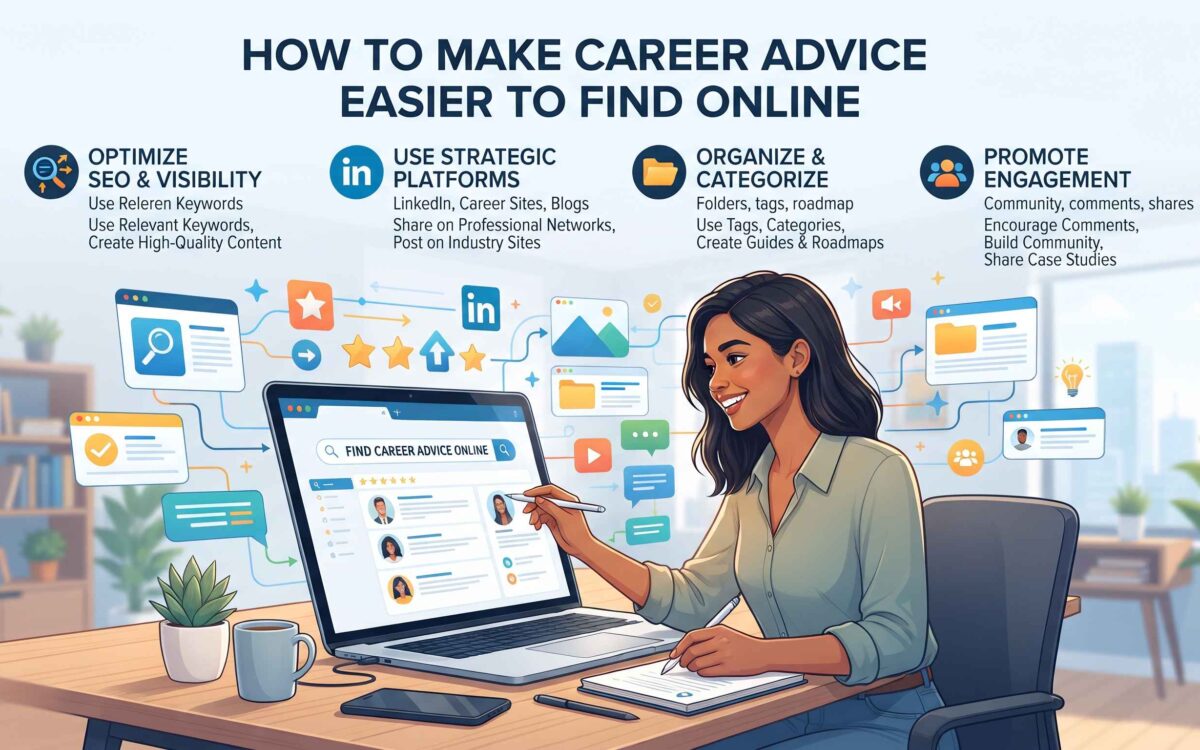
People often turn to the web when they need to choose a course, prepare for an interview, change careers, or find their first job. For educators, career coaches, recruiters, and employment businesses, publishing useful guidance online can help those readers make informed decisions. Reaching them takes more than posting frequently: it requires clear information, suitable publishing channels, and a website that makes the next step easy to take.
A practical approach begins with the reader’s problem. Instead of writing broadly about “career success,” answer a specific question, such as how to explain a career gap, compare vocational training options, or prepare for a first conversation with a recruiter. Focused advice is easier to assess, more likely to match what people search for, and more useful when shared by schools, employers, or professional communities.
Start With the Questions People Actually Ask
Career information needs vary by stage and circumstance. A student exploring options may need a plain-language comparison of qualifications. Someone returning to work may want advice on updating skills or explaining a break in employment. An employer may be looking for fair, consistent ways to describe a role and assess applicants.
Before drafting, identify the intended reader and the decision the article should help them make. Check the questions that come up in consultations, classrooms, job-search workshops, and recruitment conversations. Then make the scope specific enough to answer well. For example, a piece on interview preparation can explain how to research a company, practice examples, and prepare questions, while noting that expectations differ across industries.
Make Advice Clear, Practical, and Responsible
Readers should be able to act on the information without mistaking general guidance for a guarantee. Use straightforward language, explain unfamiliar terms, and separate established facts from suggestions. When discussing qualifications, salaries, employment rights, or hiring processes, identify the relevant location and date where appropriate; these details can vary and change.
Useful career content also acknowledges trade-offs. A certificate may help demonstrate a skill, but it does not ensure a job offer. A resume format may improve readability, but the best approach depends on the role and the applicant’s experience. Explaining these limits builds trust and helps readers make decisions based on their own circumstances.
Organize the article so that a busy reader can scan it. Descriptive subheadings, short paragraphs, examples, and a concise checklist can all improve usability. End with a realistic next step, such as reviewing a job description, contacting a training provider, or preparing questions for a career adviser. Avoid pressuring readers into a single service when several paths may suit them.
Choose Publishing Channels for Audience Fit
A useful article can still go unnoticed if it appears in the wrong place. Consider where the intended readers already seek information: education sites, industry publications, local news blogs, professional communities, or employer resources. Look at recent articles on a potential publication, its audience, its editorial standards, and whether your proposed topic fills a genuine gap.
Guest contributions can introduce specialist guidance to readers beyond an organization’s own website. A directory of career guest-posting sites can help recruiters, coaches, and employment organizations find publications to investigate. Treat any list as a starting point rather than a recommendation: check that each site is active, relevant, transparent about its publishing rules, and appropriate for the audience you hope to reach.
Before pitching, read the submission guidelines and study the publication’s existing coverage. Offer a distinct angle rather than a lightly reworked version of an article already on the site. Ask about author attribution, editing, links, fees, and how long a contribution is expected to remain available. A placement is most valuable when the article stands on its own as useful information, not when it merely points readers elsewhere.
Keep Your Own Website Ready to Support Readers
External publishing may bring new visitors, but those visitors need a clear destination. A career resource site should make its main topics easy to find, work well on mobile, load reliably, and provide clear routes to relevant services or further information. Review key pages for outdated dates, broken forms, unclear calls to action, and content that no longer reflects current programs or hiring practices.
If a redesign is necessary, record baseline metrics for website redesign before changing the site. Useful measures may include organic visits, landing-page engagement, form completions, referral traffic, rankings for important queries, and the performance of pages that generate enquiries. Note the date range and analytics tools used, and account for seasonal changes where possible. These figures give the team a fair comparison after launch, rather than relying on impressions about whether the new design feels successful.
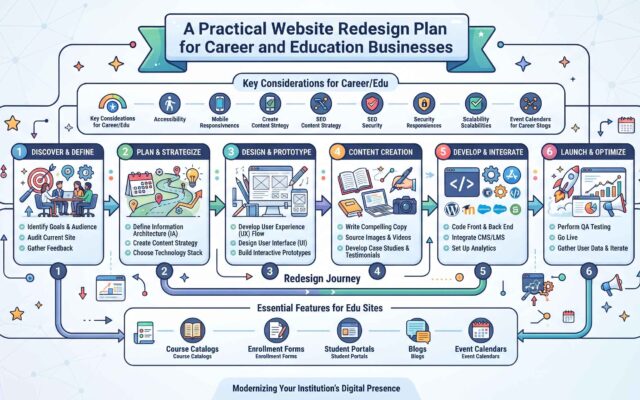
Osdire’s website redesign checklist outlines a process from planning and auditing through testing and post-launch review. That kind of planning helps a team preserve useful content and search visibility while improving the site. It also encourages clear ownership: someone should be responsible for redirects, analytics checks, accessibility, and resolving issues reported after release.
Measure Whether the Work Helps
Set a goal for each article or publishing effort before it goes live. A guide might be intended to help students understand training choices, attract relevant referral visits, or prompt employers to share better role descriptions. Choose measures that match the goal. Page views alone, for example, do not show whether readers found an answer or completed a useful next step.
Review results over a sensible period and use them to improve future work. If readers arrive through a guest article but leave quickly, the landing page may not match their expectations. If a guide attracts search traffic but generates repeated questions, it may need clearer examples or an update. Small improvements based on reader behavior can make a resource more effective over time.
Conclusion
Good online career guidance combines accurate, focused advice with thoughtful distribution and a dependable website. Start with real reader questions, choose publishing partners carefully, and make every article useful on its own. Track meaningful outcomes and keep core pages current. This steady approach helps people find practical information when they need it—and helps the organizations that provide that information earn lasting trust.