6 Things ER Veterinarians Want You to Tell Them Right Away

You know the feeling. Your pet is acting wrong, your stomach drops, and suddenly you are trying to remember every detail at once. When did the vomiting start, did they get into something, are they breathing faster than usual, was that plant toxic, did they fall? In an emergency vet visit, those first few minutes matter, and the clearest information you can give often shapes how fast your pet gets help, especially when seeking emergency pet care in San Diego, CA.
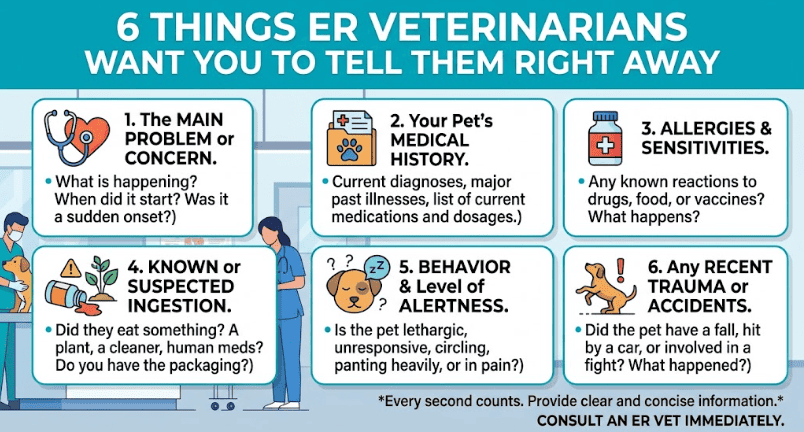
ER teams are trained to sort through chaos, but they still need the basics from you right away. The goal is not to tell the whole story perfectly. The goal is to quickly share the details that change treatment, testing, and urgency. If you are heading to an Emergency Vet, these six things can help the team act faster and with more confidence.
ER veterinarians need the timeline first
The first thing they want to know is when the problem started and how it changed. “He threw up” is helpful. “He threw up three times in the last hour, then got weak and would not stand” is much more useful. The timeline helps the team tell the difference between a mild issue that turned serious and a true crisis that is moving fast.
You may not know the exact minute. Give your best estimate. Say when you last saw your pet acting normal, when the symptoms began, and whether they are getting worse, staying the same, or coming and going. If your dog had one seizure two hours ago and now seems normal, that matters. If your cat had one seizure and has not recovered, that matters even more.
Texas A&M shares common pet emergency warning signs such as trouble breathing, collapse, seizures, major trauma, and severe bleeding. Those are not details to save for later. Lead with them.
Possible toxins, medications, and foreign objects change treatment fast
If your pet may have eaten something harmful, say it immediately, even if you feel embarrassed. Chocolate on the counter, sugar free gum in a bag, ibuprofen on the floor, a sock missing from the laundry pile, a chewed battery, rodent bait in the garage. These details can completely change what the ER team does next.
This is where people often hesitate because they are not sure. You do not need proof. Suspicion is enough. “I think she may have gotten into grapes” gives the veterinarian a reason to act before the signs become severe. Waiting until the exam is nearly over can cost time your pet does not have.
The same goes for medications. Share every medicine, supplement, flea product, and recent dose, including human drugs your pet may have swallowed. A medication list on your phone is better than trying to remember under stress.
Breathing changes and gum color should be said out loud right away
If your pet is struggling to breathe, breathing with an open mouth, making harsh sounds, turning pale, blue, or gray at the gums, or collapsing, do not sit quietly in the waiting room hoping someone notices. Tell the front desk at once. These are triage details, and they often move your pet to the treatment area faster.
People sometimes worry about overreacting. In an animal emergency clinic, saying “My cat is open mouth breathing” is never overreacting. It gives the team the chance to assess oxygen needs, circulation, and distress before the problem gets worse.
Past health problems and recent procedures fill in the missing pieces
A pet with diabetes, heart disease, kidney disease, seizures, allergies, or a recent surgery is not walking into the ER as a blank slate. Those details frame the whole case. Vomiting in a healthy young dog is one thing. Vomiting in a diabetic dog that missed insulin is another. Lethargy after a routine vaccine may be mild. Lethargy after surgery with pale gums can point somewhere else entirely.
If your pet was seen recently by your regular veterinarian, mention it. Bring discharge papers if you have them. The FDA also advises pet owners to know who to contact during urgent situations and how to prepare for a pet emergency. That preparation pays off when your mind goes blank.
Changes in eating, drinking, bathroom habits, and pain help reveal hidden emergencies
These details can sound ordinary, but they often point to serious trouble. Tell the ER veterinarian if your pet has stopped eating, is drinking far more than usual, has not urinated, is straining to urinate, has black stool, diarrhea with blood, or cries when touched. A blocked cat, for example, may only look restless or uncomfortable at first, but inability to urinate is an emergency.
Pain also shows up in quiet ways. Hiding, shaking, panting, pacing, refusing stairs, or snapping when touched may be the clearest signs your pet can give. If that behavior is new, mention it early.
The best details are short, direct, and specific
When you are stressed, it is easy to tell the story in a long loop and bury the key point in the middle. ER teams usually need the headline first, then the background. Start with what is wrong now, then add what led up to it.
| What to report | Less helpful | More helpful |
|---|---|---|
| Vomiting | “He got sick today.” | “He vomited four times in two hours and now will not stand.” |
| Toxin exposure | “She may have eaten something.” | “I found a chewed bottle of ibuprofen about 30 minutes ago.” |
| Breathing | “He seems off.” | “He is breathing fast, open mouthed, and his gums look pale.” |
| Urination | “He keeps going to the box.” | “He has gone in and out of the litter box for an hour and has produced no urine.” |
Three steps to make an emergency vet visit smoother
Write a fast symptom note. Put the start time, main symptoms, possible toxin or injury, current medications, and medical conditions in your phone notes before you walk in. Even 30 seconds of organizing your thoughts can make your pet ER visit more efficient.
Take photos of labels, vomit, stool, or the scene. A picture of the chewed package, plant, medication bottle, or strange object can answer questions faster than memory can. If your pet had an episode at home, a short video can also help the veterinarian understand what happened.
Say the urgent part first. If your pet cannot breathe well, has collapsed, is actively seizing, or may have swallowed a toxin, open with that. The rest of the story can come after your pet is safe.
When your pet is in trouble, clear information is a form of care. You do not need perfect words, and you do not need to stay calm the whole time. You just need to give the ER team the facts that change what happens next. If your pet is showing signs of distress, contact an emergency vet right away and share these six details as soon as you arrive.