Core Technologies in Modern Residential Water Systems

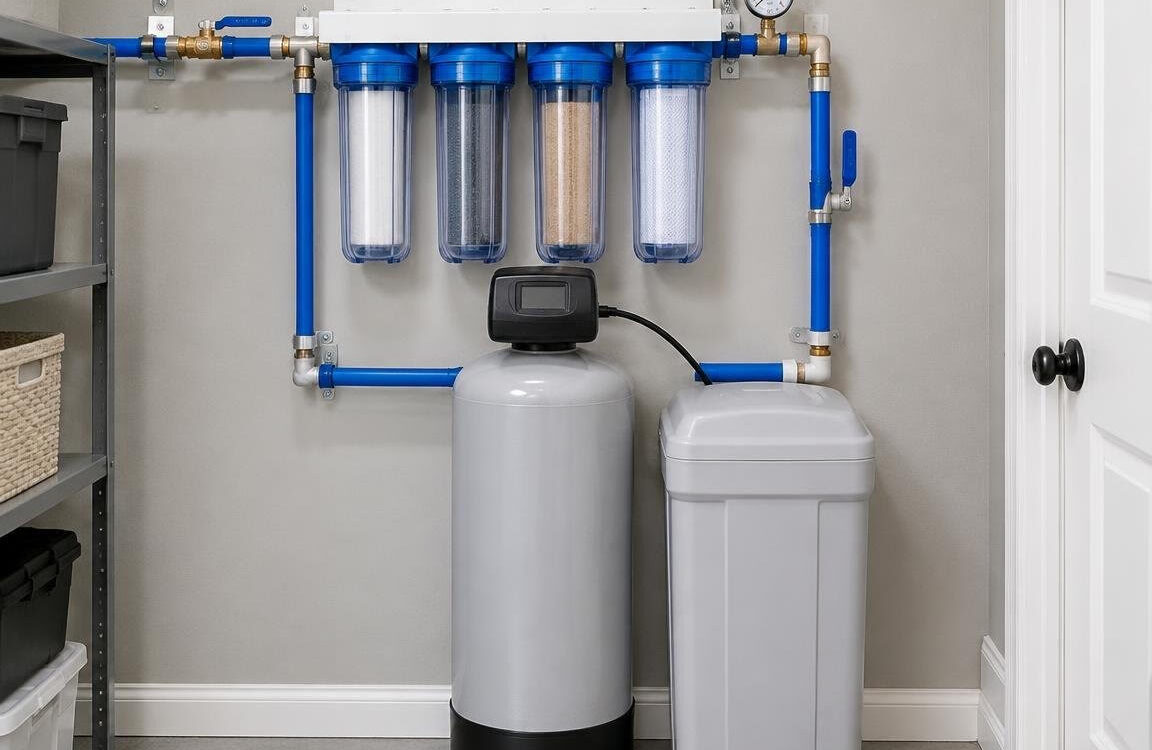
We often take the water flowing from our taps for granted. Yet, the quality of this water significantly impacts our health, the longevity of our home appliances, and even the air we breathe indoors. From municipal supplies to private wells, understanding what’s in our water is the first step toward ensuring it’s as clean and safe as possible.
Residential water systems are no longer just an amenity; they are a critical component of a healthy and well-maintained home. These systems work tirelessly behind the scenes to address various water quality issues, from sediment and chlorine to harmful bacteria and emerging contaminants.
In this extensive guide, we will dive deep into residential water systems. We’ll explore the main types of treatment technologies, detail which contaminants they remove, and discuss how to choose the right system for your specific needs. We will also cover essential maintenance, typical costs, and important certifications to look for. Understanding these systems helps us protect our household health and infrastructure, often complementing other vital home services like plumbing heating and AC services.
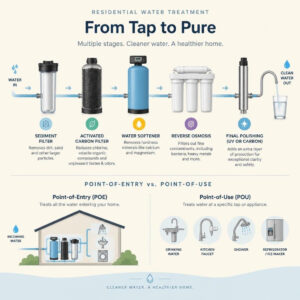
Modern residential water systems employ a variety of sophisticated technologies designed to act as barriers against unwanted substances. Each system is engineered to tackle specific contaminants, with its effectiveness often hinging on the precise mechanics of its filtration or treatment process. To make an informed choice, it’s crucial to understand these core technologies, their hydraulic efficiency, and how they contribute to overall water quality. The best system begins with understanding what’s in your water through comprehensive testing.
Point-of-Entry vs. Point-of-Use Configurations
When considering water treatment, homeowners typically choose between two primary configurations: Point-of-Entry (POE) or Point-of-Use (POU) systems.
Point-of-Entry (POE) systems, often referred to as whole-house systems, are installed directly on the main water line where water enters your home. This means every drop of water used throughout the house for drinking, showering, laundry, and appliances is treated. The benefits of whole-house coverage are extensive. Beyond providing clean drinking water from every tap, POE systems protect all plumbing and water-using appliances from sediment and chemical damage, potentially extending their lifespan. A significant, often overlooked, benefit is the improvement of indoor air quality. For instance, chlorine present in unfiltered tap water can evaporate into steam during hot showers, negatively impacting the air we breathe indoors. A whole-house system mitigates this, contributing to better respiratory and skin health. We find that for comprehensive protection and greater long-term cost-effectiveness, a whole-house system often outperforms managing multiple individual POU filters.
Point-of-Use (POU) systems, on the other hand, treat water at a single tap or outlet, such as an under-sink filter at the kitchen faucet or a showerhead filter. These are ideal for targeted treatment, particularly for drinking and cooking water, where specific contaminants might be of concern. While POU systems are generally more affordable upfront and easier to install, they offer limited protection for the rest of the home’s water supply and appliances. For volatile organic compounds (VOCs) and radon, which can vaporize at untreated taps like showers, POU devices at a single kitchen tap are insufficient to prevent inhalation risks, highlighting the need for broader POE coverage if these contaminants are present.
Membrane Filtration and Reverse Osmosis Technologies
Membrane filtration represents a powerful class of water treatment technologies that physically remove contaminants by forcing water through a semi-permeable barrier with microscopic pores. These technologies are categorized by their pore size, which dictates the types of contaminants they can effectively remove:
- Microfiltration (MF): With pore sizes typically around 0.1 micron (ranging from 0.05 to 5 microns), microfiltration systems are effective at removing larger suspended solids, parasites like Giardia and Cryptosporidium, and some bacteria. However, they do not remove viruses or dissolved chemicals.
- Ultrafiltration (UF): Featuring smaller pores, averaging 0.01 micron (ranging from 0.001 to 0.05 micron), ultrafiltration can remove parasites, bacteria (e.g., Salmonella, E. coli), and some viruses, along with suspended solids.
- Nanofiltration (NF): These membranes have an average pore size of 0.001 micron. Nanofiltration systems are capable of removing parasites, bacteria, and viruses, as well as a significant percentage of dissolved chemicals, heavy metals (like lead and iron), blue-green algae toxins, and hard water minerals. A key advantage of nanofiltration is its ability to remove up to 95% of contaminants while allowing some beneficial minerals to remain, offering a balance between comprehensive purification and mineral retention. This often results in higher water flow rates and lower pressure requirements compared to reverse osmosis.
- Reverse Osmosis (RO): Considered the gold standard for comprehensive water purification, reverse osmosis systems utilize an ultra-fine membrane with pores approximately 0.0001 micron in size. This technology forces water through the membrane against its natural osmotic flow, effectively removing the widest spectrum of contaminants. RO is highly effective at eliminating microorganisms (parasites, bacteria, viruses), heavy metals (lead, copper, chromium), salts, nitrates, PFAS, and other dissolved chemicals. While incredibly effective, RO systems typically produce some wastewater and may require higher operating pressure.
Understanding the differences in pore size helps us determine the precise contaminant reduction capabilities of each membrane technology.
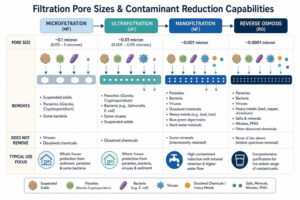
For example, RO systems are particularly adept at removing dissolved chemicals like lead, copper, chromium, sodium, and chloride, which other filtration methods might miss. Nanofiltration, with its slightly larger pores, still provides excellent contaminant reduction for issues like chemicals, heavy metals, and hard water minerals, while offering a unique balance of high flux and mineral retention.
Ion-Exchange Softening vs. Salt-Free Conditioning
Hard water is a common problem in many regions, characterized by high concentrations of dissolved minerals, primarily calcium and magnesium. These minerals can lead to scale buildup on plumbing, fixtures, and appliances, reducing efficiency and lifespan. To combat this, residential water systems offer two main approaches: ion-exchange softening and salt-free conditioning.
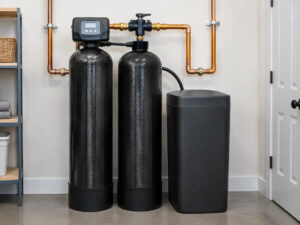
Ion-exchange water softeners are the traditional solution. They work by passing hard water through a resin bed containing negatively charged beads. These beads attract and “exchange” the positively charged calcium and magnesium ions for less problematic ions, typically sodium or potassium. When the resin bed becomes saturated with hardness minerals, the system undergoes a regeneration cycle, flushing the minerals away with a brine solution (saltwater) and replenishing the resin with sodium ions. This process effectively removes hardness, preventing scale and improving soap lathering. EcoWater Systems, for instance, manufactures a significant portion of the residential automatic water softeners sold in the US, often incorporating advanced features like counter-current brining for increased salt and water efficiency. However, it’s important to note that traditional water softeners do not remove biological contaminants like bacteria or viruses, and they add sodium to the water, which may be a concern for some individuals.
Salt-free water conditioners, often utilizing Template Assisted Crystallization (TAC) technology, offer an alternative approach to scale prevention. Instead of removing hardness minerals, these systems transform them into microscopic crystals that cannot adhere to surfaces. This means the minerals remain in the water but lose their ability to form scale. The primary benefits of salt-free conditioning include preventing scale buildup on heating elements and appliance lines without adding salt or chemicals to the water. These systems typically require no electricity and produce no wastewater, making them an eco-friendly choice. Combining a salt-free conditioner with a catalytic carbon filter, for example, can address both scale and modern chemical contaminants simultaneously. While they don’t technically “soften” the water by removing minerals, they effectively mitigate the problems associated with hard water.
Source Water Treatment Strategies: Municipal Supplies vs. Private Wells
The choice of a residential water treatment system fundamentally depends on your water source. Municipal water and private well water present distinct challenges and require different diagnostic approaches and treatment strategies. Before investing in any system, we always recommend comprehensive water quality testing to identify specific contaminants.
Treating Municipal Additives with Residential Water Systems
Municipal water supplies undergo extensive treatment before reaching your home, but they often contain additives and byproducts that homeowners may wish to remove. Chlorine and chloramines are widely used disinfectants that, while effective at killing harmful bacteria, can impart unpleasant tastes and odors. They can also react with organic matter to form disinfection byproducts (DBPs), and chlorine evaporating in shower steam can affect indoor air quality.
Residential water systems designed for municipal water typically focus on removing these additives and associated contaminants:
- Activated Carbon Filtration: This is a cornerstone technology for removing chlorine, chloramines, and many volatile organic compounds (VOCs) that contribute to poor taste and odor. Activated carbon works by adsorbing these contaminants onto its porous surface.
- Catalytic Carbon: For municipal supplies that use chloramines (a more stable disinfectant than chlorine), catalytic carbon is particularly effective. It breaks down the chloramine bond, ensuring more thorough removal.
- KDF (Kinetic Degradation Fluxion) Media: Often used in conjunction with carbon, KDF media aids in chlorine reduction, inhibits internal bacterial and algae growth within the filter, and can prolong the life of the main carbon tank.
- Specialized Media: Many advanced systems, like Aquasana’s HealthShield™ system, are engineered to reduce a wide range of emerging contaminants, including PFAS, VOCs, pharmaceuticals, and chloramines, with high efficiency (up to 99.9% reduction for 61 contaminants).
By treating municipal water, we not only improve its aesthetic qualities but also contribute to better skin and hair hydration, reduce exposure to potentially harmful chemicals, and enhance the overall living environment.
Protecting Private and Small Shared Water Wells with Advanced Treatment
Private wells draw water directly from underground aquifers, meaning their quality can vary significantly based on local geology, agricultural practices, and proximity to septic systems or industrial sites. Unlike municipal water, well water is not centrally treated or monitored, placing the responsibility for water safety squarely on the homeowner. Resources like the Water Systems Council provide invaluable information and guidance for maintaining private and small shared water wells. We strongly advise regular, certified laboratory testing for well water to identify specific contaminants.
Well water often faces a different set of challenges:
- Microbiological Risks: Wells are susceptible to contamination from bacteria (like E. coli and coliform), viruses, and parasites (Cryptosporidium, Giardia) from surface runoff or faulty well construction.
- UV Disinfection: Ultraviolet (UV) water treatment systems are highly effective against microbiological threats, sterilizing up to 99.8% of bacteria and viruses without adding chemicals. For maximum effectiveness, UV systems require pre-filtration to remove sediment that could shield microbes from the UV light.
- Microfiltration/Ultrafiltration/Nanofiltration: These membrane technologies can also physically remove bacteria, viruses, and cysts, depending on their pore size.
- Heavy Metals: Lead, arsenic, and other heavy metals can leach into well water from natural deposits or industrial pollution.
- Reverse Osmosis: RO systems are highly effective at removing a broad spectrum of heavy metals.
- Specialized Media: Specific filtration media can target contaminants like arsenic. Arsenic exists in two forms (Arsenic 3 and Arsenic 5), and many treatment devices only reduce Arsenic 5, requiring specific solutions for comprehensive removal.
- Nitrates: Often a concern in agricultural areas, nitrates can be harmful, especially to infants. Effective nitrate treatment typically requires a minimum water supply pressure of 40 psi and is rated for specific concentration limits.
- Iron, Sulfur, and Manganese: These minerals cause staining, unpleasant odors (rotten-egg smell from hydrogen sulfide), and metallic tastes.
- Air Aspiration Systems: Chemical-free air-aspirated filters are an innovative solution for iron and sulfur removal. They introduce air into the filter tank to oxidize these dissolved minerals, causing them to precipitate out and be filtered, all without the need for harsh chemicals.
- Oxidation Filters: Other systems use oxidizing agents or media to convert dissolved iron and manganese into a filterable form.
By implementing advanced treatment strategies tailored to specific well water test results, we can ensure a safe, clean, and aesthetically pleasing water supply for your home.
Maintenance, Sizing, and Plumbing System Integration
Investing in a residential water system is just the first step; ensuring its long-term effectiveness requires proper sizing, regular maintenance, and seamless integration with your home’s plumbing. These factors directly impact the system’s performance, the longevity of your plumbing, and your overall water pressure.
Sizing Flow Rates and Preventing Water Pressure Drops
One of the most critical aspects of installing a whole-house water treatment system is ensuring it’s correctly sized for your home’s needs. The system’s flow rate, measured in gallons per minute (GPM), must match or exceed your household’s peak fixture demand to prevent noticeable water pressure drops. A large home, for example, with multiple bathrooms, might require a system capable of 14+ GPM to maintain strong water pressure even when multiple showers are running simultaneously.
Factors to consider when sizing include:
- Number of bathrooms and fixtures: More fixtures mean higher potential peak demand.
- Household size: More occupants generally lead to higher water usage.
- Inlet pipe dimensions: The system’s connections should match your home’s main water line to avoid bottlenecks.
Modern systems are designed to minimize pressure loss. High-capacity filter media and larger filter housings contribute to this by allowing greater water flow and offering increased dirt-holding capacity, which means less frequent filter changes and more consistent pressure. For instance, Aquasana’s Rhino® Max Flow system is designed to reduce chlorine effectively at twice the flow rate of standard systems, ensuring robust water pressure throughout the home.
Routine Maintenance Schedules for Residential Water Systems
Consistent maintenance is paramount to ensuring your water treatment system operates at peak efficiency and continues to deliver clean water. The lifespan and maintenance requirements vary significantly by system type and component:
- Sediment Pre-filters: These are the first line of defense, capturing larger particles like rust, silt, and dirt. They typically require replacement every 3-6 months, or more frequently in areas with high sediment. Neglecting pre-filters can clog subsequent filtration stages and reduce overall system effectiveness.
- Activated Carbon Media: The lifespan of carbon filters depends on their capacity (rated in gallons) and water usage. A general rule of thumb for whole-house carbon filtration is approximately one year for every 80,000 to 100,000 gallons of capacity. Some high-capacity systems, like Aquasana’s Rhino® whole house water filtration system, are designed to last for 1,000,000 gallons or up to 10 years.
- Reverse Osmosis (RO) Membranes: RO membranes are durable but require periodic replacement, typically every 2-5 years, depending on water quality and usage. Many RO systems also include pre- and post-filters that need more frequent changes.
- UV Lamps: Ultraviolet lamps in disinfection systems generally need to be replaced annually, as their germicidal effectiveness diminishes over time, even if the bulb still appears to be lit.
- Brine Tank Maintenance (for softeners): Salt-based water softeners require regular replenishment of salt in the brine tank. It’s also advisable to periodically clean the brine tank to prevent salt bridging or mushing, which can impair regeneration.
Always refer to the manufacturer’s Performance Data Sheet (PDS) for specific replacement schedules and maintenance instructions. This document provides crucial information on a system’s contaminant reduction ratings, daily capacity, and expected lifespan.
Integrating Plumbing and Filtration Hardware
Proper integration of water filtration hardware into your home’s plumbing system is essential for both performance and ease of maintenance. Whole-house systems are installed directly into the primary main supply line before water branches off into interior plumbing.
Key components for effective integration include:
- Pro-Grade Bypass Valves: Installing a bypass valve kit, ideally with durable brass fittings, allows you to isolate the filtration system for maintenance (like filter changes) without shutting off water to the entire house. This makes future service much easier.
- Shutoff Valves: Strategically placed shutoff valves before and after the system provide additional control during maintenance or in case of an emergency.
- Drain Lines: Systems that require backwashing (like some softeners or iron filters) or produce wastewater (like RO systems) need proper drain line connections to safely dispose of the flushed contaminants or brine.
- Appropriate Pipe Sizing: Ensuring the system’s inlet and outlet connections match your home’s plumbing diameter (e.g., 1-inch or 3/4-inch) is crucial for maintaining optimal flow and pressure.
While some homeowners with plumbing experience might undertake DIY installation, we often recommend professional installation. An experienced plumber can ensure the system is correctly sized, installed according to local plumbing codes, and integrated seamlessly, preventing leaks, pressure issues, and ensuring optimal performance. For comprehensive home care, coordinating with providers of plumbing heating and AC services ensures that all aspects of your home’s critical infrastructure are professionally managed.
Regulatory Standards, Certifications, and Sustainable Water Options
When selecting a residential water treatment system, look beyond marketing claims and verify performance through independent certifications. Furthermore, as freshwater resources become increasingly strained, exploring sustainable water options is becoming a necessity for many homeowners.
Understanding NSF/ANSI Standards and Third-Party Certifications
Unlike some other consumer products, residential water treatment filters, purifiers, and RO systems are not federally regulated in the United States. Instead, their safety and performance are governed by voluntary national standards developed by organizations like NSF International and the American National Standards Institute (ANSI). These NSF/ANSI standards provide a crucial benchmark for validating contaminant reduction claims.
When a product is certified to an NSF/ANSI standard, it means it has undergone rigorous testing by an accredited third-party organization (such as NSF, Water Quality Association (WQA), IAPMO R&T, UL, or CSA Group) to confirm it meets specific requirements for material safety, structural integrity, and contaminant reduction performance. Certification to a standard does not mean a system eliminates all contaminants; it only certifies reduction for the specific contaminants evaluated under that particular standard.
Key NSF/ANSI standards to look for include:
- NSF/ANSI 42 (Aesthetic Effects): Certifies systems for reducing non-health-related contaminants that affect the taste, odor, and appearance of water, such as chlorine, chloramines, and particulates.
- NSF/ANSI 53 (Health Effects): Certifies systems for reducing specific health-related contaminants, including lead, VOCs, Cryptosporidium, and Giardia.
- NSF/ANSI 44 (Water Softeners): Establishes minimum requirements for cation exchange water softeners designed to reduce hardness.
- NSF/ANSI 55 (UV Microbiological Water Treatment Systems): Categorizes UV systems into Class A (for treating contaminated water to reduce bacteria, viruses, and cysts) and Class B (for supplemental disinfection of already disinfected drinking water).
- NSF/ANSI 58 (Reverse Osmosis Drinking Water Treatment Systems): Certifies RO systems for reducing total dissolved solids (TDS), lead, cysts, arsenic, chromium, and other contaminants.
- NSF/ANSI 401 (Emerging Contaminants): Certifies systems for reducing up to 15 specific emerging contaminants, including certain pharmaceuticals, pesticides, and unregulated chemicals.
- NSF P231 (Microbiological Water Purifiers): A more stringent standard for microbiological purifiers, validating reduction of bacteria, viruses, and cysts from microbiologically unsafe water without relying on UV light.
Always check the product’s Performance Data Sheet (PDS) and verify its certification against the specific NSF/ANSI standards that address the contaminants you are concerned about. The WQA Gold Seal program is another reputable certification to look for, indicating products have passed industry standards for performance, capacity, and integrity.
Sustainable Innovations: Rainwater Harvesting and Greywater Recycling
As concerns about freshwater depletion grow—with regions like California facing a projected 20-year supply and New Mexico a 10-year supply at current usage rates—sustainable water management is becoming increasingly critical for residential properties. Rainwater harvesting and greywater recycling offer compelling solutions to reduce reliance on municipal or well water, conserve resources, and lower utility costs.
Rainwater Harvesting: This involves collecting rainwater from rooftops and storing it in cisterns for later use. Rainwater can serve as a primary or supplemental freshwater source, especially when cisterns are sized to accommodate worst-case drought conditions. For potable applications, collected rainwater undergoes a multi-barrier treatment process, typically involving sediment filtration (down to 5 µm), UV disinfection (at least 40 mj/sq cm to meet EPA standards for bacteria and viruses), and a final carbon filter for taste and odor. Beyond providing a water source, rainwater harvesting also helps manage stormwater runoff, contributing to local environmental health.
Greywater Recycling: Greywater refers to wastewater from non-toilet sources, such as showers, bathtubs, laundry machines, and bathroom sinks. Recycling greywater for non-potable uses, like landscape irrigation or toilet flushing, can significantly reduce a household’s freshwater demand. Systems like the Estuary greywater system can save substantial amounts of water and money—for example, 270,000 gallons of water and $8,000 in costs over 10 years.
Key benefits of greywater recycling include:
- Water Conservation: Reduces the need for potable water for irrigation, keeping gardens green even during droughts.
- Cost Savings: Lower water utility bills.
- Septic Load Reduction: Diverting greywater away from home septic tanks reduces hydraulic load, prolonging the lifespan of septic systems and drain fields.
- Natural Filtration: Some advanced systems use plant-powered natural filtration, integrating seamlessly with outdoor aesthetics.
While both rainwater harvesting and greywater recycling offer immense environmental and financial benefits, it’s crucial to understand local regulations and plumbing codes, as these systems often require specific permits and installation configurations. Integrating these sustainable options with traditional filtration ensures water quality is appropriate for its intended use, whether potable or non-potable.
Frequently Asked Questions About Residential Water Treatment
As we navigate the complexities of residential water systems, several common questions arise. Addressing these helps homeowners make informed decisions about their water quality.
How often should residential water filters and membranes be replaced?
The replacement frequency for filters and membranes is critical for maintaining water quality and system performance. It largely depends on the specific type of filter, the volume of water processed, and the quality of your incoming water.
- Sediment Pre-filters: These are typically replaced every 3 to 6 months. In areas with high sediment, they may need more frequent changes to prevent clogging and protect subsequent filtration stages.
- Activated Carbon Filters: For whole-house systems, activated carbon media generally lasts between 1 to 10 years, or for a specific gallon capacity (e.g., 165,000 to 1,000,000 gallons). Aquasana’s Rhino® systems, for example, are rated for 1,000,000 gallons or up to 10 years. For point-of-use systems, carbon filters might last 6-12 months.
- Reverse Osmosis (RO) Membranes: RO membranes are more durable and typically require replacement every 2 to 5 years. However, proper pre-filtration is essential to protect the membrane and extend its life.
- UV Lamps: UV bulbs in disinfection systems should be replaced annually, regardless of whether they appear to be working. Their germicidal intensity diminishes over time, compromising their ability to neutralize microorganisms.
- Specialty Filters: Filters targeting specific contaminants (e.g., iron, nitrates) will have their own recommended replacement schedules based on capacity and contaminant load.
Always consult your system’s manufacturer guidelines and Performance Data Sheet for precise replacement intervals. Regular water testing can also help determine if filters are still effectively reducing contaminants.
What is the difference between NSF/ANSI 42, 53, and 58 certifications?
These three NSF/ANSI standards are among the most common certifications for residential water treatment systems, each addressing different aspects of water quality:
- NSF/ANSI 42 (Aesthetic Effects): This standard certifies systems that reduce non-health-related contaminants. These are substances that affect the taste, odor, or appearance of water, such as chlorine, chloramines, and particulate matter. A system certified to NSF/ANSI 42 improves the overall palatability and clarity of your water.
- NSF/ANSI 53 (Health Effects): This standard is for systems that reduce specific health-related contaminants, meaning substances that could pose a risk to human health. Examples include lead, volatile organic compounds (VOCs), Cryptosporidium, and Giardia. Certification to NSF/ANSI 53 indicates that a system has been rigorously tested to effectively reduce these harmful substances.
- NSF/ANSI 58 (Reverse Osmosis Drinking Water Treatment Systems): This standard specifically applies to Point-of-Use (POU) reverse osmosis systems. It certifies these systems for reducing total dissolved solids (TDS) and a wide range of health-related contaminants, including lead, cysts, arsenic, chromium, copper, and nitrates. NSF/ANSI 58 is a comprehensive standard for RO systems, ensuring both contaminant reduction and structural integrity.
Understanding these distinctions helps you verify that a potential water treatment system is certified to address the specific contaminants identified in your water test results.
Can whole-house filtration replace a dedicated water softener?
No, whole-house filtration cannot fully replace a dedicated water softener, as they address different water quality issues.
- Whole-house filtration systems (typically using activated carbon, catalytic carbon, or other specialized media) are designed to remove chemical contaminants, sediment, chlorine, chloramines, VOCs, and improve taste and odor from all water entering your home. They are excellent for improving the overall quality and safety of your water for various uses, including showering and drinking.
- Dedicated water softeners (either ion-exchange or salt-free conditioners) specifically target hardness minerals—calcium and magnesium. Ion-exchange softeners remove these minerals from the water, while salt-free conditioners prevent them from forming scale. Neither type of softener is designed to remove chemical contaminants, sediment, or microbiological threats.
For comprehensive water treatment, especially in areas with hard water, the best approach is often to combine a whole-house filtration system with a water softener or salt-free conditioner. This allows you to simultaneously remove chemical impurities and address hardness minerals, protecting your plumbing, appliances, and ensuring high-quality water throughout your home.
Conclusion
The journey to understanding and maintaining residential water systems is a crucial one for every homeowner. From deciphering the mechanics of advanced filtration technologies to recognizing the importance of certifications and embracing sustainable solutions, informed choices empower us to safeguard our health, protect our investments, and contribute to a more sustainable future.
We’ve explored how different systems, whether Point-of-Entry or Point-of-Use, membrane filtration or ion-exchange softening, are engineered to tackle specific challenges in both municipal and well water. We’ve highlighted the critical role of regular maintenance, proper sizing, and professional plumbing integration in ensuring these systems operate effectively for years to come. Moreover, we’ve touched upon the vital role of NSF/ANSI standards in validating performance and the growing significance of sustainable options like rainwater harvesting and greywater recycling.
A proactive approach starting with comprehensive water testing—allows us to customize water treatment solutions that perfectly match our household’s unique needs. By investing in and properly maintaining these essential systems, we ensure a continuous supply of clean, healthy water, contributing to a better quality of life and the longevity of our homes.