7 Oral Changes Parents Should Photograph Before A Dental Visit

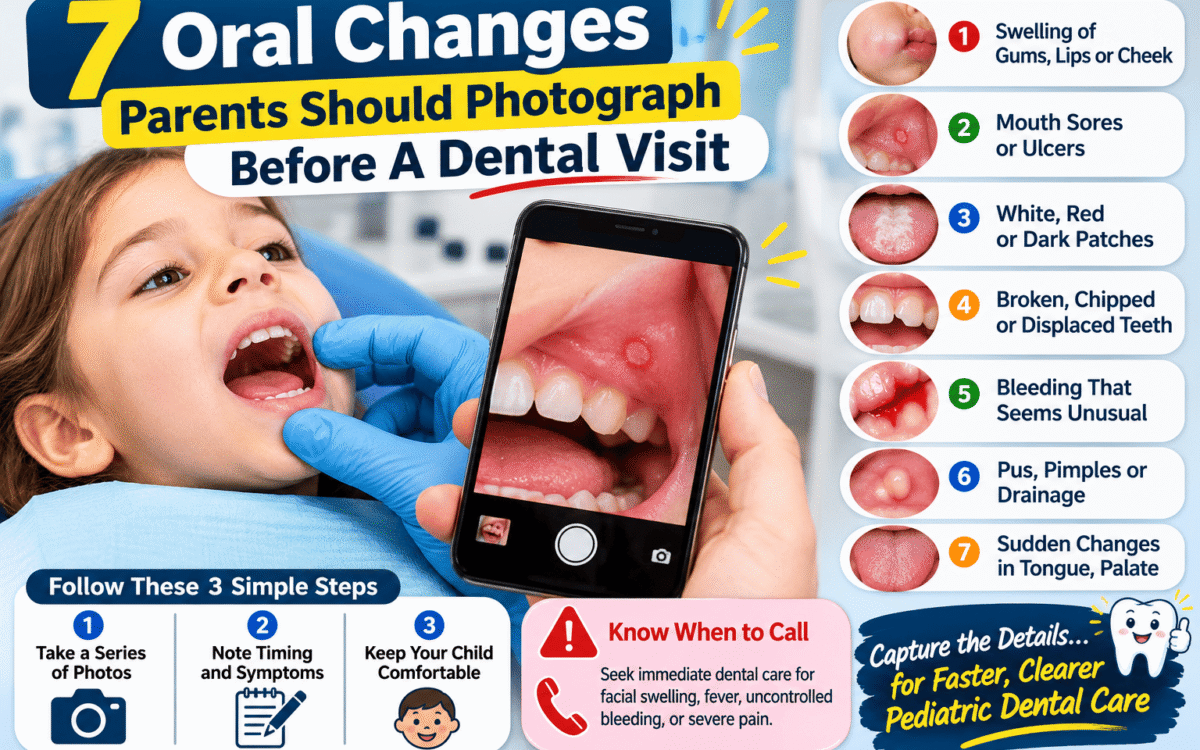
You notice something in your child’s mouth and your mind starts racing. Is it a canker sore, a chipped tooth, a rash, an infection, or something that will be gone by morning? That stress is real, especially when kids are in pain, refuse to open wide, or wake up looking worse than they did the night before. If you need help for a child’s dental emergency in Rialto, CA, photos help because mouths change fast, and the exact look, color, size, and location of a spot can tell a pediatric dentist a lot before your child even sits in the chair.
Clear photos do not replace an exam, but they can capture details that fade by the time you get to the office. If your child has swelling, sores, trauma, or a tooth that suddenly looks different, take a few pictures in good light, then call for guidance. A careful record can save time, reduce guesswork, and help your child get the right care sooner.
Photographs help document oral changes that may disappear or worsen quickly
Children heal fast, but symptoms can also shift fast. A white patch after lunch may be gone by bedtime. Lip swelling after a fall may double within an hour. A dark spot on a tooth may look small in person and much clearer in a photo. That is why mouth changes to photograph before a dental appointment include anything new, sudden, painful, or spreading.
If your child had a bump, sore, or injury, take one photo up close and one from farther back so the dentist can see the exact spot and how it sits in the whole mouth. Try to get both sides if there is swelling. If your child will tolerate it, take another photo a few hours later. Change over time matters.
These seven oral changes give a pediatric dentist useful clues
- Swelling of the gums, lips, or cheek. Swelling can point to infection, trauma, a blocked salivary gland, or irritation from biting. If one side of the face looks fuller than the other, photograph it from the front and side.
- Mouth sores or ulcers. Small ulcers may come from irritation, viral illness, or immune triggers. Multiple sores with fever or hand and foot rash may fit hand, foot, and mouth disease. Photos help track whether sores are multiplying, crusting, or healing.
- White, red, or dark patches. Color changes matter. A white patch that does not wipe away, a bright red area, or a bluish or black spot after trauma should be documented. These details can help a dentist sort out irritation from injury, infection, or a lesion that needs closer review.
- Broken, chipped, or displaced teeth. A quick photo right after an injury can show the original position before swelling starts. It can also show a crack line or a missing piece that is harder to see later.
- Bleeding that seems unusual. A little bleeding after flossing is common. Bleeding from one area without brushing, after a fall, or around a loose tooth that looks out of place is different. Photograph the source if you can do it safely.
- Pus, pimples, or drainage on the gums. A small bump near a tooth can signal an abscess draining through the gum. It may shrink and return, which makes photos especially helpful if the bump is gone by the visit.
- Sudden changes in the tongue, palate, or inside of the cheeks. Coating, blisters, peeling tissue, or a raw area from burns or biting are all worth documenting. The American Academy of Pediatric Dentistry guidance on oral pathology and surgery considerations reflects how wide the range of oral findings can be in children, from common irritation to conditions that need prompt evaluation.
Some oral symptoms can wait a day, others should be reported right away
You do not need to panic over every spot, but some findings should move to the top of your list. Facial swelling, trouble swallowing, fever with mouth pain, uncontrolled bleeding, or trauma that changes how teeth line up should be reported right away. A photo is helpful, but it should not delay a call.
Other problems are less urgent but still worth documenting. A painless white spot, a mild ulcer, or a chipped baby tooth without pain may wait for the next available visit, especially if your child is eating, drinking, and acting normally. Prevention still matters here. The CDC shares simple oral health tips for children that lower the risk of cavities and gum problems, which often reduces the number of surprise mouth changes parents face.
Photographing symptoms well can make the dental visit more productive
| Oral Change | What to Photograph | Why It Helps | Call Sooner If |
|---|---|---|---|
| Swelling | Front and side views, both sides of face | Shows size, spread, and asymmetry | Fever, pain, trouble swallowing, fast growth |
| Sores or ulcers | Close up and repeat photo later | Tracks number, size, and healing | Dehydration, fever, widespread rash |
| Tooth injury | Tooth position, bite, any fragments | Documents original damage after trauma | Tooth pushed out of place, severe pain, bleeding |
| Gum bump or drainage | Spot near tooth, any fluid | May show an abscess that comes and goes | Face swelling, foul taste, fever |
This is where a lot of parents get stuck. They take one blurry picture while their child is crying and hope it is enough. Try for natural light, a clean finger to pull the lip or cheek aside, and a second adult if possible. Skip flash if it washes out the color. A short video can help if your child will not hold still. These small steps make oral symptoms to document before seeing a dentist much easier to assess.
Three steps you can take before the dental visit
Take a series, not a single photo. Get one close up, one medium shot, and one wider image that shows where the area sits in the mouth or on the face. If there was an injury, photograph the lip, gums, and teeth, not just the obvious spot.
Write down timing and symptoms. Note when you first saw it, whether it changed, and what your child feels. Pain with chewing, bad breath, fever, drooling, poor sleep, and recent falls all add context to a photo.
Keep your child comfortable while you wait. Offer water, soft foods, and age appropriate pain relief if your child’s doctor or dentist has said it is safe for them. Avoid poking the area or using home remedies that can burn tissue. If a permanent tooth was knocked out, that is urgent and needs immediate dental guidance.
Good photos support faster, clearer pediatric dental care
You are not overreacting by taking pictures. You are creating a record your child’s dental team can use. That is especially helpful when the problem fades, swells, drains, or changes color before the visit. For many families, 7 Oral Changes Parents Should Photograph Before A Dental Visit becomes less about getting the perfect image and more about catching the details that matter.
If your child has a new mouth sore, swelling, bleeding, or a tooth injury, document it and schedule a visit with a pediatric dentist. If the symptoms look severe or are getting worse quickly, call right away.