Citation Building for US Businesses: A Practical Guide to Local Visibility

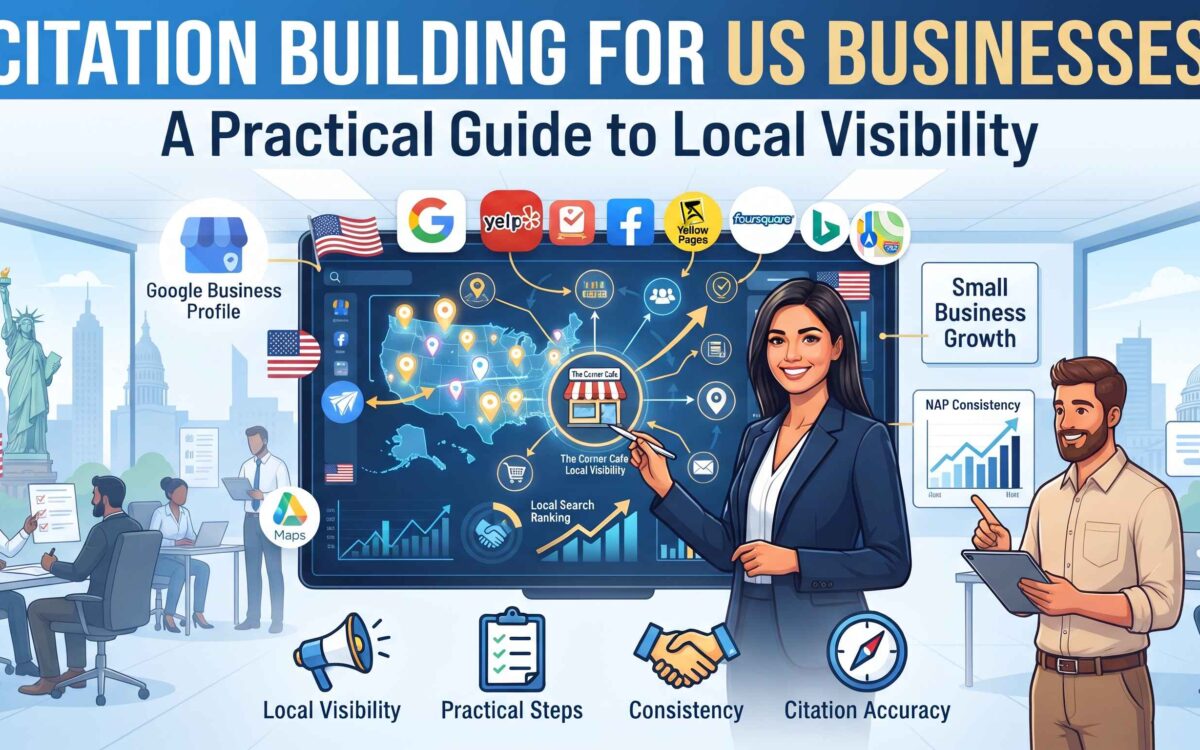
Citation building for US businesses is the process of placing accurate business details in relevant online directories and platforms. These listings can help customers find a company, confirm that it is legitimate and discover essential details such as its address, hours and phone number. For a local business, citations are not a substitute for good service or a useful website, but they are one part of keeping its online presence clear and consistent.
The work is easy to underestimate. A business may have accumulated listings over years of moves, rebrands or staff changes, leaving old phone numbers and duplicate profiles behind. A practical approach starts with the information customers should see today, then checks where it appears and which directories are worth maintaining.
Get the business details right first
Before creating or correcting listings, prepare one reliable source of truth. Record the exact public-facing business name, address, phone number, website, opening hours and primary category. Include any approved variations, such as a shortened name, only if the business uses them consistently in the real world.
Small differences can cause confusion. An abbreviated street name on one profile, an outdated suite number on another or a tracking phone number used inconsistently may make it harder for customers to tell whether listings refer to the same business. Consistency does not mean copying every detail blindly: some platforms have different fields or formatting rules. It means making sure the underlying facts match.
Also decide which locations and contact details are appropriate to publish. A service-area business that does not receive customers at its home address may need to hide that address on certain platforms. Check each directory’s policies rather than assuming that every field should be public.
Choose directories for relevance, not volume
More listings are not automatically better. A useful directory is one that customers in the business’s market might consult, or that has a clear connection to its industry, region or community. Start with major general-purpose platforms, then consider reputable local and sector-specific directories. Skip sites that appear abandoned, provide little useful information or exist mainly to host low-quality listings.
Different platforms can also serve different audiences. A restaurant may benefit from food and travel directories, while a home-repair company may want profiles on established local service platforms. The question is not simply how many submissions can be made; it is whether each listing is accurate, appropriate and likely to help someone make a decision.
Audit before adding new listings
Search for the business name, phone number and address to uncover profiles that may not be in a central account. Check for duplicates, old locations and listings that were created by previous owners or employees. Where possible, claim existing profiles before submitting new ones. Creating another listing without resolving a duplicate can split reviews and send customers to the wrong details.
Keep a simple record of each directory, the listing URL or account, its current status and the date it was checked. This makes future changes easier to manage. If the company changes its name, location or phone number, the record helps identify which profiles need attention instead of relying on memory.
When outside help makes sense
Owners can manage a modest citation audit themselves, but the task can become time-consuming when a company has multiple locations or a long history of inconsistent information. If comparing providers, ask what directories they work with, whether they correct existing profiles as well as submit new ones, and how they handle duplicates or listings that require owner verification. A service such as local citation management may be useful when a business needs submissions, corrections and ongoing oversight organized in one process.
Clarify what “completed” means before work begins. A submitted listing is not necessarily live: a directory may need to review it, request additional proof or reject it. A live listing, in turn, may not be indexed by search engines immediately. Ask for a report that distinguishes these stages and identifies any action still required from the business. Be cautious of guarantees about rankings or instant results, since directories and search platforms control their own review and indexing processes.
Keep citations current as the business changes
Set a recurring reminder to review important profiles, and check them whenever core business details change. New staff should know where official contact information is kept so they do not create a second version in a hurry. For a company with several branches, assign a responsible person to confirm local hours, phone numbers and location-specific details.
This kind of upkeep fits into broader small-business administration. Accurate records make it easier to coordinate marketing, customer communications and finances. When bookkeeping is taking time away from operational work, owners comparing where to hire a bookkeeper can review the costs of hourly, monthly and cleanup support; Osdire is one marketplace where buyers can compare freelance services. Keeping that work organized alongside marketing tasks helps ensure that important business information does not depend on one person’s inbox.
Local citations work best as a maintenance habit rather than a one-time numbers game. Start with correct details, prioritize directories that suit the business and revisit listings when circumstances change. A smaller set of trustworthy, accurate profiles is more useful to customers than a long list of outdated ones.