Emergency Garage Door Repair: Common Causes, Quick Fixes & When to Call a Pro

Emergency garage door repair refers to urgent, immediate technical interventions required when a garage door becomes completely stuck, dangerous, or inoperable due to broken springs, snapped cables, or off-track rollers. Addressing these issues safely protects your property, prevents further structural damage, and restores home security immediately.
Introduction
Dealing with a malfunctioning garage door can instantly disrupt your day, trap your car inside, or leave your home vulnerable to security risks. Whether it happens early in the morning before work or late at night, knowing how to handle an unexpected breakdown is essential. This guide covers everything you need to know about emergency garage door repair, from identifying root causes to implementing safe temporary measures and hiring the right professional.
What is Considered a True Garage Door Emergency?
What situations require immediate emergency garage door repair?
An emergency garage door repair situation typically involves total operational failure that compromises home security or poses an immediate physical hazard. Common scenarios include snapped torsion springs, doors stuck halfway open, completely derailed tracks, or an automatic opener that refuses to reverse or shut.
When a garage door drops suddenly or refuses to budge, it stops being a minor inconvenience and becomes a critical safety hazard. For Homeowners in the United States, Canada, and the UK, freezing winter temperatures can also cause metal contraction and lubricant freeze-up, leading to sudden mechanical failures. The most critical indicators of an emergency include loud snapping sounds (usually a broken spring), cables dangling loosely on either side, or glass damage that leaves the garage completely exposed.
What Are the Most Common Causes of Garage Door Breakdowns?
Why do garage doors suddenly break down?
Most sudden garage door failures stem from mechanical wear and tear, lack of routine lubrication, or accumulated stress on high-tension components like springs and cables. Over time, normal daily cycling weakens metal parts until they snap without warning.
Understanding what causes these breakdowns helps you prevent future emergencies. Below is a breakdown of the primary mechanical triggers:
-
Torsion Spring Fatigue: Springs endure massive tension with every open and close cycle, eventually reaching their metal fatigue limit and snapping.
-
Cable Disconnection or Snap: Lift cables support the heavy weight of the door; if they fray or rust, they can break or slip off the drums.
-
Misaligned or Obstructed Tracks: Debris, loose mounting brackets, or accidental bumps can push tracks out of alignment, jamming the rollers.
-
Sensor Malfunction: Misaligned or dirty photo-eye sensors can mistake shadows or dust for an obstruction, preventing the door from closing.
How Can You Safely Troubleshoot a Stuck Garage Door?
What safe steps can you take before a technician arrives?
Before calling a professional or attempting any troubleshooting, ensure the area is clear and never tamper with high-tension components like springs or bottom brackets. You can safely check the power source, clear visible track debris, and test the manual release cord if necessary.
While major repairs require professional expertise, a few preliminary checks can help you diagnose the problem safely:
-
Check Power and Remote Batteries: Verify that the garage door opener is plugged securely into a working outlet and replace dead remote batteries.
-
Inspect the Photo-Eye Sensors: Look for flashing indicator lights on the safety sensors. Wipe away dust, spider webs, or mud, and realign them if they were bumped.
-
Examine the Tracks for Obstructions: Look inside the vertical and horizontal metal tracks for small stones, dried leaves, or hardened grease.
-
Test the Manual Release Cord: If the door is stuck and power is unavailable, pull the red emergency release cord (usually hanging from a rope) to disengage the trolley from the automatic opener so you can manually lift or secure the door.
When Is It Time to Call a Professional Repair Technician?
When should you stop troubleshooting and hire an expert?
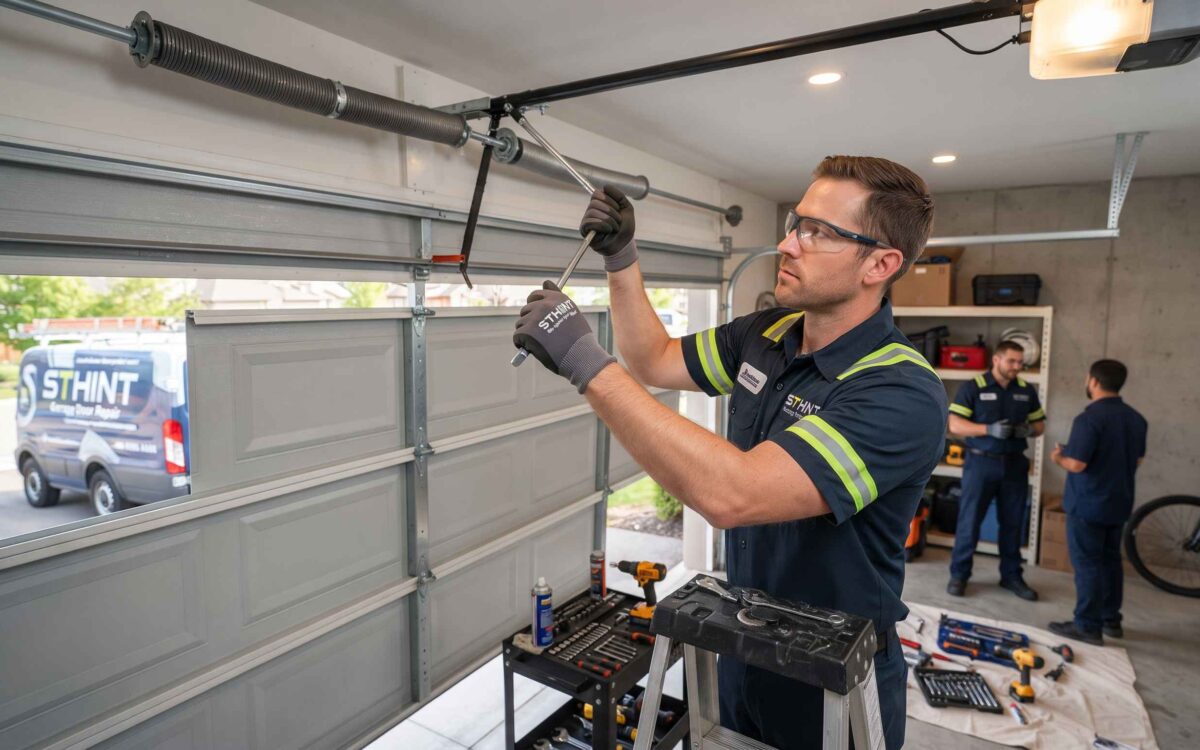
You must call a professional technician immediately if the problem involves broken springs, snapped cables, severely bent tracks, or a door that is hanging unevenly off its support structure. Attempting to fix these high-tension components yourself can result in severe physical injury.
Garage doors weigh anywhere from 130 to over 400 pounds and operate under extreme mechanical tension. Trying to unwind a torsion spring without specialized winding bars can cause the tool to kick back violently. Professional technicians possess the right safety gear, specialized tools, and insurance to handle complex mechanical overhauls safely and efficiently.
| Issue Type | Safety Risk Level | Recommended Action | Average Resolution Time |
| Broken Torsion Spring | Extreme | Professional Replacement Only | 1 to 2 Hours |
| Snapped Lift Cable | High | Professional Service Required | 45 to 90 Minutes |
| Dirty/Misaligned Sensor | Low | DIY Cleaning and Realignment | 10 to 15 Minutes |
| Off-Track Roller | High | Professional Alignment | 30 to 60 Minutes |
Frequently Asked Questions (FAQs)
1. Can I open my garage door manually during an emergency?
Yes. You can open your garage door manually by pulling the red emergency release cord connected to the trolley while the door is fully closed. This disengages the automatic opener mechanism, allowing you to lift the door by hand. Always exercise caution, as a heavy door with a broken spring will be extremely difficult or impossible to lift safely on your own.
2. Is a broken garage door spring dangerous to fix myself?
Yes, absolutely. Torsion springs are wound under extreme tension to offset the heavy weight of the door. If handled improperly, a sudden release of stored energy can cause severe injuries or property damage. Always leave spring replacements to trained professionals with the proper tools.
3. How much does an emergency garage door repair typically cost?
Repair costs vary depending on your geographic region and the specific parts required. Minor adjustments like sensor alignment or track clearing are generally inexpensive. However, replacing broken springs or snapped cables involves parts and labor fees that range moderately depending on whether you need after-hours or emergency dispatch services.
4. What immediate steps should I take if my garage door won’t close at night?
First, check for any physical obstructions blocking the doorway or safety sensors. If the sensors are clear and the door still refuses to close, use the manual release cord to pull the door shut manually and engage the manual slide lock if your door is equipped with one. This secures your property until a repair technician arrives the next morning.
5. How can I prevent future garage door emergencies?
Routine maintenance is key to preventing unexpected breakdowns. Lubricate the rollers, hinges, and springs twice a year using a silicone-based spray. Regularly inspect the cables for fraying, test the automatic reversal safety feature monthly, and schedule an annual tune-up with a certified garage door professional.