Azelaic Acid for Acne: How It Works, How to Use & Results

If you have breakouts, stubborn dark marks, and skin that gets angry at harsh products, azelaic acid for acne deserves a spot on your shortlist. It calms redness, clears clogged pores, and fades the marks pimples leave behind, without the dryness that comes with many stronger treatments.
This guide explains how azelaic acid works, which strength to choose, how to use it step by step, and what to expect in the first few months.
What Is Azelaic Acid?
Azelaic acid is a dicarboxylic acid found naturally in grains like wheat, barley, and rye. The version used in skincare is made in a lab for better stability. It is sold as a gel, cream, foam, or serum, both over the counter and by prescription.
Dermatologists mainly use it for mild-to-moderate acne and for rosacea. It is also popular for uneven skin tone.
How Does Azelaic Acid Work on Acne?
Acne usually comes from a mix of clogged pores, bacteria, and inflammation. Azelaic acid works on several of these at once:
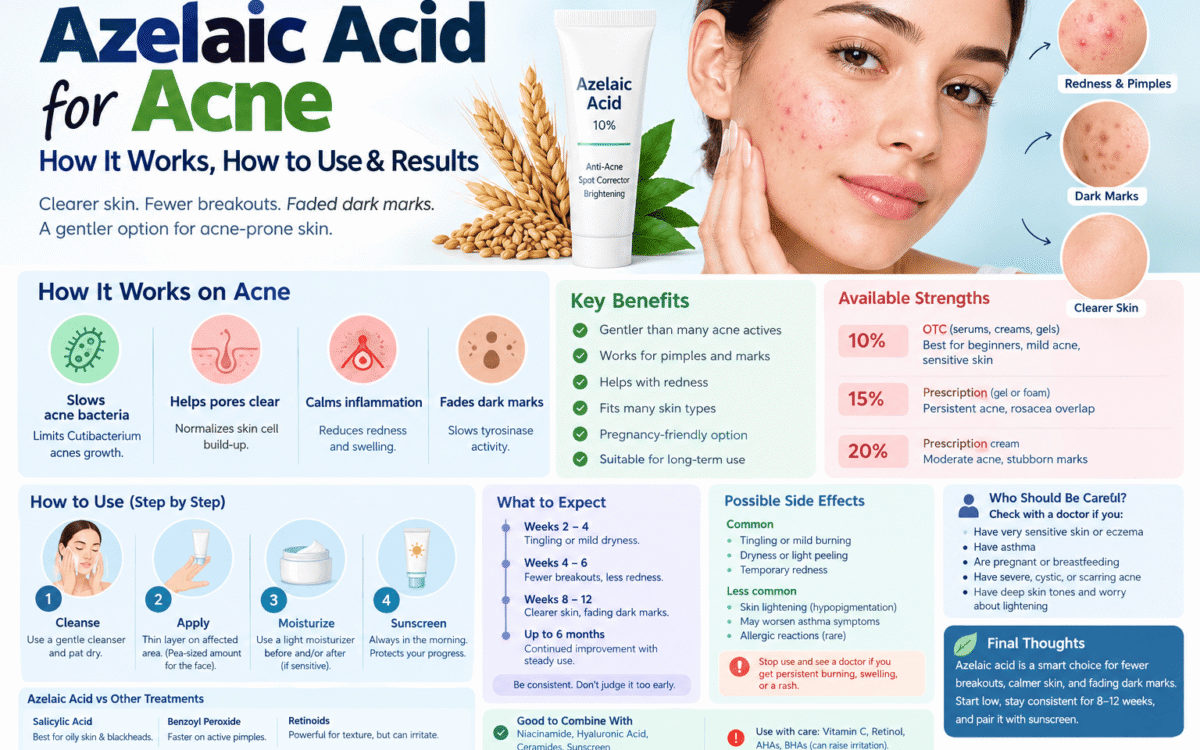
- Slows acne bacteria. It limits the growth of Cutibacterium acnes, the bacteria linked to pimples. Dermatology sources note it does not cause antibiotic-style resistance.
- Helps pores clear. It normalizes how skin cells build up inside the pore, which helps prevent blackheads and whiteheads.
- Calms inflammation. It reduces redness and swelling around pimples.
- Fades dark marks. It slows the enzyme (tyrosinase) that produces excess pigment, so post-acne dark spots fade faster.
Because it works on both pimples and the marks they leave, it is especially useful for people with acne and uneven tone together.
Benefits of Azelaic Acid for Acne-Prone Skin
- Gentler than many acne actives. It usually irritates less than retinoids or high-strength salicylic acid.
- Works for pimples and marks. One ingredient covers breakouts and post-inflammatory hyperpigmentation (PIH).
- Helps with redness. Useful if your acne overlaps with rosacea or a flushed look.
- Fits many skin types. It is commonly recommended for sensitive skin and for deeper skin tones prone to dark marks.
- Pregnancy-friendly option. It is widely considered one of the acne ingredients that can be used during pregnancy, but always confirm with your doctor first.
- Suitable for long-term use. Since resistance is not a concern, it can be kept in a routine for maintenance.
Azelaic Acid Strengths: 10% vs 15% vs 20%
| Strength | Availability | Best for |
|---|---|---|
| 10% | Over the counter (serums, creams, gels) | Beginners, mild acne, mild dark marks, sensitive skin |
| 15% | Usually prescription (gel or foam) | Persistent acne, rosacea overlap |
| 20% | Prescription cream in many countries | Moderate acne and stubborn marks |
Higher strength can work better but can also sting more. If you are new to it, start with 10% and move up under a dermatologist’s guidance if results are slow.
How to Use Azelaic Acid for Acne (Step by Step)
- Cleanse with a gentle, non-stripping cleanser and pat dry.
- Apply a thin layer of azelaic acid to the whole affected area, not just individual pimples. A pea-sized amount covers the face.
- Moisturize on top. If your skin is sensitive, apply a light moisturizer before and after the active (the “sandwich” method).
- Add sunscreen in the morning. Sun exposure darkens acne marks, so SPF protects your progress.
Frequency: Begin once a day, or every other day if your skin is sensitive. If it feels comfortable after two weeks, move to twice daily. Prescription instructions from your doctor always come first.
Tip: Avoid harsh scrubs and strong astringents while you are using it. They add irritation without adding results.
How Long Does Azelaic Acid Take to Work?
Patience matters here. Sources differ slightly, but a realistic picture looks like this:
- Weeks 2 to 4: Skin may feel a little tingly or dry as it adjusts.
- Weeks 4 to 6: Some people notice fewer new breakouts and less redness.
- Weeks 8 to 12: Clearer improvement in pimples and early fading of dark marks.
- Up to 6 months: Dermatology references describe continued gains with steady use, especially for stubborn acne and PIH.
Do not judge it in the first two weeks. Consistency matters more than strength.
Azelaic Acid Purging vs Irritation
Some people break out a bit more early on. This can be “purging,” when the product speeds up turnover and pushes existing clogs to the surface.
| Purging | Irritation | |
|---|---|---|
| Where | Your usual breakout areas | New areas |
| Look | Typical pimples | Rash, burning, itching, swelling |
| Timeline | Settles within a few weeks | Gets worse or does not settle |
If you see persistent burning, swelling, or a rash, stop using it and speak to a doctor.
Azelaic Acid Side Effects
Most people tolerate it well. Common effects include:
- Tingling or mild burning after application
- Dryness or light peeling
- Temporary redness
Less common but important:
- Skin lightening (hypopigmentation) can occur and may be more noticeable on darker skin tones, so watch for uneven patches.
- Reports of asthma symptoms worsening exist. Talk to a doctor if you have asthma and notice changes.
- Do not use it if you are allergic to azelaic acid or to ingredients like propylene glycol.
Azelaic Acid vs Other Acne Treatments
Azelaic acid vs salicylic acid: Salicylic acid is oil-soluble and dives into pores, which suits oily skin and blackheads. Azelaic acid is better for redness, sensitivity, and dark marks. They can work well together, but start with one to avoid overload.
Azelaic acid vs benzoyl peroxide: Benzoyl peroxide is a strong antibacterial and often acts faster on active pimples. Azelaic acid is gentler and also helps pigmentation. Some research suggests benzoyl peroxide may edge it out for pimple reduction, so they are often used together by a dermatologist.
Azelaic acid vs retinoids: Retinoids are powerful for clogged pores and texture but can irritate. Azelaic acid is a milder option and can be paired with a retinoid at different times of day (for example, azelaic acid in the morning, retinoid at night).
What Can You Combine With Azelaic Acid?
- Good matches: niacinamide, hyaluronic acid, ceramide moisturizers, sunscreen
- Use with care: vitamin C, retinol/retinoids, AHAs, BHAs. These can raise irritation, so alternate days or times.
Introduce one new active at a time so you can tell what your skin is reacting to.
Who Should Be Careful?
Check with a doctor or dermatologist first if you:
- Have very sensitive skin or eczema
- Have asthma
- Are pregnant or breastfeeding
- Have severe, cystic, or scarring acne (this usually needs stronger, prescribed treatment)
- Have deep skin tones and are worried about lightening
Frequently Asked Questions
Is azelaic acid good for acne?
Yes, for mild-to-moderate acne it is a well-supported option, especially when redness or dark marks are part of the picture.
Can I use azelaic acid every day?
Yes, most people can use it once or twice daily after a gradual start.
Does azelaic acid fade acne scars?
It helps with dark marks (PIH) left after pimples. It does not remove deep, indented scars, which need professional treatments.
Can I use azelaic acid with niacinamide?
Yes, they are a popular pairing and usually well tolerated.
Is azelaic acid safe in pregnancy?
It is commonly considered a suitable option, but confirm with your doctor.
Morning or night?
Either works. Many people prefer mornings if they use a retinoid at night.
Can teenagers use it?
Yes, many dermatologists recommend it for teen acne. Follow professional advice for prescription strengths.
Final Thoughts
Azelaic acid for acne is a smart choice when you want fewer breakouts, calmer skin, and fading dark marks without a harsh routine. Start low, stay consistent for at least 8 to 12 weeks, and pair it with sunscreen. If your acne is severe or not improving, see a dermatologist for a plan that fits your skin.