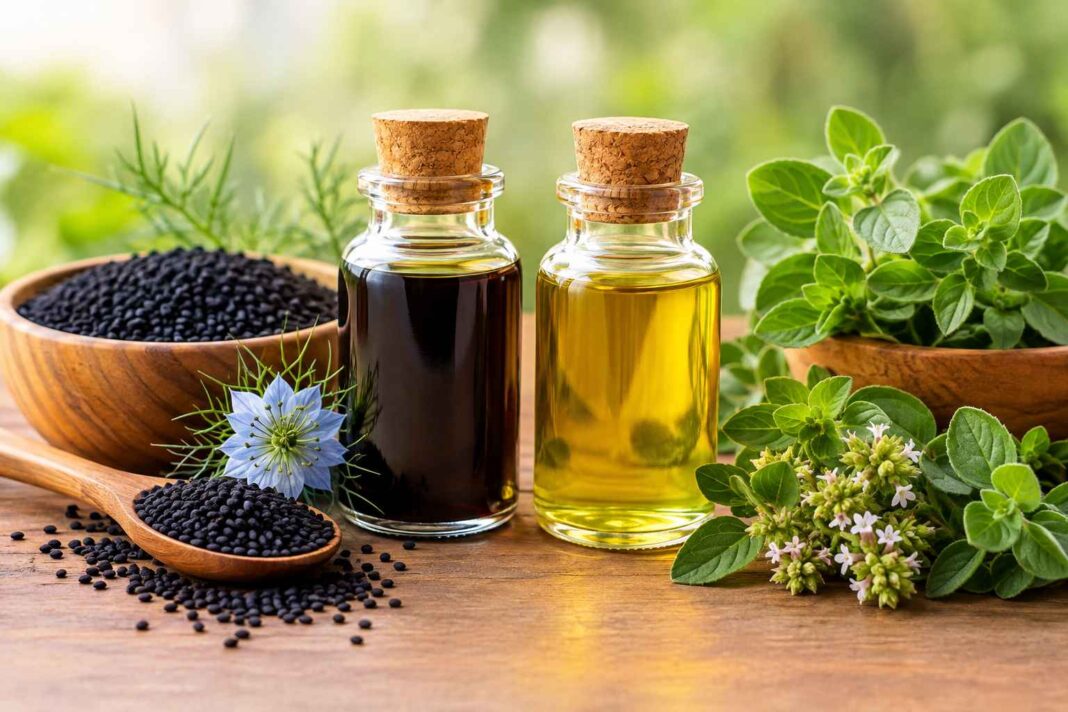
For generations, people have used plants and herbs as part of their everyday health and wellness routines. Among the many plant-based oils available today, black seed oil and oregano oil have attracted considerable attention. Although they come from different plants and contain different compounds, both have a long history of traditional use and have been the subject of scientific research.
Learning how these oils are traditionally used and what current research says about their properties can help people make more informed choices about incorporating them into a healthy lifestyle.
What Is Black Seed Oil?
Black seed oil is extracted from the seeds of Nigella sativa, a flowering plant native to regions of the Middle East, North Africa, and South Asia. The small black seeds have been used for generations in traditional practices and as a culinary ingredient.
One reason black seed oil has attracted attention is the variety of naturally occurring compounds it contains. One of the most widely studied is thymoquinone, along with several fatty acids and other plant compounds. These components contribute to the oil’s distinctive aroma, flavor, and nutritional profile.
Today, black seed oil is available in several forms, including liquid oil and capsules. It is also found in some personal-care products.
Potential Benefits of Black Seed Oil
Researchers have examined black seed oil and its individual compounds for several potential health-related properties. While research is ongoing, a few areas have received particular attention.
Antioxidant Properties
Black seed oil contains compounds that have demonstrated antioxidant activity. Antioxidants help protect cells from oxidative stress associated with unstable molecules called free radicals.
Including foods that naturally contain antioxidant compounds can be part of a balanced diet. However, black seed oil should complement, rather than replace, nutrient-rich foods such as fruits, vegetables, nuts, and whole grains.
Support for a Healthy Inflammatory Response
Inflammation is a normal biological response that helps the body respond to injury and other challenges. Concerns may arise when inflammatory processes remain active for an extended period.
Studies have investigated compounds in black seed, particularly thymoquinone, for their possible effects on inflammatory pathways. Although early findings are interesting, further human research is needed to understand the potential benefits more clearly.
Everyday Wellness
Some people include black seed oil in their daily routines because of its long-standing history in traditional health practices. Its naturally occurring compounds can be considered alongside other healthy habits, including eating a varied diet, staying physically active, getting enough sleep, and managing stress.
What Is Oregano Oil?
Oregano oil is produced from the leaves and flowering parts of oregano plants, particularly species within the Origanum genus. It should not be confused with the dried oregano commonly used to season food, as oregano oil is a much more concentrated product.
Two compounds frequently associated with oregano oil are carvacrol and thymol. Scientists have studied these compounds for their antioxidant and antimicrobial activity, particularly in laboratory research.
Because oregano oil is highly concentrated, it is normally used in much smaller amounts than the culinary herb.
Potential Benefits of Oregano Oil
Oregano oil has received scientific interest because of the active plant compounds it contains. Research has explored several possible applications, although evidence varies depending on the specific use.
Antioxidant Activity
Carvacrol, thymol, and other compounds found in oregano oil have shown antioxidant activity in laboratory studies. Such compounds may help counter oxidative stress, but laboratory findings do not necessarily mean that consuming oregano oil will produce the same effects in humans.
For this reason, oregano oil is best viewed as one component of a broader approach to nutrition and health rather than a standalone solution.
Antimicrobial Properties
Oregano oil has attracted particular interest for its potential antimicrobial properties. Laboratory studies have found that compounds such as carvacrol and thymol can affect certain microorganisms.
This characteristic has led researchers to investigate possible uses in areas such as food preservation and natural product development. However, oregano oil should not be used as a substitute for appropriate medical treatment when an infection is suspected or diagnosed.
Oregano Oil and Digestive Health
Oregano has a long history of culinary and traditional use. Some people use oregano-based products as part of their digestive health routines.
However, evidence for specific digestive benefits from concentrated oregano oil remains limited. More research is needed before firm conclusions can be made about its effectiveness for particular digestive concerns.
Black Seed Oil and Oregano Oil: What Is the Difference?
Although both oils come from plants, they have different origins, compositions, and traditional uses.
Black seed oil comes from Nigella sativa seeds and is particularly associated with thymoquinone and various fatty acids. Oregano oil, on the other hand, comes from oregano plants and is commonly associated with compounds such as carvacrol and thymol.
Their traditional roles are also different. Black seed has a long history in traditional health practices, while oregano has been widely used both as a culinary herb and in herbal preparations.
Rather than considering one oil better than the other, it is more useful to understand their individual characteristics and consider which product, if any, is appropriate for a particular purpose.
How Should These Oils Be Used?
How these oils should be used depends largely on the specific product and its formulation. Black seed oil may be sold as a food oil or dietary supplement, while oregano oil is often available in highly concentrated forms.
Oregano essential oil should not be swallowed directly unless it is specifically formulated and labeled for oral use. Essential oils are concentrated substances and may cause irritation or other adverse effects when used incorrectly.
Always follow the directions provided on the product label. Using a larger amount does not necessarily provide greater benefits and may increase the risk of unwanted effects.
Important Safety Considerations
Plant-based oils can contain biologically active compounds, so they should be used responsibly. Being natural does not automatically mean that a product is suitable for everyone.
People who are pregnant or breastfeeding, taking prescription medications, preparing for surgery, or managing a long-term health condition should speak with a qualified healthcare professional before using concentrated herbal products.
Extra care is also needed when applying oregano oil to the skin. Concentrated oregano oil may cause irritation and is commonly diluted before topical application. A small patch test can help identify possible skin sensitivity, although it cannot guarantee that a reaction will not occur.
Choosing products from reputable manufacturers is another sensible step. Look for clear ingredient information, appropriate usage instructions, and transparent labeling.
A Natural Approach to Everyday Health
Black seed oil and oregano oil are interesting examples of how traditional plant-based practices continue to attract modern scientific attention. Their naturally occurring compounds have been investigated for antioxidant, antimicrobial, and other biological properties.
At the same time, it is important to distinguish between traditional use, laboratory findings, and proven health outcomes in humans. Research on these oils is continuing, and evidence for one potential use does not automatically establish benefits for every health concern.
A healthy lifestyle remains the foundation of overall well-being. Nutritious food, regular physical activity, sufficient sleep, stress management, and appropriate medical care all play important roles.
Final Thoughts
Black seed oil and oregano oil each have a distinctive history and chemical profile. Black seed oil is associated with compounds such as thymoquinone, while oregano oil contains notable components including carvacrol and thymol. Researchers continue to explore how these compounds may interact with the body and where they might have practical applications.
For people interested in plant-based products, learning about their ingredients, traditional uses, potential benefits, and safety considerations is a sensible starting point. With realistic expectations and responsible use, these oils can be considered as part of a broader approach to personal wellness rather than as replacements for established medical care.