Key Programmer Guide 2026: Types, Uses & Best Picks

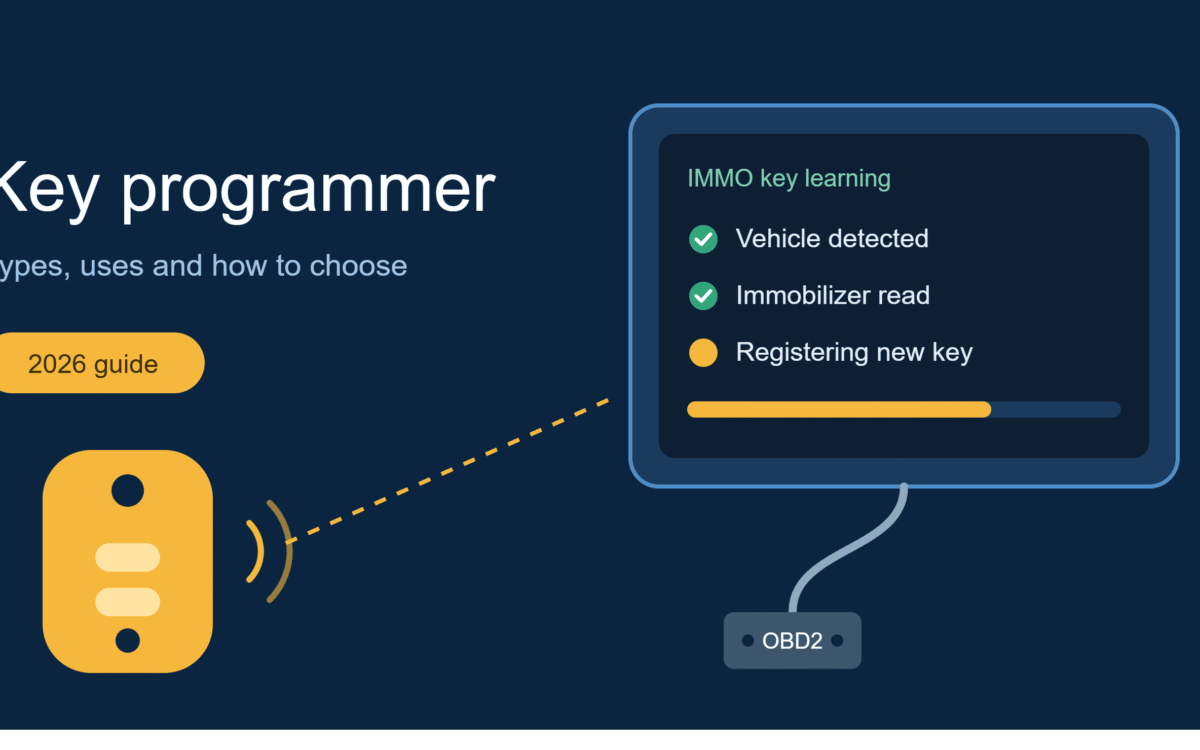
A modern car key is no longer a piece of cut metal. It carries a tiny chip, a radio transmitter, and sometimes a full smart-entry system. If you lose one, or just want a spare, the car will not simply accept a new key. It must be introduced to the vehicle first. The tool that makes this possible is a key programmer.
This guide explains what a key programmer is, how a car key programming machine works, which types exist, and what to check before you buy one.
What Is a Key Programmer?
A key programmer is an electronic device that writes, copies, or registers key data so a car recognizes a new key or remote. In simple terms, it lets the vehicle’s immobilizer system say “yes, this key belongs to me.”
You will also see it called a car key programmer, key programming machine, key fob programming tool, or IMMO tool. The names differ, but the job is the same: connect to the car or the key chip, communicate with the security system, and register a key.
Why Cars Need Key Programming
Since the late 1990s, most vehicles have used an immobilizer. The car will only start if it receives the correct code from a chip inside the key. A key that only looks right but carries no registered chip will turn in the lock yet never start the engine.
A key programmer is needed when you:
- Lose your only key (the “all keys lost” situation)
- Want a spare key or extra remote
- Replace a damaged or worn-out key fob
- Replace an ECU or immobilizer module
- Work as a locksmith or garage that serves many customers
How a Key Programmer Works
The exact steps depend on the make and model, but most jobs follow this pattern:
- Connect. The tool plugs into the car’s OBD2 port, or reads the key chip directly.
- Identify. It detects the vehicle (often through the VIN) and the security system type.
- Authenticate. Some cars need a PIN code, a security calculation, or online access to the manufacturer data.
- Register. The new key’s chip is written or learned by the car’s immobilizer.
- Test. You check that the key starts the car and that remote functions (lock, unlock, trunk) work.
Newer vehicles, especially European brands, add extra security layers, which is why advanced tools often need paid software updates or online tokens.
Main Types of Key Programmers
1. OBD2 key programmers
These plug into the diagnostic port and register keys through the car’s own computer. They are the most common choice for garages and mobile locksmiths.
2. Transponder key programmers
These focus on reading, cloning, or generating the chip inside the key. They suit older and mid-range vehicles.
3. Remote and smart key generators
Used to create or program remote fobs and proximity (keyless-go) keys. Many handheld units fall in this group.
4. All-in-one IMMO and diagnostic tablets
These combine key programming with full diagnostics, ECU functions, and service resets. They cost more but cover the widest range of vehicles.
5. Brand-specific tools
Some devices specialize in one brand family, such as Mercedes, BMW, or Toyota/Lexus, and handle difficult jobs that general tools cannot.
Key Features to Compare Before Buying
Vehicle coverage. Check the supported makes, models, and years against the cars you really work on. Broad claims like “all cars” are marketing, so always verify your specific vehicles.
All-keys-lost support. This is the hardest job. If you do emergency lockout work, confirm the tool supports it for your target brands.
Update policy. New car models need software updates. Find out whether updates are free, time-limited, or subscription-based.
Tokens and hidden costs. Some tools charge per operation or require tokens for certain brands. Ask what is included.
Interface and language. A tablet-style Android interface with guided steps shortens learning time.
Adapters and accessories. Many European or older vehicles need extra cables or adapters. Factor that into the budget.
Support and warranty. A seller who answers technical questions is worth paying a little more for.
Which Key Programmer Is Right for You?
| If you are… | Look for |
|---|---|
| A car owner wanting a spare key | Usually cheaper to use a licensed locksmith than to buy a tool |
| A DIY enthusiast with older cars | A basic OBD2 or transponder key programmer |
| A mobile locksmith | A portable tablet-based programmer with strong all-keys-lost support |
| A garage or workshop | An all-in-one IMMO and diagnostic tool |
| A luxury-car specialist | A brand-specific programmer, plus a general tool as backup |
Prices vary widely. Basic remote generators can cost under a couple of hundred dollars, while professional tablets commonly run from several hundred to a few thousand dollars, depending on brand, software, and included adapters.
Popular Brands Worth Knowing
The market includes well-known names such as Autel, XTOOL, Xhorse (VVDI), Launch, OBDSTAR, Lonsdor, CGDI, and KeyDIY. Each has strengths: some lead in diagnostics, others in remote generation or specific car brands. Compare current coverage lists on the manufacturer’s site, because models and software change often.
Tips for Using a Key Programmer Safely
- Keep the car battery fully charged or use a power supply during programming. A voltage drop can interrupt the process.
- Confirm the exact vehicle and key type before starting.
- Never interrupt a procedure once it is running.
- Back up original data when the tool allows it.
- Read the manufacturer’s procedure for your vehicle first.
Legal and Ethical Use
Key programmers are legitimate professional tools, but they should only be used on vehicles you own or are authorized to service. Reputable locksmiths ask for proof of ownership, such as registration or ID, before making a key. Using these tools to access someone else’s vehicle is illegal in most countries.
Common Mistakes Buyers Make
- Buying only on price and ignoring coverage
- Not checking update and token costs
- Choosing a basic tool for modern European cars
- Skipping adapters and accessories in the budget
- Buying from sellers with no after-sales support
Frequently Asked Questions
What does a key programmer do?
It registers a new key or remote with a vehicle’s immobilizer so the car accepts it and starts.
Can I program a car key myself?
Some older cars allow a manual on-board procedure. Most modern vehicles need a key programmer or a professional locksmith.
Is a key programmer the same as an OBD2 scanner?
No. A standard scanner reads fault codes. A key programmer can communicate with the immobilizer and write key data. Many professional tablets do both.
Can a key programmer handle all keys lost?
Many professional models can, but support depends on the brand and model year. Check the compatibility list first.
How long does key programming take?
Simple jobs can take minutes. Complex or all-keys-lost jobs may take longer.
Do I need to pay for updates?
Often yes, after an initial free period. Always confirm before buying.
Is it better to buy a tool or hire a locksmith?
For a single spare key, a locksmith is usually more economical. A tool pays off if you program keys regularly.
Final Thoughts
A good key programmer saves time and money, but only if it matches your vehicles and workload. Start with the cars you handle most, check real coverage lists, account for updates and adapters, and buy from a seller who offers support. Do that, and you will choose a tool that keeps working as car security evolves.