How to Help Your Child Get Ready for the Grade 6 EQAO Math Test

Sometime around March, a lot of Grade 6 classrooms in Ontario start to feel a little different. Teachers mention “the EQAO” more often. Practice booklets come home. And some kids, especially the ones who already find math stressful, start asking questions like “What if I fail?” at bedtime.
If that is happening in your house, take a breath. The Grade 6 assessment matters, but probably not in the way your child imagines. This guide explains what it is, what it measures, and how you can help at home without turning the kitchen table into a battleground.
What the EQAO assessment actually is
EQAO stands for the Education Quality and Accountability Office. It is an independent provincial agency that checks how well Ontario students are meeting curriculum expectations. Students write assessments in Grade 3 and Grade 6 (reading, writing and math), in Grade 9 (math), and the literacy test in Grade 10.
The key point for parents: the Grade 6 results are mainly a system check. They help schools and boards see where students are strong and where teaching needs attention. They do not decide whether your child moves on to Grade 7, and they are not part of report card marks.
That said, your child does receive an individual report, and it can be a useful snapshot of how they handle math independently, without a teacher nearby to help.
What gets tested in math
The assessment follows the Ontario elementary math curriculum, which was updated in 2020. Questions are drawn from across the strands:
Also read: What Is an Invisible Cooktop and How Does It Work?
- Number: fractions, decimals, percents, ratios and operations with whole numbers.
- Algebra: patterns, variables, simple equations and, since the 2020 update, coding concepts.
- Data: reading graphs, finding the mean and talking about probability.
- Spatial sense: geometry, measurement, area, volume and transformations.
- Financial literacy: budgeting, simple interest ideas and money decisions.
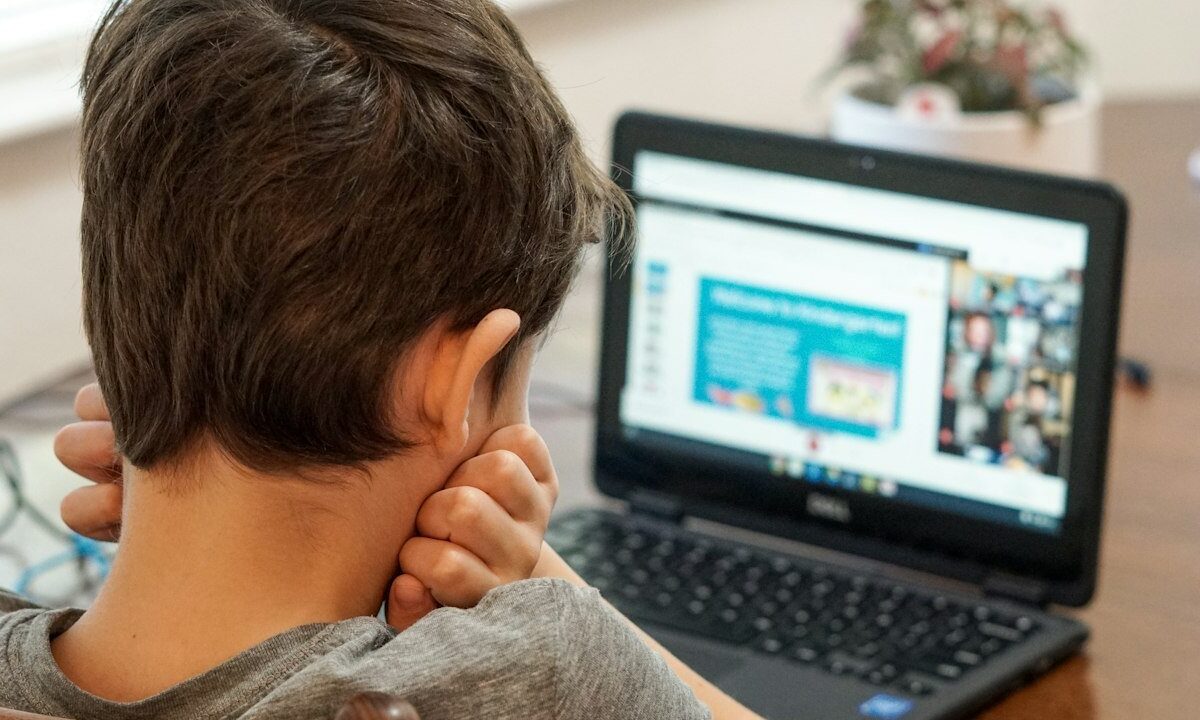
The assessment is now done on a computer, which surprises some families. Students answer a mix of multiple-choice and open-response style questions on screen, so being comfortable typing answers and using on-screen tools helps more than many parents expect.
How results are reported
Results are reported in four achievement levels, the same scale used on Ontario report cards. Level 3 is the provincial standard. Level 4 means the student is working above it. Levels 1 and 2 mean there are gaps to work on.
When the report arrives, look past the number. The useful part is the pattern. A child who is at Level 3 overall but struggled with fractions has a clear next step. That is far more helpful than simply knowing they “passed.”
Signs your child might need extra support
Most kids feel a bit nervous before a big assessment, and that is normal. Watch for signs that suggest something more:
- They avoid math homework completely, or it routinely ends in tears.
- They can do a skill one day but forget it completely the next week.
- They rely on counting fingers for basic multiplication facts in Grade 6.
- Word problems stop them cold, even when the math inside is easy for them.
- Their report card comments mention “with assistance” again and again.
None of these are emergencies. They are just signals that some foundation skills from Grades 3 to 5 did not fully settle, and those gaps tend to grow if nobody addresses them before Grade 7 and 8.
Five practical things to do at home
You do not need to be a math expert to help. Small, regular habits beat a stressful cram session every time.
Also read: Twenty Years of LA Home Building
- Keep it short. Fifteen focused minutes, three or four times a week, does more than a two-hour weekend session.
- Talk through problems out loud. Ask “How did you get that?” even when the answer is right. Explaining builds the reasoning EQAO questions look for.
- Use real life. Grocery receipts, sale percentages, recipe fractions and hockey stats are all Grade 6 math in disguise.
- Practise on a screen. Since the assessment is digital, some practice with online questions takes away the surprise on the day.
- Watch your own language. “I was never good at math either” is well meant but it gives kids permission to give up.
When a tutor makes sense
Sometimes home support is not enough, often because the gap goes back a couple of grades and nobody quite knows where it started. That is where one-to-one help earns its keep. A good tutor can spot in one or two sessions that a Grade 6 student’s trouble with ratios actually comes from shaky multiplication facts, and fix the real problem.
Many Ontario families now choose an online math tutor because sessions fit around hockey practice, music lessons and long winter commutes. Working on a screen also happens to match the format of the assessment itself.
If you want a focused plan for the assessment, look for EQAO test preparation built around the current Ontario curriculum rather than generic worksheets. Families in other provinces can find support matched to their own provincial curriculum, since BC, Alberta and Quebec all do things a little differently.
Looking past Grade 6
The real value of the Grade 6 assessment is timing. It arrives just before the jump to Grades 7 and 8, where algebra becomes more abstract, and then Grade 9, where the de-streamed math course expects every student to be ready for the same material. Fixing gaps now is far easier than fixing them in high school.
It also helps to remember that math confidence spills over into other subjects. Science, in particular, leans heavily on measurement, data and graphing, so many families who start with math later add an online science tutor as well.
Also read: Clinicient Insight Go: Features, Benefits, and Who Should Use It
A calm plan for the next few months
Start with a quick conversation with your child’s teacher about which strands need attention. Build a short, regular practice routine at home. If gaps keep showing up, get some outside help early rather than in May.
If you are thinking about one-on-one tutoring, compare a few options, ask whether a trial lesson is available, and watch how your child responds before committing to anything.
Most of all, keep the message at home simple: this assessment is a chance to show what you know, and anything you do not know yet is just the next thing to learn.