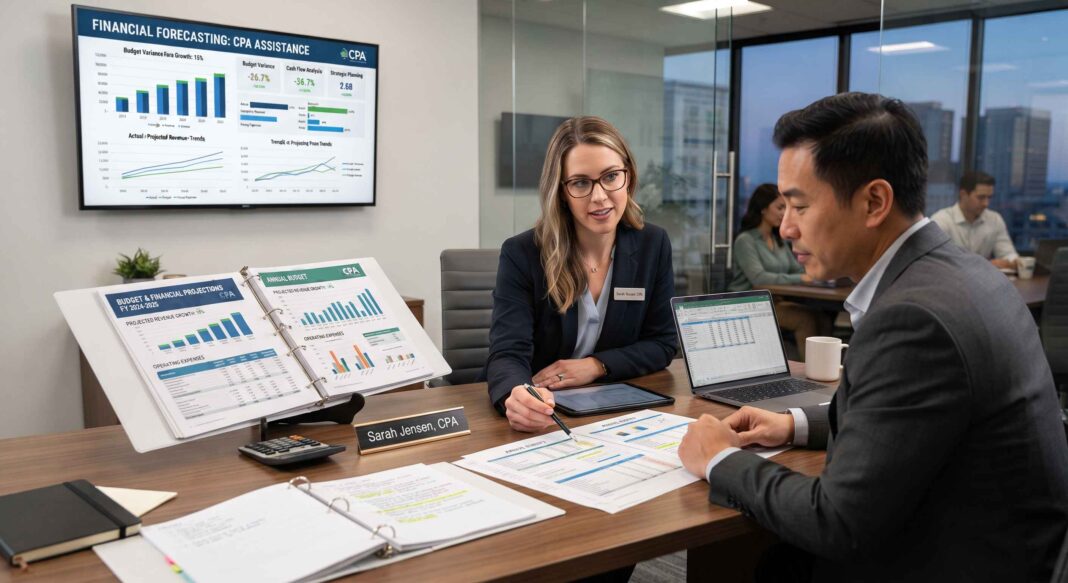
You may be bringing in money and still feel like you are guessing every month. Bills land, payroll is due, equipment needs replacing, and one slow quarter can throw off everything you thought was under control. That stress is real. Budgeting sounds simple until you have to base real decisions on it, and financial projections can feel even worse when you are trying to predict sales, costs, and cash flow without much room for error. If tax problems are adding to the pressure, IRS tax relief in Texarkana may be part of the solution.
A Certified Public Accountant helps turn that uncertainty into a plan you can use. Not a perfect crystal ball, not a pile of spreadsheets you never open again, but a working system for tracking income, controlling spending, and forecasting what comes next. How CPAs assist with budgeting and financial projections comes down to structure, accuracy, and judgment. They help you see what your numbers are actually saying before a problem gets expensive.
Budgeting problems usually start before the numbers hit the page
Most budgeting trouble is not caused by laziness. It starts when the business is moving fast and the financial side gets built in pieces. One person is watching revenue, someone else is approving expenses, and nobody is tying the full picture together. You might have a budget that looked fine in January and made no sense by April.
That gap matters because a budget is not just a spending limit. It is a decision tool. If your labor costs rise faster than sales, if your pricing no longer covers overhead, or if seasonal swings keep draining cash reserves, your budget should catch that early. A CPA reviews the assumptions behind the numbers, not just the math itself. That is where many owners get stuck. The spreadsheet adds up, but the assumptions are weak.
Financial projections create another layer of pressure. If you are applying for funding, planning a hire, opening a second location, or launching a new service, you need more than hope. You need projected income statements, cash flow forecasts, and expense estimates that match reality. Lenders and investors can usually spot numbers that were thrown together in a rush. So can you, once the month closes and the actual results do not line up.
This is where CPA budgeting and forecasting support helps. A CPA can test your assumptions against past performance, industry patterns, debt obligations, tax exposure, and working capital needs. If you expect a sales jump, they ask what is driving it. If inventory is growing, they look at whether that ties up too much cash. If a planned expansion looks profitable on paper but strains liquidity, they flag it before you commit.
Certified public accountant support improves budgeting accuracy
A budget built without clean records usually turns into wishful thinking. A CPA starts by organizing the numbers so your plan reflects actual operations. That includes revenue trends, fixed and variable expenses, tax payments, payroll timing, debt service, and owner draws. Once those pieces are clear, the budget becomes useful instead of decorative.
Projections also need context. A retail business may have holiday spikes. A contractor may have uneven receivables. A service firm may look profitable but struggle with delayed client payments. A CPA helps map those patterns so your forecast reflects timing, not just totals. That distinction matters because businesses often fail from cash shortages, not lack of profit.
If you are still shaping the business itself, these planning tools can help. The SBA offers guidance on planning your business, and Penn State Extension has a useful resource on developing a business plan. For people trying to improve money management habits at the same time, the Consumer Financial Protection Bureau provides practical tools through Your Money, Your Goals.
DIY budgeting and CPA guidance produce very different results
| Approach | What It Usually Looks Like | Common Risk | Likely Benefit |
| DIY budget | Basic spreadsheet built from bank balance and rough monthly estimates | Missed taxes, uneven cash flow, undercounted overhead | Low cost and fast to start |
| DIY projections | Revenue guesses based on best case sales goals | Overhiring, overspending, weak loan applications | Helps create a first draft |
| CPA reviewed budget | Budget tied to accounting records, seasonality, and actual expense behavior | Fewer blind spots, though still dependent on changing market conditions | Better control over spending and timing |
| CPA built projections | Forecasts based on historical data, assumptions, taxes, debt, and cash needs | Requires time and professional fees | Stronger planning, funding readiness, and decision support |
The difference is often not complexity. It is discipline. A business owner doing everything alone may know the operation well but still miss what the numbers imply. A CPA brings distance, technical skill, and pattern recognition. That is why financial planning with a CPA can change the quality of your decisions, especially when margins are tight.
Clear financial projections help you make decisions earlier
Good projections do not exist to impress anyone. They help you act sooner. If a forecast shows a cash dip in three months, you can delay a purchase, tighten collections, adjust staffing, or arrange financing before the pressure hits. If it shows stronger than expected revenue, you can invest with more confidence instead of reacting late.
That kind of planning also reduces the emotional drain. When you do not know whether you can afford a hire or survive a slow season, every decision feels heavier than it should. A root level accounting service often starts with recordkeeping, but the deeper value is clarity. You stop making every move in the dark.
Three steps you can take right now
Pull together the last 12 months of financial data. Gather profit and loss statements, balance sheets, bank records, payroll reports, loan details, and tax payments. If the records are messy, that tells you something useful right away. A budget cannot be stronger than the information behind it.
List the decisions you need your numbers to support. Hiring, pricing, expansion, inventory, debt payoff, and owner compensation all require different planning details. When you know the decisions in front of you, a CPA can build projections that answer real business questions instead of producing generic reports.
Review assumptions before you trust any forecast. Ask what sales growth is based on, whether expenses reflect current costs, how late payments affect cash flow, and where taxes fit into the plan. This one step catches many weak projections before they mislead you.
Better budgeting starts with better visibility
You do not need perfect numbers to get started. You need honest ones. A Certified Public Accountant helps you build a budget you can actually use and projections you can rely on when the stakes are high. That relief matters. When the numbers make sense, the next step usually does too.
If you are tired of guessing, reach out for professional CPA support and get a budget and forecast that match the business you are really running.