There is a moment in almost every sunglass fitting that plays out the same way. A shopper reaches for something rounded and familiar, tries it on, shrugs, and puts it back. Then, almost as an afterthought, they pick up a pair with straight brow lines and clean corners, and the reflection shifts. The face looks more defined. The expression reads as deliberate rather than accidental. Nothing about the person changed, only the geometry resting on the nose. That reaction is worth unpacking, because angular eyewear carries a reputation it does not entirely deserve. It gets filed away as bold, architectural, suited only to soft features or to people with a taste for fashion risk. In practice, the shape is one of the most adaptable in eyewear, and the reasons have less to do with passing trends than with how human vision reads line, edge, and proportion. Once that logic makes sense, shopping stops being a guessing game. You can walk into a store, or scroll through a collection online, and know within a few seconds whether a frame is working for your face or fighting it.
What Straight Lines Actually Do to a Face
Faces are made almost entirely of curves. Cheeks, jaws, brows, and lips are all soft transitions, which is why the eye latches onto any straight edge placed among them. A horizontal brow line across the upper face creates a visual reference point, and everything around it is suddenly measured against that line. Cheekbones look higher because there is a level edge above them. A jaw looks more decisive because the frame has already introduced the idea of an angle.
This is the quiet appeal of square sunglasses: they contribute structure the face does not already have, rather than repeating something it does. Rounded frames tend to echo existing curves, which can be lovely but rarely changes the impression of a face. Angular frames introduce contrast, and contrast is what the eye registers as intentional styling.
There is a second effect that goes unnoticed. A frame with a flat top edge sits parallel to the brow, and parallel lines read as ordered and calm. That is part of why angular eyewear photographs so consistently well and why it looks composed in a video call. The alignment does the work. It also explains why the same shape reads as sharp on one person and softly retro on another. Corner radius, depth, and thickness change everything, while the underlying geometry stays the same.
Matching Angles to Your Own Proportions
The old advice was mechanical: opposite shapes only, angular frames for round faces, and nothing else. It is a useful starting point and a terrible stopping point. A rounder or fuller face does gain definition from straight edges, particularly when the frame is wider than it is deep, since that width draws the eye horizontally and lengthens the look of the face. But the shape is far from limited to that one scenario.
On a longer or more oval face, the same geometry works if you choose a deeper frame with softer corners. Depth breaks up vertical length, and a gently rounded corner keeps the effect from feeling severe. On a heart-shaped face, where the forehead is broader than the chin, a frame with the widest point sitting slightly below the brow balances the two halves. Angular styling helps here because the flat lower edge visually broadens the mid-face.
Even a naturally angular face can wear the shape, which surprises people. The trick is scale rather than avoidance. A frame that echoes the jaw at roughly the same width tends to compete with it, while a slightly narrower frame with a thinner rim complements the bone structure instead. The practical test is simple. Look for the frame’s outer edge to fall close to the widest part of your face, not past it, and check that the top line follows your brow rather than cutting through it or floating well above.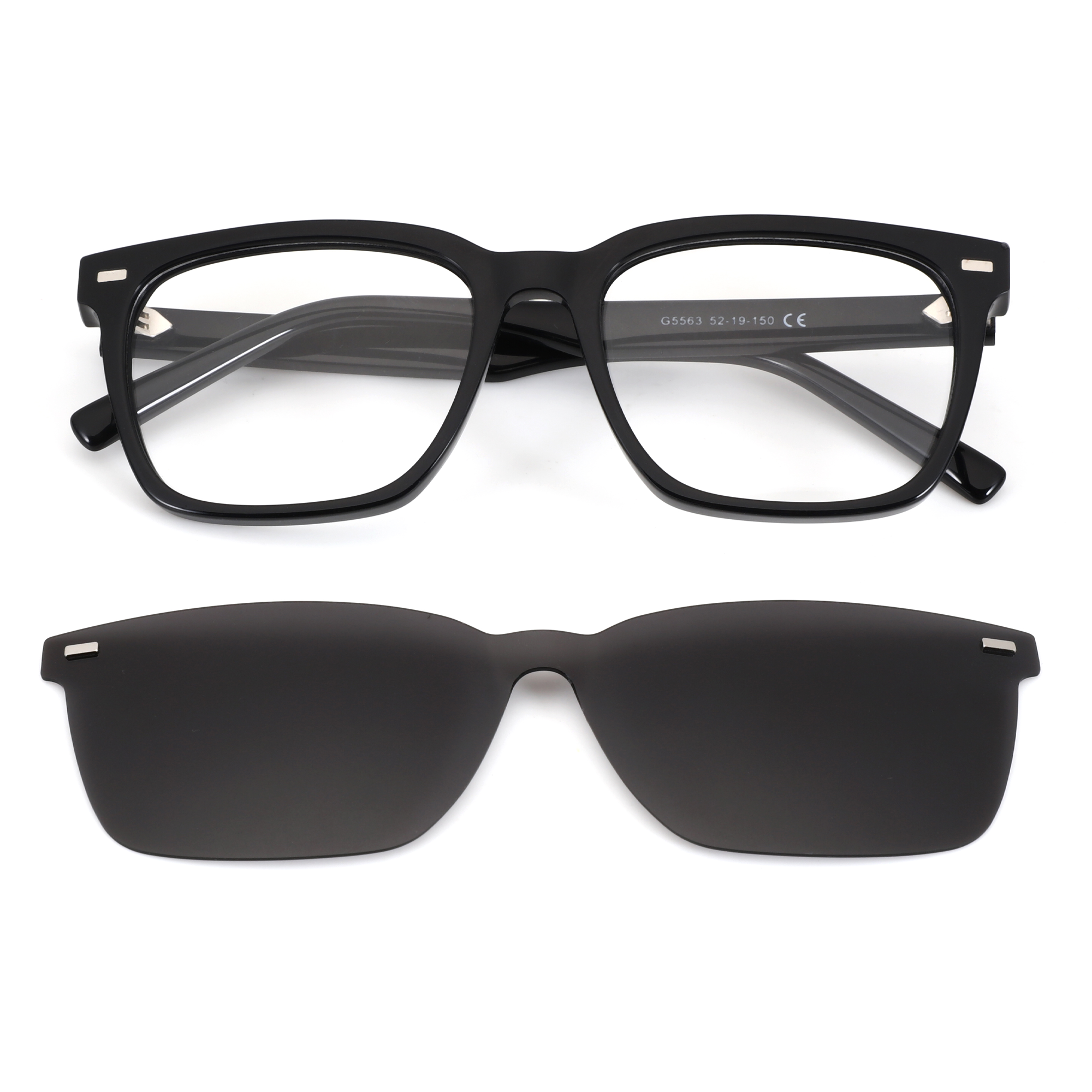
Comparing two or three variations side by side is more instructive than trying one pair alone. Small differences in corner rounding and rim thickness are hard to judge in isolation, but obvious the moment you have something to measure against. Brands with deep collections in a single silhouette, ZENOTTIC among them, make that comparison easier simply because the variations sit next to each other.
The Case for Treating the Shape as a Default
Angular eyewear is often positioned as a statement, which undersells its usefulness. In practice it behaves more like a neutral. The reason is that straight lines are already present in most of what people wear and work around: collars, lapels, notebooks, laptop screens, door frames, and screens of every size. A frame built from the same visual vocabulary blends into that environment instead of interrupting it.
This is why the shape survives wardrobe changes so well. A tailored jacket and an angular frame share a logic of clean edges, and they read as one deliberate choice rather than two competing ones. Casual outfits benefit differently. Relaxed clothing tends toward soft, unstructured shapes, and a defined frame introduces just enough precision to keep the whole look from going shapeless. The frame becomes a small anchor.
Practicality supports the same conclusion. A wider frame with a flat upper edge covers more of the eye area and blocks light entering from above and to the side, which matters for driving, walking a city at low sun, or spending an afternoon near water. The coverage is a byproduct of the geometry rather than a feature anyone designed in deliberately, but it is real, and it is one reason the shape has stayed in continuous use for decades rather than cycling in and out.
Longevity is the part shoppers underestimate most. Trend-driven silhouettes tend to date themselves precisely because they are distinctive, and a frame tied to one particular season announces that season every time you wear it. Angular frames avoid that trap because the shape has appeared in enough eras, and in enough registers, that it no longer belongs to any single one. The same geometry has read as studious, as cinematic, as minimal, and as playful depending on material and proportion. A frame that can be read several ways will not look stranded when the surrounding fashion shifts.
There is also a straightforward argument about decision fatigue. If you own one pair that works with tailoring, travel, and weekends, you stop thinking about the choice altogether. Shape versatility is what makes that possible, and it is a better reason to buy than any seasonal recommendation.
Fit Details That Outrank Shape
Once the silhouette is decided, comfort comes down to details that have nothing to do with style, and getting these wrong ruins an otherwise perfect pair. A few are worth checking carefully before committing:
- Bridge fit: the frame should rest without pinching, and without leaving red marks after twenty minutes of wear.
- Temple length: arms should follow the side of the head and curve behind the ear, not press against the temple.
- Lash clearance: deeper frames sit closer to the face, so check that lashes do not touch the lens.
- Weight balance: the pair should feel evenly supported rather than nose-heavy when you look down.
Each of these is fixable or avoidable, and each one determines whether a pair gets worn daily or ends up abandoned in a drawer. Angular frames are slightly more sensitive to bridge fit than rounded ones, because a level top line makes any tilt immediately visible. If a frame looks subtly crooked in photographs, the bridge or the temple adjustment is usually the culprit, not the frame design.
Keeping the Shape Looking Intentional
The visual advantage of straight lines depends on those lines staying straight. A frame that has been bent slightly out of alignment loses the parallel relationship with the brow, and the whole effect quietly collapses. Storing the pair in a case rather than face down on a table protects the corners, which take the most stress. Cleaning with a microfiber cloth and a little water preserves the lens surface, while paper towels and shirt hems leave fine scratches that scatter light.
Once or twice a year, it is worth having the fit checked and adjusted by an optician, even for non-prescription pairs. The adjustment takes minutes and restores the alignment that makes the shape work in the first place. Small maintenance, long payoff.
Geometry That Works Harder Than It Looks
The answer to the opening question comes down to contrast. Faces are built from curves, and a frame built from straight lines gives the eye something to measure against, which is why angular eyewear brings definition to features that are soft, balance to features that are uneven, and precision to features that are already strong. The shape adapts because the variables are adjustable. Corner radius, depth, width, and rim thickness can be tuned to almost any proportion while the underlying geometry stays intact. That flexibility is what turns a supposed statement piece into something closer to a daily default, at home with tailoring and with a weekend shirt alike. The practical takeaway is to stop shopping by shape category and start shopping by proportion. Check where the outer edge falls relative to your widest point, check that the top line follows your brow, and then confirm the bridge and temple fit before anything else. Get those right, and the frame will do the rest quietly, for years.