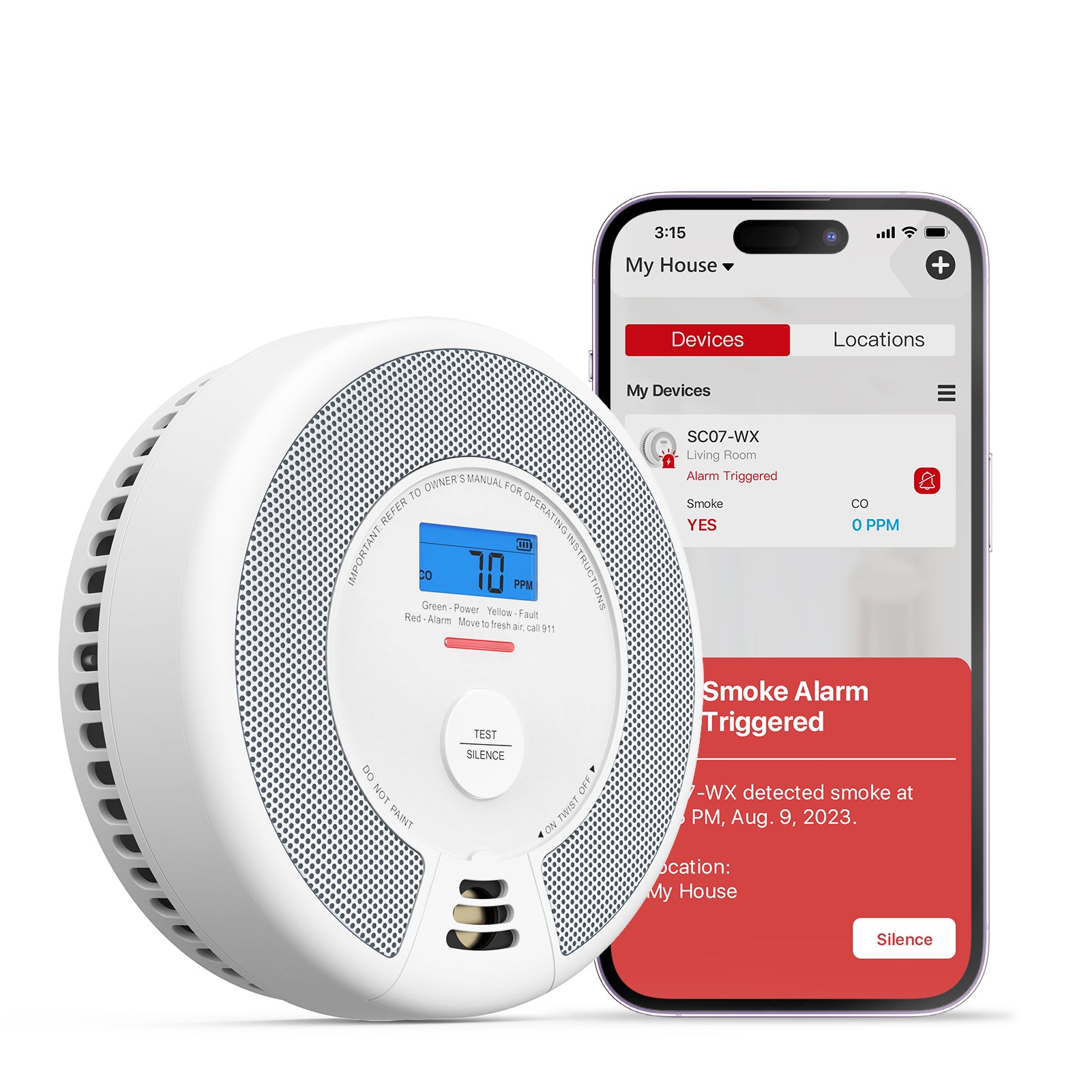
Every parent knows that sinking feeling — the smoke alarm blares at 2 a.m., only to discover it was triggered by a piece of burnt toast. But what if the next alarm is real? Home safety is one of the most pressing concerns for families today, and the reliability of your fire detection system can mean the difference between a close call and a tragedy.
Traditional smoke alarms have long frustrated homeowners with false alerts, dead batteries, and inconsistent detection. This unreliability breeds a dangerous habit: ignoring the alarm or, worse, disabling it entirely. For parents with young children, that risk is simply unacceptable.
Dual sensor alarms offer a smarter, more dependable answer. By combining two distinct detection technologies into a single device, they catch both slow-burning smoldering fires and fast-flaming blazes with greater accuracy. Paired with long-lasting battery power and wireless interconnectivity, these alarms are engineered for modern family life — delivering comprehensive protection without constant upkeep. In the sections ahead, we’ll explore exactly how dual sensor alarms work, what features set them apart, and how to choose the right system to keep every corner of your home — and everyone in it — genuinely safe.
Understanding Dual Sensor Alarms: The Ultimate Safety Solution for Modern Homes
A dual sensor alarm combines two fundamentally different detection technologies into one device: photoelectric sensors and ionization sensors. Each works differently, and that difference is precisely what makes the combination so powerful. Photoelectric sensors use a light beam inside the detection chamber — when smoke particles scatter that beam, the alarm triggers. This method excels at detecting slow, smoldering fires that produce large smoke particles before open flames ever appear. Ionization sensors, by contrast, use a small electrical current disrupted by combustion particles, making them highly responsive to fast-flaming fires with smaller, less visible particles.
Relying on just one sensor type leaves a critical gap. A kitchen grease fire can escalate in seconds — an ionization sensor catches it early. A mattress fire smoldering under the surface for hours before igniting? That’s where photoelectric detection earns its place. For families, this isn’t a technical detail; it’s the difference between an alarm that wakes everyone in time and one that responds too late.
Parents with young children face a particularly high-stakes scenario. Children sleep deeply and may not rouse easily to distant or delayed alerts. A dual sensor alarm dramatically shortens detection time across both fire types, giving every family member more critical seconds to reach safety. By integrating both technologies into a single unit, these alarms eliminate the guesswork — and the vulnerability — of single-sensor systems, delivering genuinely comprehensive protection for the modern home.
Key Features That Enhance Reliability: Battery Operation and Long-Lasting Power
Benefits of a Battery Operated Smoke Alarm
A battery operated smoke alarm removes one of the most common obstacles to proper home protection: the need for electrical wiring. Without hardwiring requirements, these alarms can be placed exactly where protection is needed most — inside closets, in finished attics, or in older homes where retrofitting wired systems would be costly and disruptive. More critically, battery-powered units continue functioning during power outages, precisely when emergency response systems may already be strained. For parents managing busy households, this plug-and-protect simplicity means safety doesn’t depend on a contractor’s schedule or a home’s electrical layout.
Why a 5-Year Replaceable Battery Matters
The single most common reason smoke alarms fail is a dead or missing battery — often removed after one too many false alarms and never replaced. A 5-year replaceable battery directly solves this problem by dramatically reducing how often maintenance is required. Rather than swapping batteries annually across every alarm in the house, families can set a calendar reminder once every five years and trust their system in between. This extended lifespan also lowers long-term costs and eliminates the frustrating low-battery chirp that typically strikes at inconvenient hours. For practical battery management, note the installation date on each unit with a marker, and replace all alarms’ batteries in the same cycle to stay consistently protected without guesswork.
Expanding Safety with Wireless Coverage for Seamless Protection
A smoke alarm that only alerts the room it’s in isn’t truly protecting your home — it’s protecting a single corner of it. Wireless coverage changes that equation entirely. When alarms are wirelessly interconnected, a trigger in one unit instantly activates every alarm throughout the house simultaneously. A fire starting in the basement at night doesn’t just sound a distant alarm that sleeping children on the second floor might never hear — it sets off every device in the network, ensuring the alert reaches every room within seconds.
For larger homes and multi-story buildings, this capability is especially critical. Sound doesn’t travel reliably through walls, floors, and closed doors. A standalone alarm in the garage provides zero warning to someone sleeping in a far bedroom. Wireless interconnection eliminates these dead zones without requiring any additional wiring or complex installation — units communicate through radio frequency signals, making setup straightforward even for non-technical homeowners. Brands like X-Sense have built this wireless interconnectivity directly into their dual sensor lineup, allowing homeowners to expand coverage room by room without any rewiring.
For parents, the value is immediate and personal. Children’s bedrooms are often the furthest from common fire-risk areas like kitchens and utility rooms. A wirelessly connected system ensures that the moment any sensor detects danger, the alarm in your child’s room activates at full volume — no delay, no signal gap. Combined with dual sensor detection technology that catches fires earlier, wireless coverage compresses the window between detection and evacuation, giving every family member the maximum time they need to get out safely.
Addressing Parents’ Safety Concerns: Solutions for Minimal Maintenance and Child Safety
For parents, a smoke alarm isn’t just a device — it’s a promise that their family will be warned in time. Yet that promise breaks down when alarms cry wolf over steam from a shower or toast left too long, training everyone in the house to tune out the sound. Dual sensor alarms significantly reduce nuisance alerts by applying the right detection method to the right type of threat, rather than triggering indiscriminately. The result is an alarm your family learns to take seriously, not ignore.
Step-by-Step Solutions for Reliable, Low-Maintenance Alarms
Start by selecting alarms with a 5-year battery and a built-in end-of-life indicator, so you’re never caught off guard by a failing unit. Set a biannual test reminder on your phone — press the test button on each alarm every six months to confirm responsiveness. If your alarms support smart home integration, connect them to receive mobile notifications even when you’re away from home. Finally, log each alarm’s installation date and plan a full system replacement every ten years, which is the standard lifespan recommended by fire safety authorities.
Ensuring Child Safety with Advanced Alarm Features
Children’s rooms deserve their own dedicated alarm — never rely on sound traveling from a hallway unit through a closed door. When choosing alarms for kids’ spaces, look for models with integrated escape lights that activate during an alert, helping disoriented children navigate to safety in the dark. Some alarms also offer voice alert features that announce “Fire! Get out!” rather than just beeping — research consistently shows children respond faster to a spoken voice than to a tone alone. Pair these features with dual sensor technology, which detects fires earlier across both smoldering and flaming scenarios, and you’ve built a system that gives your children the maximum possible window to wake up, orient themselves, and evacuate safely.
Practical Steps to Choose and Install Your Dual Sensor Alarm System
Choosing the right dual sensor alarm starts with an honest look at your home’s layout. Walk through each floor and identify every area that needs coverage: bedrooms, hallways, the kitchen, basement, and attached garage. Fire safety guidelines recommend at least one alarm on every level, inside each bedroom, and outside sleeping areas. For multi-story homes, that typically means a minimum of six to eight units — map this out before purchasing so you buy the right quantity upfront.
When comparing models, prioritize three features: a 5-year replaceable battery to minimize upkeep, verified wireless interconnectivity so all units trigger simultaneously, and a built-in end-of-life indicator that signals when the device needs full replacement. X-Sense dual sensor alarms, for example, incorporate all three of these features alongside voice alert capability, making them a practical reference point when evaluating what a well-rounded system should include. Once you have your units, placement matters as much as selection. Mount alarms on the ceiling or high on a wall — smoke rises, so positioning within 12 inches of the ceiling captures it fastest. Keep units at least 10 feet from cooking appliances to reduce nuisance triggers without sacrificing kitchen coverage.
After installation, run a full system test by pressing the test button on each unit and confirming every interconnected alarm responds. From there, maintain a simple checklist: test all alarms every six months, note each unit’s installation date, and schedule full system replacement at the ten-year mark. A well-chosen, correctly installed dual sensor system requires minimal effort to maintain — and delivers maximum protection in return.
Protecting Your Family Starts with the Right Alarm System
Home safety is too important to leave to chance — or to an alarm system that might fail you at the worst possible moment. Dual sensor alarms address the core weaknesses of traditional fire detection by combining photoelectric and ionization technologies into a single, reliable device. That combination means faster detection across both smoldering and fast-flaming fires, giving every family member more time to respond when seconds genuinely matter.
The supporting features reinforce that reliability at every level. Battery operation removes wiring barriers and keeps protection running through power outages. A 5-year replaceable battery slashes maintenance demands, so your system stays active without constant attention. Wireless interconnectivity ensures a fire detected anywhere in the home triggers every alarm simultaneously — no dead zones, no sleeping children left unwarned. And advanced features like voice alerts and escape lighting address the specific vulnerabilities children face during nighttime emergencies.
Peace of mind isn’t just a feeling — it’s the result of making the right choices before an emergency occurs. Upgrading to a dual sensor alarm system is one of the most straightforward, high-impact steps any family can take to protect their home. Assess your coverage today, choose alarms built for the long haul, and install them where your family needs them most. The protection your home deserves is well within reach.