

Artificial intelligence is no longer a future investment for businesses.
It’s becoming part of everyday operations. Organizations across industries are using AI-powered tools to automate workflows, analyze data, improve customer service, accelerate content creation, and boost productivity.
The opportunities are enormous. But so is the complexity.
The challenge for many organizations today isn’t access to AI tools. It’s choosing the right ones.
Software evaluation used to be relatively straightforward. Today, thousands of AI products compete for attention, and new solutions emerge every week. Decision-makers often face a crowded marketplace filled with tools that appear similar at first glance.
Selecting AI software is no longer just about finding a tool. It’s about making informed decisions.
That’s why AI discovery and evaluation platforms like AiToolsObserver are gaining attention. These platforms analyze emerging categories, track industry trends, and organize technologies around real-world use cases to help businesses make smarter software decisions.
Begin with the Problem, Not the Tool
Many companies make the mistake of focusing on technology before defining the problem they want to solve.
A company hears competitors discussing AI. A new platform gains traction online. An industry trend starts attracting attention.
The natural response is to begin searching for AI tools.
However, that’s rarely the best starting point.
Instead, organizations should ask:
- What processes consume the most time?
- Where are inefficiencies occurring?
- What repetitive tasks can be automated?
- Which workflows create unnecessary friction?
Once the problem is clearly defined, evaluating solutions becomes much easier.
The best AI software solves a specific business challenge. It shouldn’t be adopted simply because it’s new.
Don’t Chase Every New Release
As AI evolves rapidly, there’s constant pressure to explore the latest products.
It often feels like there’s a new launch, update, or breakthrough every week.
The reality is that most businesses don’t need dozens of AI tools. They need a small number of solutions that fit seamlessly into existing workflows and consistently deliver value.
Successful organizations typically follow disciplined evaluation processes.
They don’t chase every trend. They invest in solutions that address real operational needs.
Consistency often delivers more value than constant experimentation.
Look Beyond Features
Most AI platforms showcase impressive feature lists.
That’s not necessarily a problem.
The challenge is that features alone rarely determine whether a solution will succeed within an organization.
Context matters.
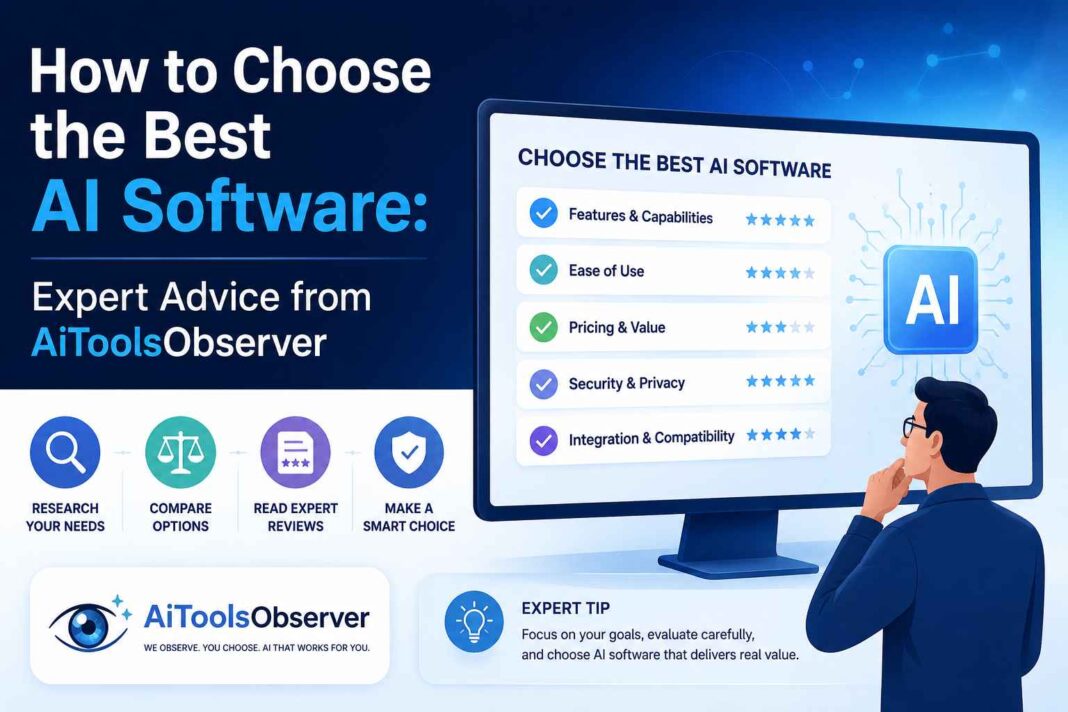
Before selecting a platform, decision-makers should consider:
- How easy is it to implement?
- Will employees actually use it?
- Does it integrate with existing systems?
- Is there a steep learning curve?
- Can it scale with the business?
In many cases, a simple tool that employees actively use provides more value than a feature-rich platform that gets ignored.
Evaluate Categories Before Products
It’s often helpful to understand software categories before comparing specific products.
Many organizations jump directly into product comparisons without understanding the broader landscape.
For example, a marketing team may be evaluating:
- Content creation tools
- SEO research platforms
- Social media automation tools
- Audience analytics solutions
Each category solves a different problem.
Understanding the category first helps businesses identify the type of solution that best aligns with their goals before evaluating individual vendors.
This is one reason curated AI tool collections have become increasingly valuable. They help users discover technologies based on objectives and use cases rather than forcing them to navigate endless lists of unrelated products.
Prioritize Workflows, Not Individual Tools
AI adoption is increasingly focused on connected workflows rather than standalone applications.
Early adopters often experimented with individual tools. Today, organizations are paying more attention to how technologies work together.
Instead of asking:
“What AI tool should we use?”
More companies are asking:
“How can we improve this workflow?”
This shift often leads to better long-term decisions.
Technology should support a process, not dictate it.
Organizations that optimize workflows tend to achieve better outcomes than those focused solely on software features.
Play the Long Game
The AI market is evolving quickly.
New companies launch every week, but only a fraction will remain influential over the next several years.
That doesn’t mean businesses should avoid emerging solutions. It means long-term viability should be part of every evaluation.
Important questions include:
- Is the product still in its early stages?
- Does it solve a meaningful problem?
- Is adoption growing?
- Is the platform actively maintained?
- Does the company have a long-term vision?
Software decisions should consider not only what works today but also what is likely to remain valuable tomorrow.
The Rising Importance of Discovery
The rapid growth of the AI industry has created a challenge many organizations weren’t prepared for: discovery.
A decade ago, the software market was far less crowded.
Today, thousands of AI products compete for visibility.
Finding the right tools is becoming just as important as using them effectively.
As a result, businesses increasingly rely on:
- Industry analysis
- Trend reports
- Product comparisons
- Ecosystem intelligence
- Discovery platforms
The goal is no longer simply finding new products.
The goal is finding the right products.
Better AI Decisions Drive Better Results
The organizations seeing the greatest success with AI aren’t necessarily using the most tools.
They’re making better decisions.
They understand their challenges. They evaluate technologies carefully. They focus on outcomes rather than hype.
Most importantly, they recognize that successful AI adoption is about more than software.
As artificial intelligence continues to reshape how businesses operate, the ability to select the right technology will become increasingly important.
Organizations don’t need to evaluate every new product or chase every trend. They need clarity around their goals, their workflows, and the technologies most likely to deliver meaningful results.
In a crowded market, informed decision-making remains one of the most valuable competitive advantages a business can have.