Clovelle of Woodlands Highlights the Gap Between the $16,000 EC Cap and $14,000 HDB Cap

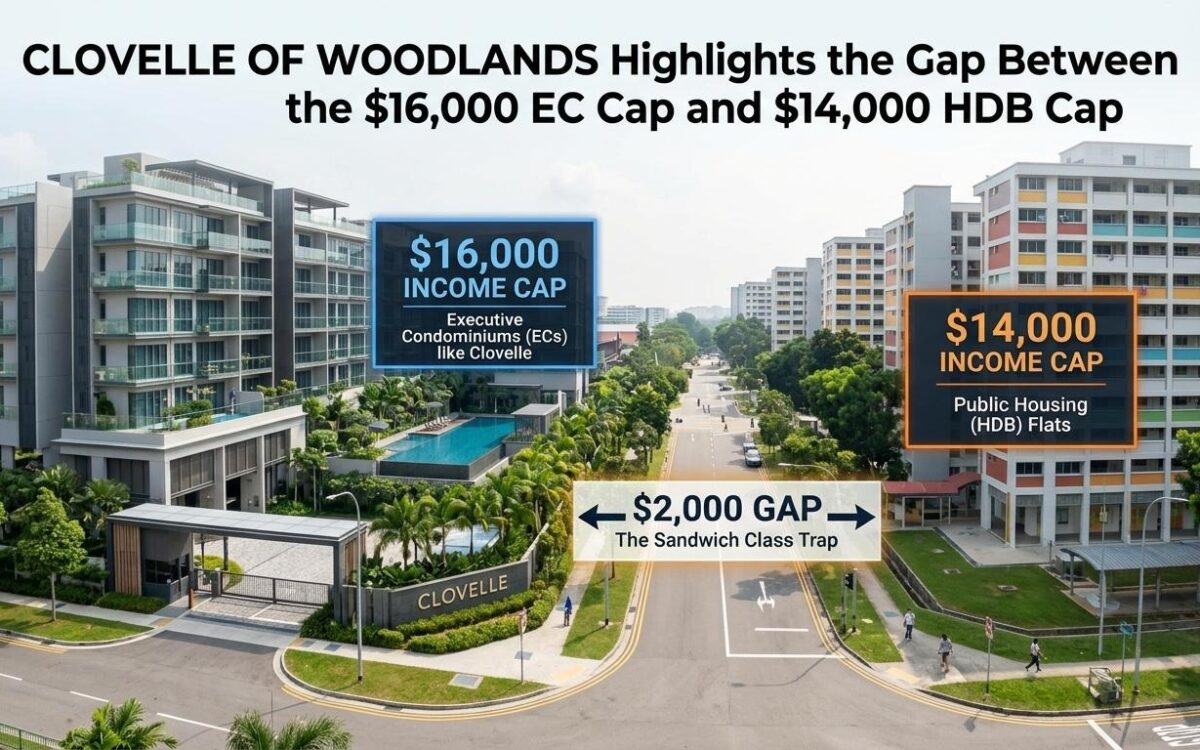
For Singapore households planning their next home, a modest difference in monthly earnings can create a significant change in housing options. The $14,000 monthly household income ceiling generally applicable to families buying new HDB flats sits below the $16,000 ceiling for new executive condominiums purchased from developers. That $2,000 interval is the central consideration brought into focus by Clovelle of Woodlands EC, a new executive condominium at Woodlands Drive 17 by Sim Lian Group Limited.
For households earning above $14,000 but not more than $16,000, the distinction is particularly meaningful. They may exceed the prevailing income ceiling for a typical new HDB family flat application while remaining within the income limit for a new EC, subject to all other eligibility conditions. The question is therefore not simply which development appeals most, but which housing pathway remains accessible.
Why the $2,000 Income Gap Matters
Singapore’s housing income ceilings define access to different forms of subsidised homeownership. For many families, the $14,000 threshold is familiar from their consideration of new HDB flats. Yet household earnings do not always rise in step with housing plans. A salary adjustment or a second income can move a family beyond that ceiling before it has secured its preferred home.
The higher EC ceiling creates a distinct eligibility band rather than an automatic entitlement. A household earning $15,000 a month, for example, would sit above the usual new HDB family income ceiling but below the new EC ceiling. That makes executive condominiums relevant to its search, although citizenship, family nucleus, property ownership and other prevailing requirements still need to be satisfied.
Clovelle of Woodlands EC and the Space Between the Caps
Within this context, Clovelle of Woodlands EC represents a housing option worth evaluating for families whose earnings fall between the two thresholds. Its relevance is not dependent on treating an EC as a substitute for every HDB purchase. Rather, it lies in offering eligible buyers another route when the standard new HDB income limit no longer accommodates their household.
For buyers considering Woodlands Drive 17, that eligibility distinction can shape the entire decision process. Instead of beginning with finishes or lifestyle aspirations, the more useful starting point is whether the household qualifies to purchase. Only then should the assessment move towards location suitability, available layouts, purchase terms and the financial commitment involved. An attractive address must ultimately align with both eligibility and everyday needs.
Income Eligibility Is Not the Same as Affordability
The $16,000 ceiling establishes an upper income limit; it does not establish a comfortable purchase budget. Families within the qualifying band should assess their available cash and CPF savings, financing options, upfront costs and ongoing commitments. Loan approval also depends on the lender’s assessment and applicable regulatory requirements, not simply on whether a household satisfies the EC income criterion.
This distinction is especially important for buyers who interpret higher eligibility as greater spending capacity. A household may qualify for an EC yet prefer a more conservative housing commitment to preserve flexibility for childcare, education or retirement. The strongest purchase decision is one that remains comfortable beyond the initial transaction, with room for changes in income and family circumstances.
A Narrower Income Band Calls for Careful Planning
Households approaching the $16,000 ceiling should establish how their income will be assessed under prevailing rules. Variable earnings, self-employment income and changes in employment can require closer attention to documentation. Buyers should verify the relevant assessment period and application requirements rather than relying solely on their latest monthly salary figures. Early clarification supports a more disciplined search without turning the ceiling into a reason to rush.
The $14,000 HDB Cap Needs the Right Context
The headline comparison concerns the usual family income ceiling for new HDB flats and the ceiling for new ECs bought from developers. It should not be read as a universal restriction across every HDB transaction. Different schemes and household configurations can carry different conditions, while resale HDB purchases generally do not have an income ceiling, although grants and financing arrangements have their own criteria.
Accordingly, a family above $14,000 is not necessarily excluded from HDB ownership altogether. Its choices may instead shift towards resale flats, an eligible new EC purchase or private housing, depending on circumstances. Understanding these distinctions keeps the comparison useful: the gap highlights a particular opportunity within the housing framework, rather than proving that one property category is always preferable.
Looking Beyond the Ceiling Before Committing
New executive condominiums carry conditions that distinguish them from unrestricted private condominium purchases. Buyers need to understand the applicable occupation, ownership and resale requirements, alongside any implications arising from previous subsidised housing. For existing homeowners, the transition also requires careful attention to prevailing disposal rules and the practical sequencing of a move.
Ultimately, Clovelle of Woodlands brings a specific affordability-policy divide into view. For eligible households earning above the usual $14,000 new HDB family ceiling but within the $16,000 new EC limit, it offers a reason to examine the EC route closely. The opportunity is not merely to qualify for a different home, but to choose one with a clear understanding of the rules, the financial commitment and the household’s longer-term priorities.