Buying a Used Pickup in Dallas, Texas: A Practical Checklist for North Texas Drivers

Key Takeaways
- Choose a pickup for its real job, whether that is commuting, hauling, towing, family travel, or work.
- Budget for ownership costs, not only the purchase price and monthly payment.
- Verify payload, towing equipment, title history, maintenance records, and physical condition.
- Inspect the underbody carefully for leaks, damage, corrosion, and signs of previous repairs.
- Use an independent mechanic and be ready to walk away from questionable paperwork or mechanical problems.
Buying a used pickup in Dallas means thinking beyond paint color, lift kits, and headline towing numbers. From weekday traffic on Central Expressway to job sites, lake trips, ranch roads, and North Texas summer heat, the right truck needs to fit the way it will actually be used. Shoppers comparing Dallas cars and trucks can make a stronger decision by using the same practical checklist for every vehicle they consider.
A well-kept used truck can be a useful daily vehicle and work tool, but it should be evaluated as both. Prioritize condition, documented care, safe load capacity, and clear paperwork over cosmetic upgrades or a low odometer reading alone.
Start With the Truck’s Main Job
Write down what the truck will do most weeks. A pickup used mainly for commuting between Dallas, Plano, Irving, or Fort Worth may need a manageable size, good visibility, and a comfortable cabin. A truck for landscaping, construction, ranch chores, boat launches, or trailer towing needs the appropriate bed, payload rating, hitch equipment, and drivetrain.
Buying more truck than necessary can increase fuel, tire, insurance, and repair costs. A midsize pickup may suit light hauling, outdoor equipment, and small trailers. A full-size or heavy-duty truck may be more appropriate when heavy loads or frequent towing are central to the plan.
Set a Realistic Budget
Separate the truck’s selling price from the total cost of putting it on the road. Include sales tax, registration, insurance, fuel, loan interest, routine service, tires, brakes, and repairs that may be needed soon after purchase. Keep a repair reserve rather than spending every available dollar on the purchase itself.
A cheaper truck is not necessarily the better value if it needs tires, suspension work, cooling-system repairs, or transmission service immediately. Request an itemized out-the-door figure and compare it with the likely maintenance needs revealed by the inspection.
Pick the Right Size and Configuration
Compact and Midsize Pickups
Smaller pickups are generally easier to park in dense Dallas shopping areas and garages. They can work well for light cargo, weekend projects, camping gear, and modest trailers, but buyers should confirm bed length, rear-seat space, and load ratings for the exact truck.
Full-Size and Heavy-Duty Pickups
Full-size trucks offer more choices in cab space, bed length, engines, and towing equipment. Heavy-duty models can make sense for regular heavy trailers or commercial-style work. For light-duty use, however, their larger size and operating costs may not provide enough benefit.
Check Payload Before Towing Capacity
Payload is the weight carried by the truck, including passengers, cargo, accessories, and trailer tongue weight. It is easy to focus on a maximum tow rating, but a loaded family, toolbox, bed cargo, and trailer can use much of the truck’s available payload.
- Read the driver-side door-jamb labels for the truck’s specific ratings.
- Confirm gross vehicle weight rating, axle ratings, and gross combined weight rating.
- Match the hitch, trailer brakes, wiring, tires, and cooling equipment to the intended trailer.
- Use ratings for the exact engine, cab, bed, axle ratio, and drivetrain configuration.
Review the VIN, Title, and Recall History
Get the VIN before arranging an inspection. Texas buyers can use the state’s title-check guidance to help review title information before money changes hands. Carefully compare the title, VIN, seller identity, and vehicle condition, and ask whether the truck has been rebuilt, flooded, stolen, used commercially, or operated as a rental or fleet vehicle.
Also, use the VIN to check for unrepaired safety recalls. A history report is useful, but it does not replace a physical inspection, service records, or clear answers from the seller.
Inspect the Frame, Body, and Maintenance Story
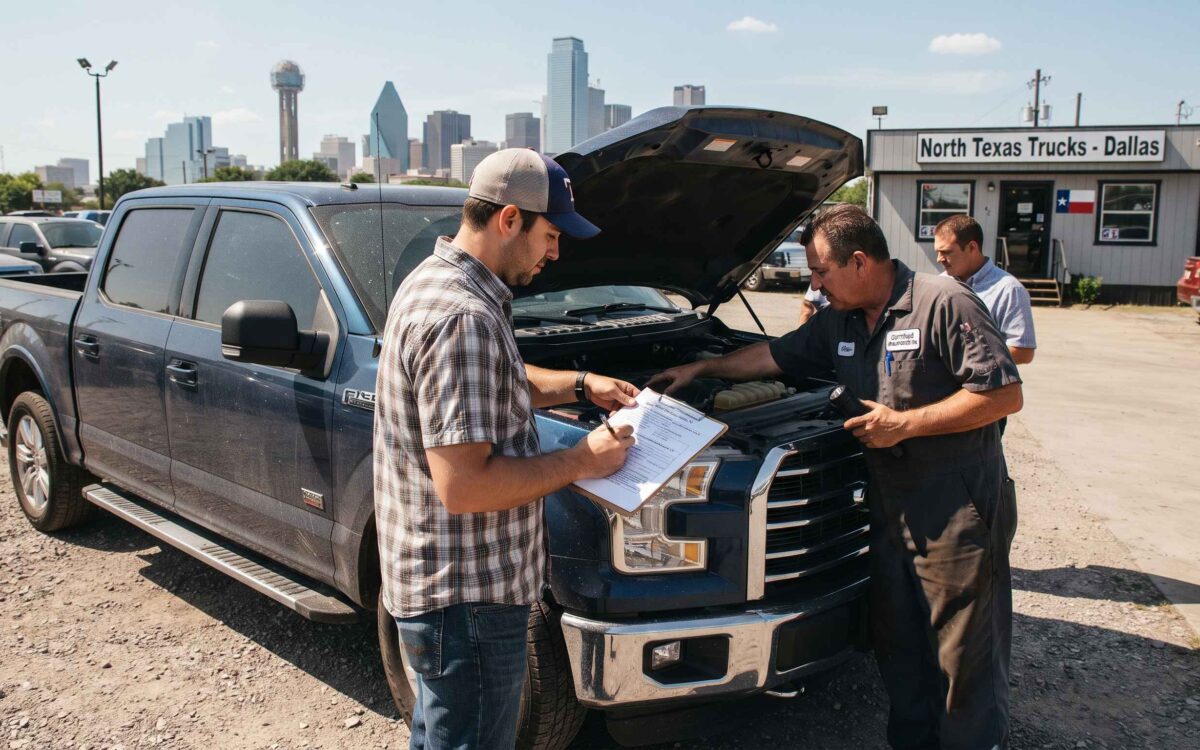
See the truck in daylight if possible, and bring a flashlight. Scratches in a bed can reflect ordinary work use, but structural concerns deserve much closer attention. Look underneath for frame bends, fresh welds, severe corrosion, fluid leaks, damaged skid plates, and fresh undercoating that could obscure repairs. Check panel gaps, paint consistency, tire wear, and signs of water exposure inside the cabin.
Maintenance records often provide a clearer picture than mileage alone. Look for regular oil changes, brake and tire replacements, cooling system work, transmission and differential service, four-wheel-drive service where applicable, and completed recall repairs. A higher-mileage truck with consistent documented care may be a safer prospect than a low-mileage truck with years of neglected maintenance.
Take a Complete Test Drive
- Start the engine cold when possible and listen for unusual noises.
- Watch for warning lights during startup and while driving.
- Test acceleration, braking, steering, shifting, and highway-speed stability.
- Run the air conditioning at full power, an important check for Dallas summers.
- Operate windows, locks, cameras, lights, screens, sensors, and towing controls.
- Listen for vibration, clunks, grinding, wheel-bearing noise, or drivetrain whine.
Choose the Right Powertrain
Gas engines can be a straightforward choice for light and moderate use. Diesel trucks may suit frequent heavy towing, but buyers should understand their service history and potential repair costs. Hybrid and electric pickups may fit some local driving patterns, yet buyers should consider charging access, expected range with cargo or a trailer, and nearby service options before committing.
Ask Questions and Know When to Walk Away
Ask why the truck is being sold, how long it has been owned, whether it is towed regularly, and whether receipts, keys, manuals, and accessories are included. Insist on an independent pre-purchase inspection. Walk away if the seller will not provide the VIN, refuses an inspection, cannot explain title issues, has mismatched paperwork, or dismisses warning lights, harsh shifting, flood evidence, or frame repairs.
Final Dallas Used Pickup Checklist
- Define the truck’s primary job and expected loads.
- Set a full ownership budget with a repair reserve.
- Choose the size, cab, bed, and powertrain that match local needs.
- Verify payload, towing limits, and installed equipment.
- Check the VIN, title, recalls, maintenance records, and underbody.
- Complete a thorough test drive and independent inspection.
- Read every document before payment and decline a deal that does not add up.
The best used pickup for a Dallas driver is not always the newest, biggest, or lowest-mileage option. It is the truck with a clear history, sound mechanical condition, practical capacity, and a role that matches the owner’s real life in North Texas.