Gentle Cleanser for Perioral Dermatitis: Safe Picks Guide

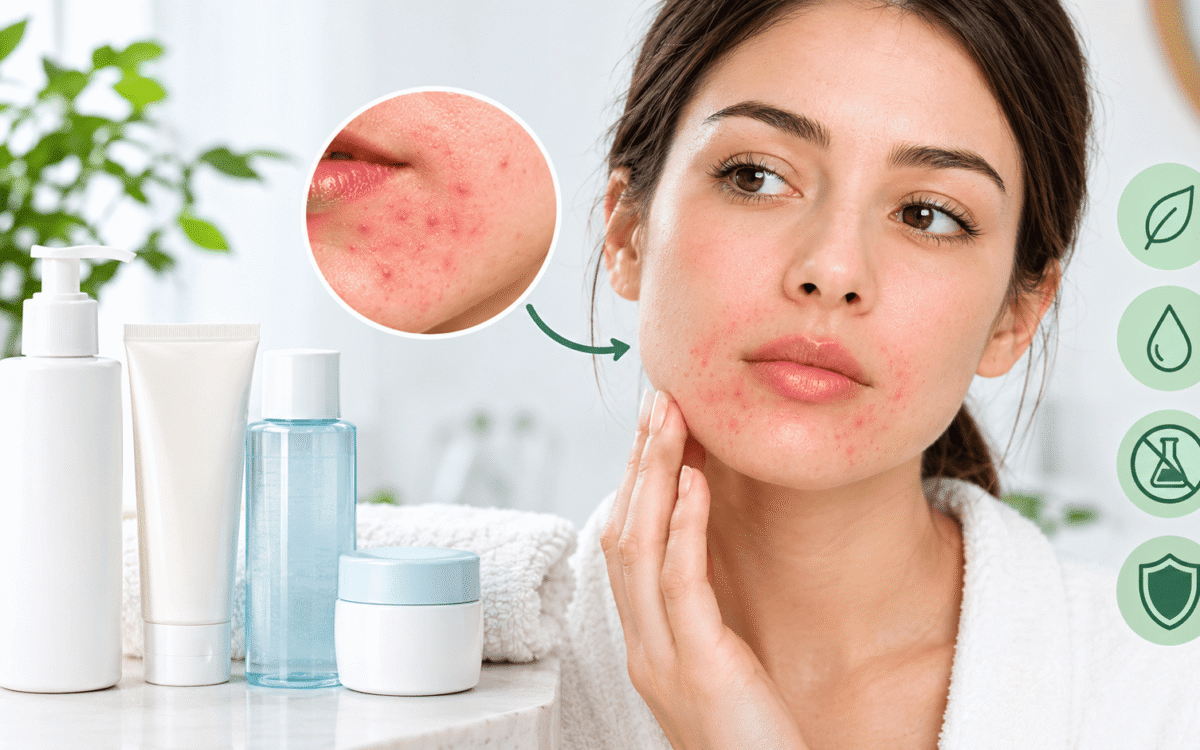
Red bumps around your mouth, tight skin, and a stinging feeling every time you wash your face can make cleansing feel like a gamble. When you have perioral dermatitis, the cleanser you pick can calm your skin or set off another flare-up.
This guide explains how to choose a gentle cleanser for perioral dermatitis, which ingredients to look for, which to skip, and how to wash your face so your skin barrier gets a chance to recover.
What Is Perioral Dermatitis?
Perioral dermatitis is an inflammatory skin condition that usually shows up as small red bumps, dry flaky patches, or irritation around the mouth. It can also spread to the area around the nose and eyes. It can look like acne, but it behaves differently, and treating it like acne often makes it worse.
Common triggers include:
- Harsh or over-foaming cleansers
- Over-exfoliation with acids and scrubs
- Heavily fragranced skincare
- Topical steroid creams
- Using too many products at once
- Stress, hormonal changes, and a damaged skin barrier
Because a weakened skin barrier is often involved, cleansing is the first place to make a change.
Why Your Cleanser Matters So Much
Cleansing is the one step you repeat every single day. A harsh cleanser strips natural oils, leaves skin tight, and pushes an already reactive barrier further into irritation. A gentle cleanser removes dirt, sunscreen, and makeup while leaving your skin comfortable afterward.
A simple test: if your face feels tight, squeaky, or hot after washing, the cleanser is too strong for you.
What Makes a Cleanser “Gentle” for Perioral Dermatitis?
Look for these qualities on the label and in how the product feels:
1. Fragrance-free: Fragrance and essential oils are common irritants for sensitive skin. “Unscented” is not always the same as fragrance-free, because some unscented products use masking fragrances.
2. Non-foaming or low-foam: Heavy lather usually comes from strong surfactants. Creamy, milky, or lotion-style cleansers are usually kinder.
3. Sulfate-free (SLS-free): Sodium lauryl sulfate is a strong detergent that can strip the skin barrier.
4. Soothing, barrier-friendly ingredients: Glycerin, ceramides, panthenol, squalane, and colloidal oatmeal help skin stay hydrated and comfortable.
5. Balanced, mild formula: Avoid cleansers with scrubbing beads, strong acids, or “deep cleansing” claims.
Ingredients to Avoid in a Cleanser
While your skin is flaring, it is best to skip:
- Sodium lauryl sulfate (SLS) and similar harsh detergents
- Added fragrance, essential oils, and menthol
- Exfoliating acids such as salicylic or glycolic acid
- Physical scrubs and cleansing brushes
- Alcohol-heavy or “astringent” formulas
- Very heavy, occlusive balms if they make your skin feel congested
This is usually temporary. Once your skin is stable, you can reintroduce products slowly, one at a time.
Types of Gentle Cleansers: Which One Suits You?
| Cleanser type | Best for | Things to watch |
|---|---|---|
| Cream or milk cleanser | Dry, tight, or very reactive skin | Make sure it rinses off cleanly |
| Gel (low-foam, sulfate-free) | Skin that feels oily but sensitive | Check the label for fragrance and strong surfactants |
| Oil or balm cleanser | Removing sunscreen and makeup | Some people find heavy oils too rich, so patch test first |
| Micellar water | Gentle makeup removal | Rinse or follow with a mild cleanser if it leaves residue |
| Plain lukewarm water | Mornings during a bad flare | Not enough to remove sunscreen or makeup at night |
Well-Known Gentle Cleansers People Commonly Consider
The following are widely known fragrance-free or sensitive-skin options that skin professionals often mention for reactive skin: Vanicream Gentle Facial Cleanser, CeraVe Hydrating Cleanser, La Roche-Posay Toleriane Dermo-Cleanser, and Avène XeraCalm cleansing oil. Formulas change over time, so always read the current ingredient list, and patch test before using any new product on your face. No single cleanser works for everyone.
How to Wash Your Face With Perioral Dermatitis
How you cleanse matters as much as what you use.
- Use lukewarm water. Hot water irritates inflamed skin.
- Use a small amount of cleanser and massage it gently with clean fingertips for about 30 seconds.
- Skip washcloths, brushes, and scrubbing tools. Friction makes irritation worse.
- Rinse thoroughly so no residue stays near your mouth.
- Pat dry with a clean, soft towel. Do not rub.
- Moisturize straight away with a simple, fragrance-free moisturizer while your skin is still slightly damp.
Cleanse once or twice a day at most. In the morning, water alone is often enough if your skin is very sensitive.
A Simple Skincare Routine for Perioral Dermatitis-Prone Skin
Less is more. A minimal routine usually works best during a flare-up:
- Morning: gentle rinse or mild cleanser, light barrier-supporting moisturizer, mineral sunscreen
- Night: gentle cleanser (or a mild makeup remover first if needed), moisturizer
Pause strong actives like retinoids, exfoliating acids, and new serums until your skin calms down.
Common Cleansing Mistakes to Avoid
- Washing your face too many times a day
- Switching cleansers every week
- Using a cleanser that “squeaks” or leaves skin tight
- Layering many products right after cleansing
- Ignoring toothpaste, lip products, or hair products that touch the mouth area, since some people notice these as triggers
When to See a Dermatologist
Gentle skincare supports your skin, but perioral dermatitis sometimes needs medical treatment. See a dermatologist if the rash spreads, becomes painful, does not improve after a few weeks of simplifying your routine, or if you have used steroid creams on your face. A professional can confirm the diagnosis and rule out look-alikes such as acne, rosacea, or fungal issues.
Frequently Asked Questions
What is the best cleanser for perioral dermatitis?
The best option is usually a fragrance-free, non-foaming, sulfate-free cleanser that leaves your skin comfortable instead of tight. The exact product varies from person to person.
Can I use a foaming face wash with perioral dermatitis?
It is generally better to avoid strongly foaming cleansers, as they often contain detergents that can irritate a weakened skin barrier.
Should I wash my face with just water?
Many people do this in the morning during a flare-up. At night, you still need a gentle cleanser to remove sunscreen and makeup.
Is micellar water safe for perioral dermatitis?
A fragrance-free micellar water can work for makeup removal, but rinse your skin afterward if you notice any residue or stinging.
How long until my skin improves after changing cleansers?
It varies. Some people see calmer skin within a few weeks, while others need longer or need medical treatment. Be patient and consistent.
Can a cleanser cure perioral dermatitis?
No. A gentle cleanser helps protect your skin barrier and avoid triggers, but it is not a cure.
Final Thoughts
Choosing a gentle cleanser for perioral dermatitis comes down to a few simple rules: fragrance-free, non-foaming, sulfate-free, and barrier-friendly. Combine that with lukewarm water, soft hands, and a minimal routine, and your skin has the best chance to settle. If your symptoms persist, talk to a dermatologist rather than adding more products.