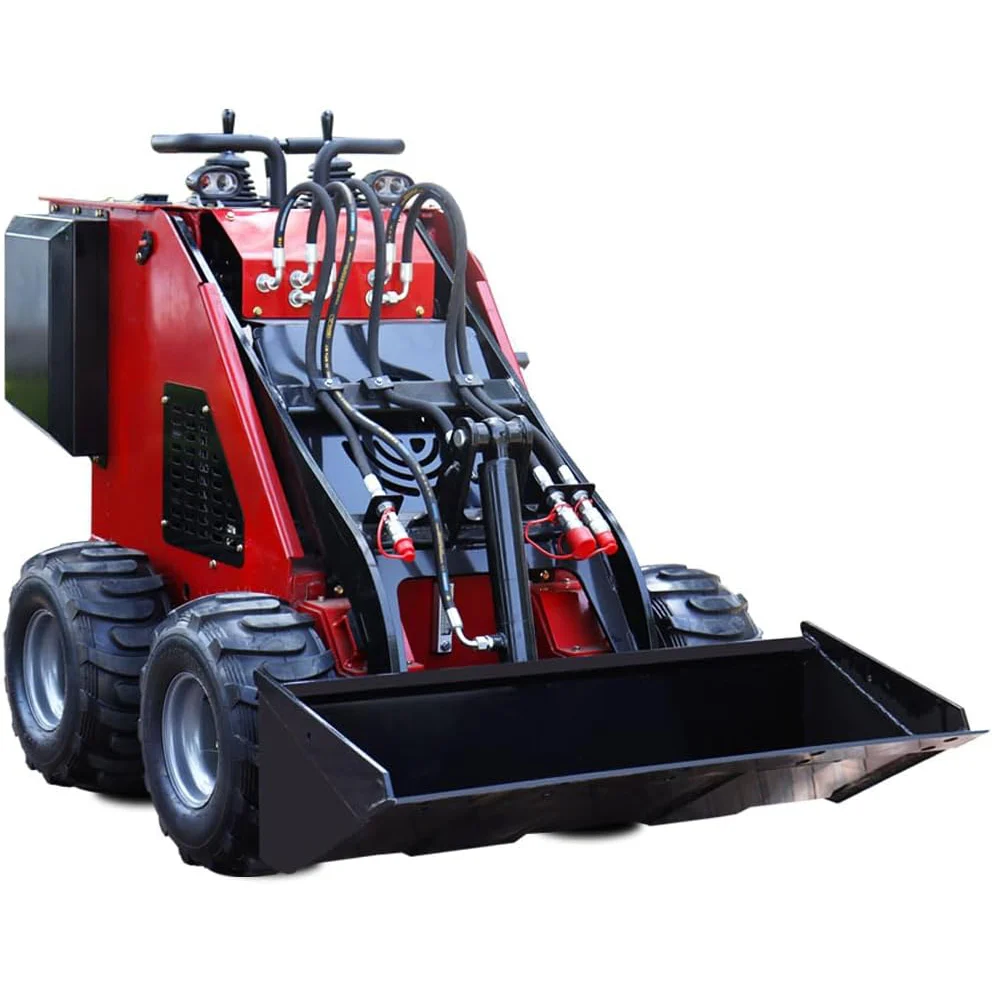
There is a class of construction machinery that quietly earns back its purchase price faster than any single-purpose tool on the yard, and it is the compact loader that fits through a garden gate. Landscape crews use it to move a pallet of pavers into a backyard without tearing up the lawn. Small builders use it to shuttle mixed concrete, gravel, and soil across sites where a full-size machine would not fit. Property maintenance teams use it to grade driveways, plow snow, and lift construction debris into skips without a second operator on the ground.
This guide is written for contractors weighing their first compact loader purchase, rental operators fielding weekly requests for one, and landscape business owners who feel every hour of manual barrow work in their backs by Friday. The sections ahead cover the jobs the machine handles best, the specifications that actually matter when comparing models, and the attachments that turn one machine into a small fleet. The focus stays on the operational reality, not the marketing gloss.
Why This Machine Category Keeps Growing
Compact loaders answered a problem that traditional equipment could not solve: how to bring mechanical power into spaces designed for people. A standard skid steer is too wide for most residential gates and too heavy for many lawns. A wheelbarrow keeps the access but replaces machines with labor. The stand-on or walk-behind mini skid steer loader bridges that gap by combining hydraulic muscle with a footprint measured in the same range as a garden path.
Landscape and Hardscape Applications
Moving bulk materials is where the machine pays for itself first. A single operator can shuttle pallets of stone, mulch, or topsoil from a curbside delivery to the back of a property without ever picking up a shovel. Auger attachments drill footing holes for pergolas and fences in minutes. Trencher attachments cut clean channels for irrigation lines. Grapples clear brush and storm debris that would otherwise fill a pickup bed six times over.
Small Site Construction
Foundation work, backfill, and site cleanup all become one-person operations. When paired with a bucket, the loader handles soil relocation for footings and drainage. Swap to pallet forks and the same machine unloads deliveries from the truck. The productivity gain is not just speed; it is also reduced fatigue, which means crews finish the week with the energy to plan the next one instead of nursing sore shoulders.
The Specifications That Decide Fit
Rated operating capacity, or ROC, is the number to read first. It defines how much the loader can lift safely at full reach, and it directly determines what bucket and pallet loads are practical. Machines in this category usually sit between 350 and 1200 pounds of ROC, and the wider that range grows, the more the machine starts to overlap with full-size skid steers in both capability and price.
Track vs. Wheel Undercarriages
Tracks distribute weight and shine on soft ground, wet lawns, and freshly seeded areas. Wheels move faster on hard surfaces and are cheaper to maintain, but they leave marks on turf and struggle in mud. Contractors working primarily on finished residential properties usually prefer tracks. Those working on paved commercial sites, snow clearing, or hard-packed gravel yards can save on running costs with wheels without losing much productivity.
Hydraulic Flow and Attachment Compatibility
Auxiliary hydraulic flow, measured in gallons or liters per minute, determines which attachments the machine can actually power. Low-flow units run buckets, forks, and simple grapples. Higher-flow variants unlock brush cutters, cold planers, and stump grinders. Buying based on today’s attachment list and ignoring tomorrow’s is a common mistake. Read the flow rating with future expansion in mind.
Attachments That Transform the Machine
The universal quick-attach plate is the reason a single machine can replace half a dozen dedicated tools. Buckets handle bulk material. Pallet forks lift and place deliveries. Augers drill holes. Trenchers cut lines. Sweepers clean job sites at the end of the day. Snow blades and blowers extend the working season into winter, which is critical for contractors trying to keep revenue flowing through slow months.
Choosing Attachments by Actual Utilization
Every attachment is a capital cost, and unused attachments are money parked in a shed. Track how often each tool comes off the wall for at least one full season before adding another. A rule that has served many small operators well is to buy only what earns at least twenty full days of use per year. Anything below that threshold is often cheaper to rent when needed.
Operator Experience and Long-Term Value
Stand-on platforms suit crews doing frequent on-and-off work, since dismounting takes a second rather than a full seat exit. Walk-behind controls suit tight, low-height environments like crawl spaces and low garages. Ride-in cabs on the larger end of the compact category add weather protection for year-round work but reduce the visibility that makes the machine so easy to place in tight spots.
Serviceability and Support
Compact loaders live outdoors, take dirt into every seal, and often work in wet conditions. Access to filters, hydraulic connections, and engine service points determines how quickly a small issue gets addressed before it becomes a downtime event. Suppliers such as MMS INDUSTRIAL make component diagrams and maintenance schedules available for their compact loader lines, which shortens diagnosis and keeps machines earning on the calendar instead of sitting on the shop floor.
The Compact Loader as a Small-Business Multiplier
The value of a compact loader is measured not just in what it lifts, but in what it removes from the labor budget: the second helper who used to push a wheelbarrow, the aching shoulders at the end of the day, the extra day tacked onto every project because of manual material handling. Match the rated capacity to the loads that actually come across your invoices, pick the undercarriage that suits the surfaces you work on most, and grow the attachment collection based on real utilization rather than optimism. Done well, a single machine turns a two-person crew into a three-person team without adding payroll, and that is the kind of productivity gain that reshapes small construction businesses.