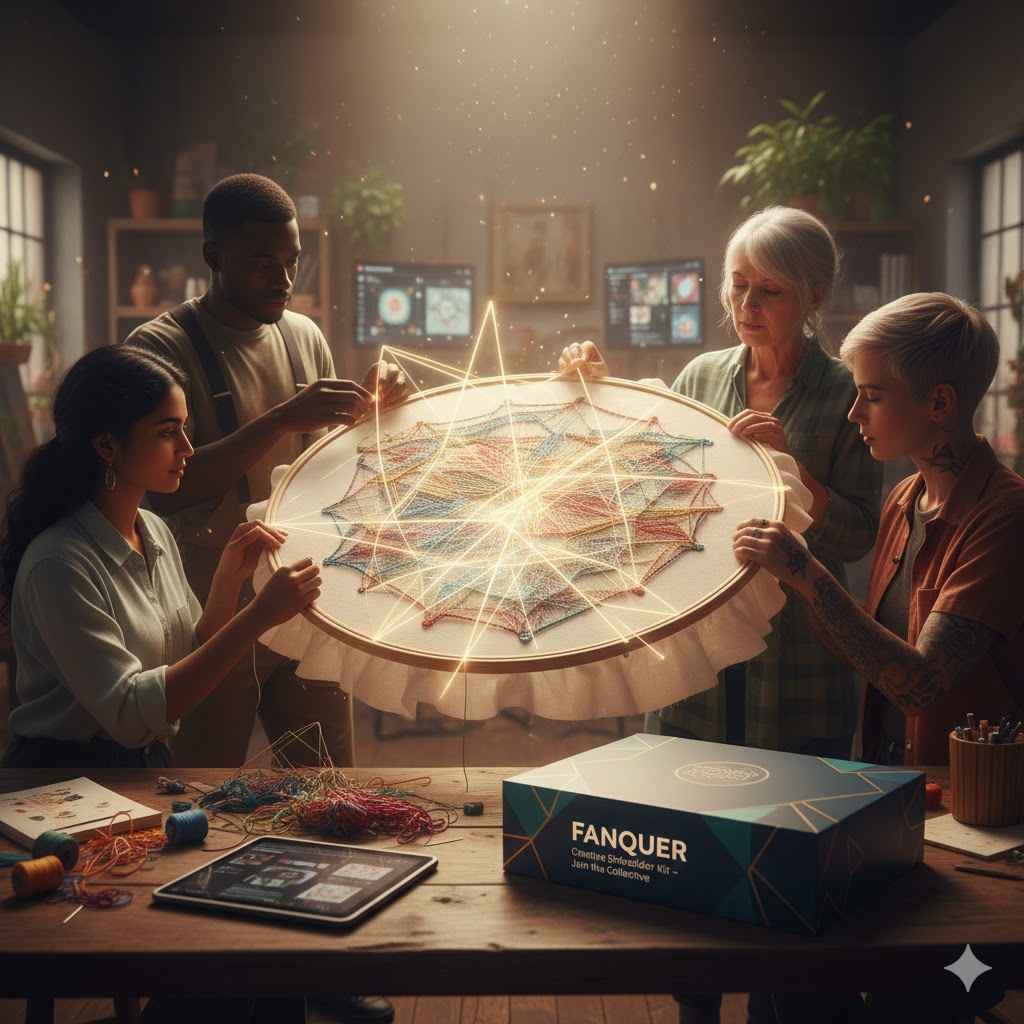
In today’s fast-paced digital world, where brands and creators vie for attention, the term Fanquer stands out as a fresh and innovative concept. Derived from combining “fan” and “connoisseur,” Fanquer refers to cultivating a core group of passionate early supporters who go beyond mere consumerism. These individuals become true believers, championing a product or creator through active involvement. Whether it’s through direct engagement, shared investment, or exclusive perks like private events, Fanquer transforms casual users into loyal advocates. Interestingly, Fanquer also doubles as a brand name for creative products, such as beginner embroidery kits sold online, emphasizing hands-on creativity and community ties.
This dual nature makes Fanquer particularly intriguing. As a concept, it shifts focus from passive consumption to meaningful participation, aligning perfectly with our era of connectivity and customization. It’s about nurturing relationships that drive long-term success, rather than chasing fleeting trends.
The Conceptual Foundations of Fanquer
At its heart, Fanquer embodies participatory alignment between people and their shared environments be it digital platforms, social groups, or creative spaces. This intentional interaction allows participants to influence outcomes, making it dynamic and adaptable. Unlike rigid structures, Fanquer thrives on feedback, contribution, and shared ownership, reflecting broader trends toward decentralization and empowerment.
Theoretically, Fanquer serves as a lens for understanding modern systems where value emerges from engagement rather than top-down control. It’s relevant across disciplines, from online communities to organizational settings, highlighting why new terms like this are essential in our rapidly evolving world.
Key Aspects of Fanquer
To grasp Fanquer fully, let’s break down its main points in a clear, structured list based on its core principles and applications:
- Community Building: Prioritizes forming a tight-knit group of dedicated fans early on, setting the stage for organic growth before hitting the mainstream.
- Early Adopters: Targets believers who embrace a product or creator from the start, turning them into vocal advocates who spread the word.
- Investment/Support: Enables fans to contribute financially or gain exclusive access, such as special events or perks, fostering a sense of ownership.
- Product Branding: Positions Fanquer as a retail identity for items like embroidery kits, blending creativity with fan-driven experiences.
- Active Involvement: Emphasizes participation over passive watching, encouraging two-way interactions and recognition for efforts.
- Flexibility and Adaptability: Functions in small groups or large networks, adapting to contexts like digital communities or professional teams.
- Ethical Considerations: Focuses on fairness, transparency, and trust to ensure sustainable engagement.
These elements capture the essence of Fanquer, making it a versatile tool for enhancing connections in various domains.
Fanquer in Digital Communities
Online spaces exemplify Fanquer in action. Platforms rely on user-driven content and interactions, where members shape norms through collective behavior. This creates resilient environments built on trust and transparency—key to deepening engagement. When fans feel their input matters, they contribute more, leading to vibrant, evolving communities.
For instance, in creator-led groups, Fanquer encourages ongoing dialogue, turning one-way broadcasts into collaborative experiences. This mutual reinforcement not only sustains the community but also amplifies its reach through authentic advocacy.
Social and Cultural Dimensions
Extending beyond screens, Fanquer influences grassroots movements and participatory art. It promotes inclusion and dialogue, allowing diverse voices to challenge norms and foster cultural renewal. However, maintaining balance is crucial; without shared understanding, openness can lead to fragmentation.
In these contexts, Fanquer supports experimentation, lowering barriers for new participants and enriching collective creativity. It’s a reminder that true vitality comes from shared purpose, not hierarchy.
Fanquer in Organizational Settings
Businesses are adopting Fanquer-like models to boost innovation. Cross-functional teams and open feedback systems empower employees to contribute beyond their roles, broadening ideas and aligning personal goals with organizational ones.
Yet, success requires structure clear objectives and accountability ensure participation translates into results. When implemented thoughtfully, Fanquer enhances performance and job satisfaction, proving its value in professional environments.
Technological Enablers and Challenges
Technology fuels Fanquer by enabling real-time communication and data-driven adaptations. Tools that promote accessibility ensure inclusive participation, but issues like information overload or uneven involvement can arise.
Limitations include diffuse accountability in distributed systems and the risk of dominant voices overshadowing others. Addressing these through ethical governance focusing on fairness and clear roles helps mitigate drawbacks while maximizing benefits.
The Future Outlook for Fanquer
As connectivity grows, Fanquer is poised to expand across sectors like education, business, and civic engagement. Its emphasis on adaptability and user involvement positions it as a framework for navigating complexity.
In the future, Fanquer may standardize in specific areas while retaining flexibility, supporting deeper, more meaningful interactions in our interconnected world.
Conclusion
Fanquer represents a shift toward empowered, participatory experiences that build lasting loyalty. By focusing on community building, early adopters, investment/support, and product branding, it moves beyond traditional engagement to create genuine champions. Whether as a concept or brand, Fanquer fosters environments where participation drives success. Embracing its principles can lead to stronger connections, innovation, and growth essential in today’s dynamic landscape.