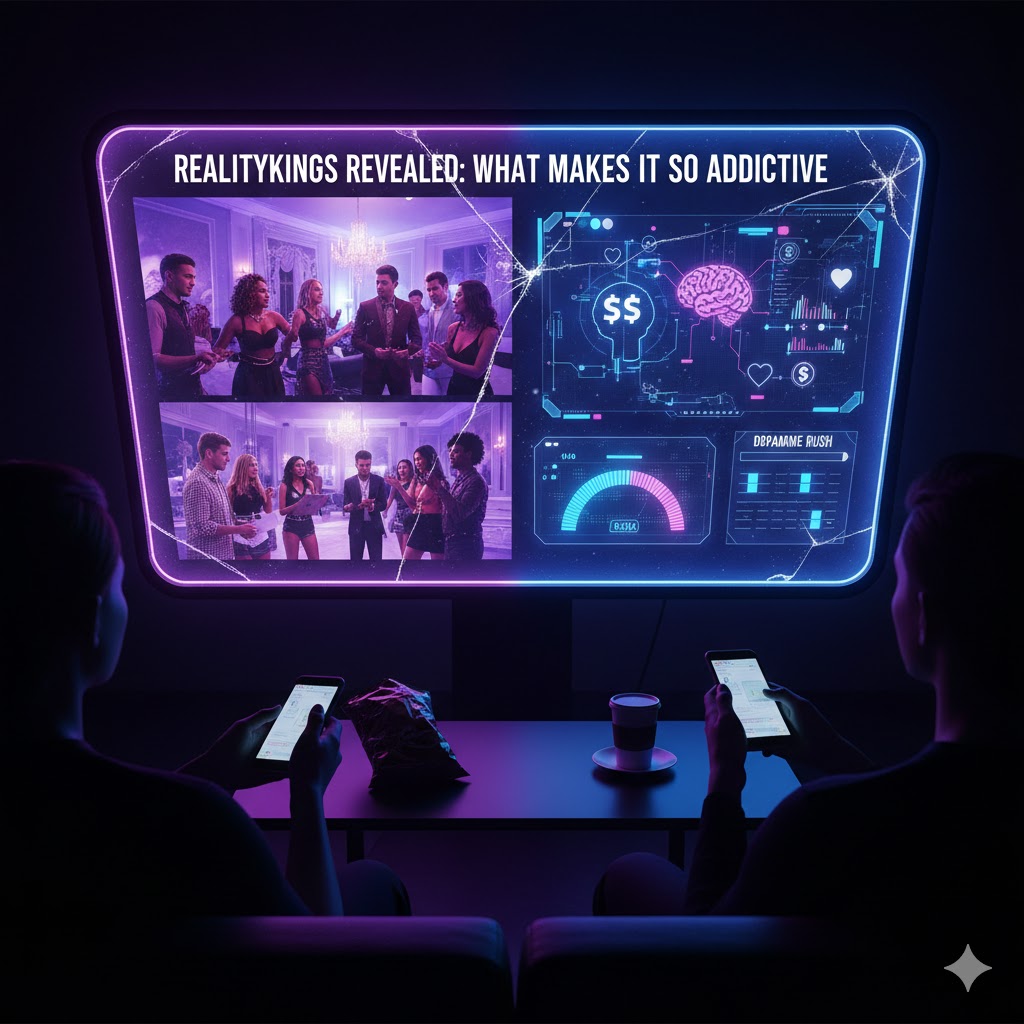
In an era where digital platforms compete for every second of our attention, one name has surfaced with a reputation for creating an unusually compelling hold on its users: Realitykubgs. Unlike traditional social media or gaming platforms, Realitykubgs offers a blended experience that seems to tap into fundamental human psychology with extraordinary precision. But what exactly is it, and more importantly, what makes Realitykubgs so addictive? This deep-dive analysis moves beyond surface-level observations to explore the intricate web of behavioral design, neuroscientific triggers, and socio-technical engineering that fuels its compulsive use.
Understanding the Realitykubgs Phenomenon
At its core, Realitykubgs is an immersive, interactive ecosystem. It blurs the lines between curated social content, gamified progression, and personalized reality simulation. Users don’t just consume content; they navigate a layered environment where their actions yield immediate, variable, and often emotionally charged feedback. This isn’t accidental. It is the product of deliberate design choices aimed at maximizing user engagement, session length, and return frequency.
The addictive nature of Realitykubgs is not a singular feature but a symphony of interconnected elements. To understand it, we must examine the components separately and then observe how they work in concert to create a powerful feedback loop that can be difficult to break.
The Core Psychological Hooks of Realitykubgs
The platform leverages several well-documented psychological principles:
-
The Variable Reward Schedule: This is the most potent hook. Inspired by B.F. Skinner’s operant conditioning experiments, Realitykubgs designs its interactions so that rewards (likes, new content, level-ups, virtual items) are delivered unpredictably. You don’t know when the next compelling piece of content or achievement will appear. This uncertainty triggers a dopamine-driven response, making the user compulsively check and interact, much like a person pulling a slot machine lever.
-
The Fear of Missing Out (FOMO): The ecosystem is dynamic and event-driven. Limited-time events, exclusive content drops, and real-time social interactions create a pervasive anxiety that stepping away means missing something unique or valuable. This social pressure is a powerful motivator for constant connection.
-
The Endless Scroll & The Goal Gradient Effect: There is no natural “end” to the experience. Content streams infinitely, and progression systems often have escalating yet never fully attainable goals. The Goal Gradient Effect states that individuals accelerate their behavior as they approach a reward. Realitykubgs uses progress bars, “almost there” notifications, and tiered achievements to make users feel perpetually close to the next milestone, encouraging continued effort.
-
Social Validation & Identity Investment: Users build profiles, avatars, and reputations within the platform. The investment of time and ego creates a “sunk cost fallacy,” making it harder to leave. Positive social feedback (comments, shares, virtual applause) within this invested identity delivers potent hits of social validation, tying self-worth to platform engagement.
Deconstructing the Addictive Loop: A Step-by-Step Analysis
The user journey in Realitykubgs can be mapped to a cyclical, self-reinforcing loop. This loop is the engine of its addictiveness.
Stage 1: The Trigger (External & Internal)
Every session begins with a trigger. External triggers are notifications, messages, or alerts from the platform itself. Internal triggers are emotional states—such as boredom, loneliness, curiosity, or stress—that the user has learned Realitykubgs can alleviate. The platform’s design ensures it becomes the default solution for these internal states.
Stage 2: The Action (Frictionless Engagement)
The action is the simplest behavior done in anticipation of a reward: tapping the app icon, scrolling, or clicking. Realitykubgs minimizes friction to this action. The interface is intuitive, loading times are minimized, and the entry point is always a single tap away on the user’s device.
Stage 3: The Variable Reward
This is the critical phase. The user takes action but receives a reward that is:
-
Variable: The content or outcome is not the same every time.
-
Salient: It is personally relevant, often through sophisticated algorithms.
-
Emotionally Resonant: It sparks curiosity, amusement, pride, or a sense of belonging.
This phase directly stimulates dopamine pathways, reinforcing the connection between the trigger and the action.
Stage 4: The Investment
The final stage asks the user to put something into the platform. This isn’t just money (though in-app purchases are a factor). More importantly, it’s data, time, content, and social capital. This could be:
-
Customizing a profile.
-
Posting a piece of user-generated content.
-
Building a friend list or community.
-
Learning the intricacies of the platform’s rules.
These investments increase the likelihood of the user returning (to see the return on their investment), thus seeding future triggers. The loop then begins again, stronger each cycle.
A Comparative Table: Realitykubgs vs. Traditional Media
To illustrate its unique positioning, the following table contrasts the engagement model of Realitykubgs with traditional digital and analog media.
| Feature | Traditional Media (e.g., TV, Static Websites) | Social Media 2.0 (e.g., Classic Social Networks) | Realitykubgs |
|---|---|---|---|
| Interaction Model | Passive consumption | Active but discrete interaction (like, share, comment) | Immersive, continuous participation |
| Reward Schedule | Predictable (scheduled programming) | Semi-predictable | Highly variable and unpredictable |
| User Identity | Minimal or non-existent | Curated personal profile | Invested avatar/alter-ego with social stakes |
| Feedback Loop Speed | Slow (ratings, reviews) | Fast (likes, shares in minutes) | Instantaneous and constant |
| Exit Points | Clear (end of show, article) | Somewhat clear (end of feed) | Ambiguous, intentionally obscured |
The Role of Algorithmic Curation and Personalization
Beneath the surface, the true architect of the Realitykubgs experience is its algorithmic engine. This system employs advanced machine learning to perform what is known as hyper-personalization.
-
Content Optimization: Every click, hover, pause, and skip is data. The algorithm constructs a psychological profile so accurate that it can predict what content will engage you at different times of the day, depending on your emotional state inferred from your interaction patterns.
-
Social Graph Exploitation: It doesn’t just understand you; it understands your network. By prioritizing content from individuals you have shown a subtle affinity for (even beyond explicit “friends”), it creates a sense of intimate, yet algorithmically-managed, social reality.
-
Adaptive Difficulty: In gamified segments, the challenge level adjusts in real-time to keep you in a state of flow—the zone between boredom and frustration where time seems to disappear. This is a key state for prolonged engagement.
The Ethical Implications and User Well-being
Understanding why Realitykubgs is addictive naturally leads to questions of ethics and responsibility. The deliberate use of persuasive design to capitalize on psychological vulnerabilities raises significant concerns.
-
Impact on Attention Spans: The constant context-switching and rapid reward cycles can rewire neural pathways, making sustained focus on slower-paced tasks (like reading a book or complex problem-solving) more difficult.
-
Mental Health Correlations: While not solely causative, heavy use of such platforms has been correlated with increased anxiety, depression, and feelings of social isolation, despite the platform’s promise of connection. The discrepancy between curated reality and personal reality can be stark.
-
Data Privacy and Manipulation: The depth of data required to fuel this personalization is immense. The user becomes both the consumer and the product, with their behaviors and preferences being refined and, critics argue, manipulated for maximum engagement.
For authoritative information on the behavioral science behind technology design, readers can refer to resources from the American Psychological Association (APA) on digital media or research from institutions like the Stanford University Human-Computer Interaction Group (a .edu resource).
Strategies for Mindful Engagement
Awareness is the first step toward regaining control. If you find your engagement with Realitykubgs or similar platforms becoming compulsive, consider these strategies:
-
Audit Your Triggers: Use device settings to turn off all non-essential notifications. This breaks the cycle of external triggers.
-
Introduce Friction: Move the app icon off your home screen, log out after each session, or set a timer. Adding even a small delay between impulse and action can empower conscious choice.
-
Schedule Usage: Designate specific, limited times for engagement instead of intermittent checking throughout the day. This contains the experience and prevents it from fragmenting your attention.
-
Curate Your Feed Actively: Use any available tools to mute, unfollow, or indicate “not interested” to train the algorithm toward less emotionally charged content.
-
Invest in Reality: Counteract the platform’s pull by consciously investing in offline activities that provide genuine, non-variable rewards—hobbies, exercise, and face-to-face social interaction.
For guidelines on healthy digital habits, public health resources like those from the National Institute of Mental Health (NIMH) offer science-based advice (a .gov resource).
Conclusion: Navigating the New Reality
Realitykubgs represents a zenith in the convergence of behavioral psychology and software design. Its addictive nature is not a flaw but a feature—a direct result of its mission to capture and retain human attention in an overwhelmingly competitive digital landscape. By deconstructing its mechanics—the variable rewards, the endless loops, the hyper-personalized algorithms—we empower ourselves as users.
We transition from passive consumers to informed participants. The goal is not necessarily to abandon these platforms entirely, but to engage with them intentionally, understanding the powerful forces at play. In doing so, we reclaim our time, our attention, and ultimately, our cognitive sovereignty. The insights presented here aim to foster a more authoritative and critical discourse around the technologies that shape our daily lives and minds.
Disclaimer: This article is an analytical examination based on observed design patterns and publicly available psychological research. It is intended for informational purposes and does not constitute professional psychological or medical advice.