Introduction
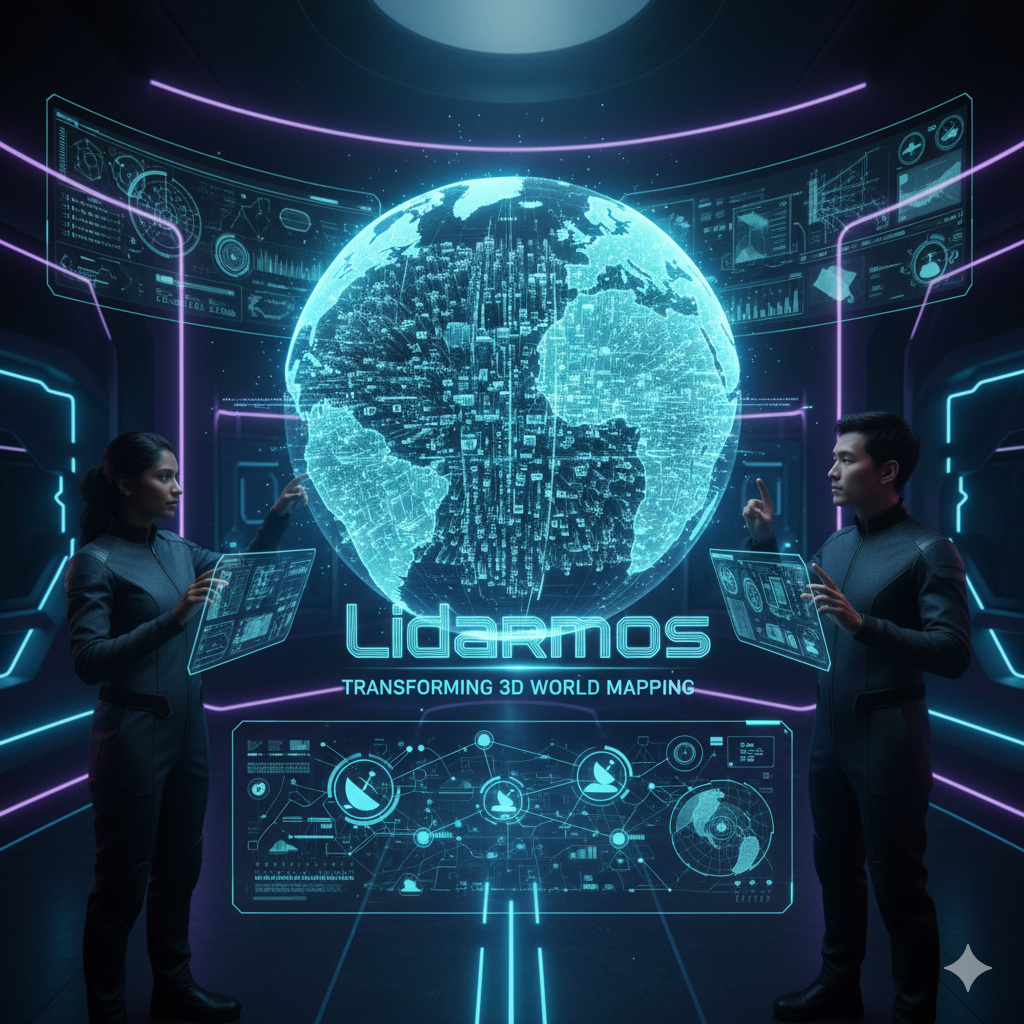
If you’ve ever used a map on your phone, relied on a self-driving car’s sensors, or seen drone footage that looks almost too perfect—you’ve glimpsed the power of spatial mapping. Now, imagine that precision multiplied by a thousand. That’s what Lidarmos brings to the table.
Lidarmos stands for the fusion of LiDAR (Light Detection and Ranging) and modular system design (MOS). It’s not just a buzzword—it’s a flexible, powerful framework for real-time 3D data collection, analysis, and decision-making. From autonomous vehicles to smart cities and environmental research, Lidarmos is paving the way for smarter, safer, and more efficient technology ecosystems.
Let’s explore how this innovation works, why it matters, and where it’s leading us next.
What Is Lidarmos?
At its core, Lidarmos is a next-generation platform that combines LiDAR technology with modular processing systems. It’s designed to capture, process, and interpret 3D spatial data with incredible precision.
Here’s a quick breakdown:
-
LiDAR (Light Detection and Ranging): Uses laser pulses to measure distances and create highly accurate 3D maps of environments.
-
MOS (Modular System): Adds flexibility, allowing the system to scale and adapt for different industries.
Put simply, Lidarmos is LiDAR reimagined—smarter, faster, and adaptable to virtually any sector.
How Lidarmos Works: Turning Light Into Data
So, how does Lidarmos actually work? Let’s simplify it:
-
Emission:
The system sends out millions of light pulses every second. -
Reflection:
These pulses bounce back after hitting objects—buildings, cars, trees, people. -
Measurement:
The time it takes for the light to return is used to calculate distance with pinpoint accuracy. -
Processing:
Advanced modular software converts raw data into 3D point clouds—digital representations of the real world. -
Analysis:
The system identifies static structures and moving objects in real time, helping in navigation, mapping, and monitoring.
Think of it as a “laser radar” combined with the brain of an AI system. It doesn’t just see objects—it understands them.
The Science Behind Lidarmos: LiDAR + MOS
The name “Lidarmos” often refers to LiDAR-MOS, short for LiDAR-based Moving Object Segmentation. In other words, it’s LiDAR powered by algorithms that can differentiate between what’s moving and what’s not.
For example:
-
A car driving down a street is “moving.”
-
The building beside it is “static.”
This distinction is critical for autonomous vehicles, drones, and robots. It allows machines to navigate safely and make split-second decisions.
Technologies Used in Lidarmos
-
3D Point Cloud Mapping
-
Machine Learning Models
-
Real-Time Object Segmentation
-
Sensor Fusion (LiDAR + Cameras + GPS)
-
Edge Computing for Instant Analysis
By combining these technologies, Lidarmos creates a living, breathing map of the world around us—constantly updated, incredibly detailed, and intelligent.
Why Lidarmos Matters
Let’s talk about the why. Why is Lidarmos such a big deal?
1. Unmatched Precision
Lidarmos systems can map surfaces down to a few millimeters of accuracy. For construction, robotics, and agriculture, that level of detail is gold.
2. Real-Time Insights
Whether it’s a drone scanning farmland or an autonomous car navigating traffic, Lidarmos provides instant feedback—making operations safer and more efficient.
3. Modular Flexibility
Because it’s modular, businesses can customize it for their needs—whether that’s environmental monitoring, smart city development, or warehouse automation.
4. Improved Decision-Making
Lidarmos turns raw spatial data into actionable intelligence. That means fewer risks, faster responses, and better outcomes.
5. Sustainability and Safety
With better mapping, cities can plan smarter, farmers can use fewer resources, and transport systems can reduce accidents—all while cutting costs.
Real-World Applications of Lidarmos
Here’s where things get exciting. Lidarmos isn’t just theory—it’s transforming industries worldwide.
1. Autonomous Vehicles
Self-driving cars depend on precise perception. Lidarmos helps them:
-
Detect pedestrians and obstacles.
-
Differentiate between moving and parked vehicles.
-
Navigate safely in complex environments.
2. Robotics
Factory and warehouse robots use Lidarmos to:
-
Avoid collisions.
-
Map workspaces dynamically.
-
Operate efficiently in human environments.
3. Smart Cities
Urban planners use Lidarmos to:
-
Design sustainable infrastructure.
-
Monitor traffic patterns.
-
Enhance security and environmental management.
4. Agriculture
Farmers leverage Lidarmos for:
-
Crop monitoring and health analysis.
-
Soil moisture and terrain mapping.
-
Precision irrigation and yield prediction.
5. Construction and Real Estate
Architects and engineers use Lidarmos scans to:
-
Create digital twins of sites.
-
Detect structural issues early.
-
Streamline project planning and safety checks.
6. Environmental Research
Scientists employ Lidarmos for:
-
Forest mapping and conservation.
-
Glacier and coastline monitoring.
-
Flood and disaster response modeling.
Case Studies: Lidarmos in Action
Case Study 1: Urban Mobility Upgrade
A European city used Lidarmos-powered mapping to redesign traffic systems. Within two years:
-
Traffic congestion dropped by 25%.
-
Street lighting energy use fell by 30%.
-
Pedestrian safety improved significantly.
Case Study 2: Smarter Agriculture
An agricultural startup integrated Lidarmos drones to monitor crop health.
-
Yields increased by 18%.
-
Pesticide use dropped by 12%.
-
Water consumption was reduced by 20%.
Case Study 3: Autonomous Vehicle Testing
A global car manufacturer used Lidarmos to enhance its vehicle perception systems.
-
Object detection improved by 40%.
-
Road accidents in test zones decreased dramatically.
These success stories show that when precision meets intelligence, innovation follows naturally.
Advantages of Lidarmos
Let’s sum up the biggest benefits of Lidarmos:
-
Ultra-precise mapping (within a few millimeters)
-
Adaptable modular design
-
Real-time performance
-
Compatibility with drones, vehicles, and IoT systems
-
Cross-industry usability
-
Data-rich insights for AI and ML
-
Supports sustainability and efficiency goals
In short, it gives you the power of laser vision—customized for your world.
Challenges
No technology is perfect, and Lidarmos is no exception. Here are a few challenges:
-
High Setup Cost:
Advanced sensors and computing systems aren’t cheap—though costs are dropping fast. -
Complex Data Management:
Processing terabytes of LiDAR data requires expertise and powerful hardware. -
Environmental Factors:
Weather conditions like rain or fog can reduce accuracy. -
Regulatory Concerns:
Public use (e.g., urban scanning) can raise privacy questions. -
Energy Consumption:
High-performance systems can consume significant power during continuous operation.
Still, most experts agree: the benefits far outweigh the drawbacks.
Things to Consider Before Implementing Lidarmos
If your organization is thinking about adopting Lidarmos, here’s what to evaluate first:
-
Purpose:
Define your goal—mapping, navigation, analysis, or automation. -
Budget:
Account for both equipment and data processing costs. -
Scalability:
Ensure your system can grow with your needs. -
Data Infrastructure:
Have a plan for storage, processing, and security. -
Team Training:
Invest in people who can interpret LiDAR data effectively. -
Integration:
Make sure Lidarmos works seamlessly with your existing tools.
The Future of Lidarmos: Smarter, Smaller, and More Powerful
So what’s next for Lidarmos? The future looks incredibly promising.
AI Integration
Artificial intelligence will allow Lidarmos systems to interpret and act on data automatically. Expect real-time decision-making powered by machine learning.
Sensor Fusion
Combining LiDAR with radar, thermal, and camera systems will make mapping even more robust and adaptable.
Miniaturization
Sensors are becoming smaller, cheaper, and more energy-efficient—opening doors for consumer devices and drones.
Blockchain Security
Future systems may use blockchain to store and share spatial data securely across smart cities.
Sustainability Focus
Next-gen Lidarmos systems will use green energy and materials, aligning with global environmental goals.
Frequently Asked Questions (FAQs)
Q1: Is Lidarmos the same as LiDAR?
Not exactly. LiDAR is the technology behind it, while Lidarmos is a modular, intelligent framework that expands LiDAR’s capabilities.
Q2: Can small businesses use Lidarmos?
Yes. Scalable versions exist for startups and small operations—especially in agriculture and real estate.
Q3: Does Lidarmos replace GPS?
No, but it enhances GPS accuracy by adding 3D data and visual awareness.
Q4: Is it cost-effective?
While initial costs are high, Lidarmos saves money long-term through reduced labor, fewer errors, and increased efficiency.
Q5: How weather-resistant is Lidarmos?
Modern systems are improving fast, with new LiDAR units optimized for rain, fog, and snow.
Lidarmos as a Concept Beyond Technology
Interestingly, lidarmos also has roots in Portuguese, meaning “to deal with” or “to handle together.” That collective spirit mirrors what the technology does—it helps industries, communities, and systems deal with complexity collaboratively.
So in a way, Lidarmos isn’t just technology—it’s a philosophy: working together to handle challenges using the power of light, data, and innovation.
Conclusion
Lidarmos represents more than a new piece of tech—it’s a new way of seeing and understanding the world.
By merging LiDAR’s precision with modular flexibility, it empowers industries to make smarter decisions, build safer systems, and create sustainable futures. Whether it’s guiding autonomous cars, helping farmers grow more efficiently, or shaping the cities of tomorrow, Lidarmos is leading the light revolution.
As we move deeper into the digital era, one thing is certain: the future belongs to those who can see it clearly. And with Lidarmos, we finally can.