Picture this: you’re rushing through a busy intersection during your morning commute, music blasting through your headphones, completely oblivious to the cyclist cutting across your path. It’s a scenario millions of commuters experience daily, and it raises a critical question — why do we keep choosing audio solutions that put us at risk? Studies suggest that pedestrians wearing headphones are three times more likely to be involved in traffic accidents than those without. Yet the desire to make commutes more enjoyable with music, podcasts, or calls is completely understandable.
The real problem isn’t wanting audio during your commute — it’s the tools we’ve been using to get it. Traditional headphones, whether over-ear or in-ear, create a bubble of isolation that disconnects you from the world around you at precisely the moments when awareness matters most. Bluetooth sunglasses offer a smarter path forward, merging audio technology with everyday eyewear to deliver sound without sealing off your senses. This article explores why these innovative devices are rapidly becoming the superior choice for commuters who refuse to choose between great audio and personal safety.
The Commuter’s Audio Dilemma: Why Traditional Headphones Fall Short
Every commuter knows the ritual: plug in, tune out, and hope for the best. Whether you’re navigating a subway platform, cycling through city streets, or walking to the office, headphones have become the default companion for making dull journeys more bearable. But that familiar comfort comes with a growing list of problems that most people quietly tolerate rather than question.
The most serious issue is isolation. Over-ear headphones and in-ear buds are engineered to block outside noise, which sounds appealing until you miss the warning horn of an approaching vehicle or fail to hear a fellow commuter alerting you to danger. Noise-canceling models make this worse, creating an almost airtight acoustic seal that leaves you functionally deaf to your surroundings. In environments where split-second awareness can prevent accidents, that’s not a minor inconvenience — it’s a genuine hazard.
Physical discomfort is another underrated drawback. Wearing earbuds for a 45-minute commute each way adds up to hours of pressure inside the ear canal, contributing to soreness, irritation, and long-term hearing fatigue. Over-ear headphones, while more cushioned, add bulk and heat, making them impractical during warmer months or when you’re already carrying a bag and managing transit cards.
There’s also the social friction. Headphones send an unmistakable “do not disturb” signal, which can cause commuters to miss important public announcements, staff instructions at transport hubs, or even casual interactions that make urban life feel human. For commuters who need audio that fits seamlessly into real-world movement rather than blocking it out entirely, traditional headphones simply weren’t built for the job. A smarter solution starts by rethinking the device itself.
Introducing Smart Audio Glasses: What Are Bluetooth Sunglasses?
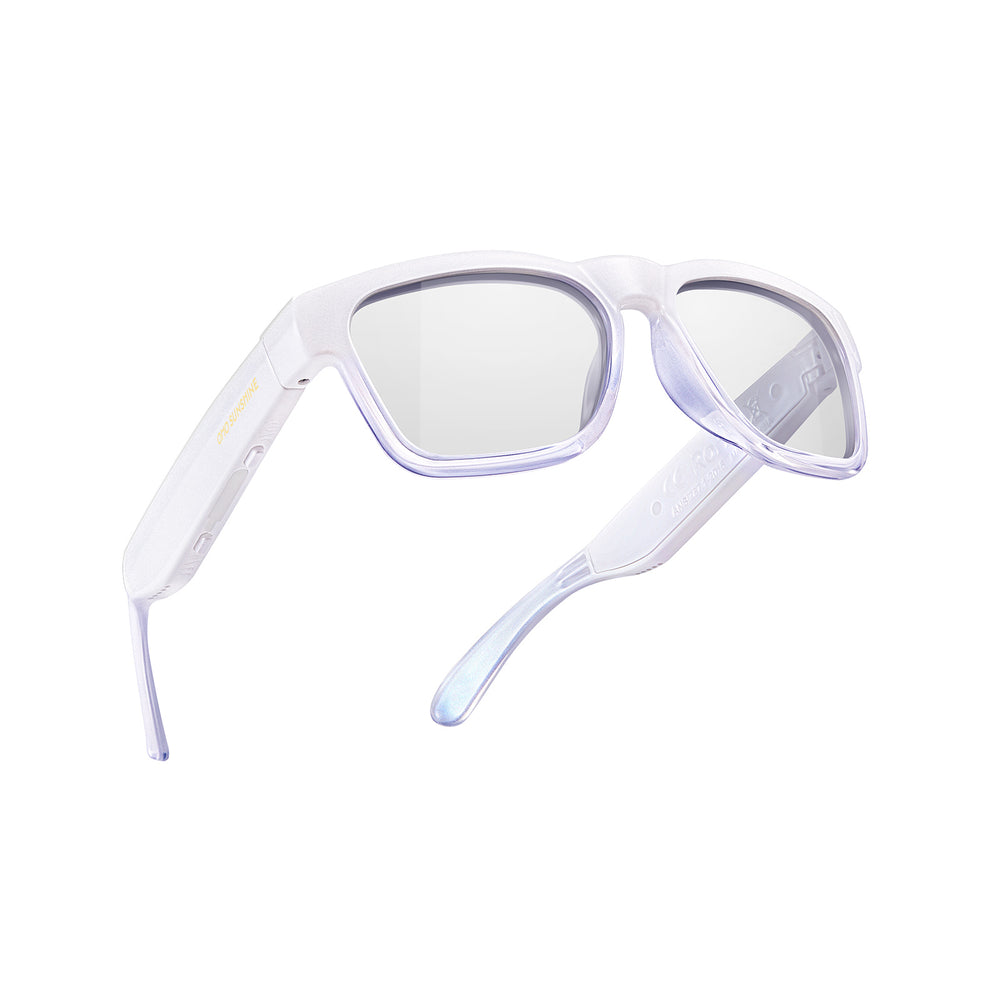
Bluetooth sunglasses are exactly what they sound like — functional eyewear with audio technology built directly into the frame. Unlike traditional sunglasses that serve a single purpose, these smart audio glasses combine UV-protective lenses with miniaturized speakers, integrated microphones, and wireless Bluetooth connectivity, all housed within a design that looks remarkably close to conventional eyewear. The result is a wearable device that handles your audio needs without anything going in or over your ears.
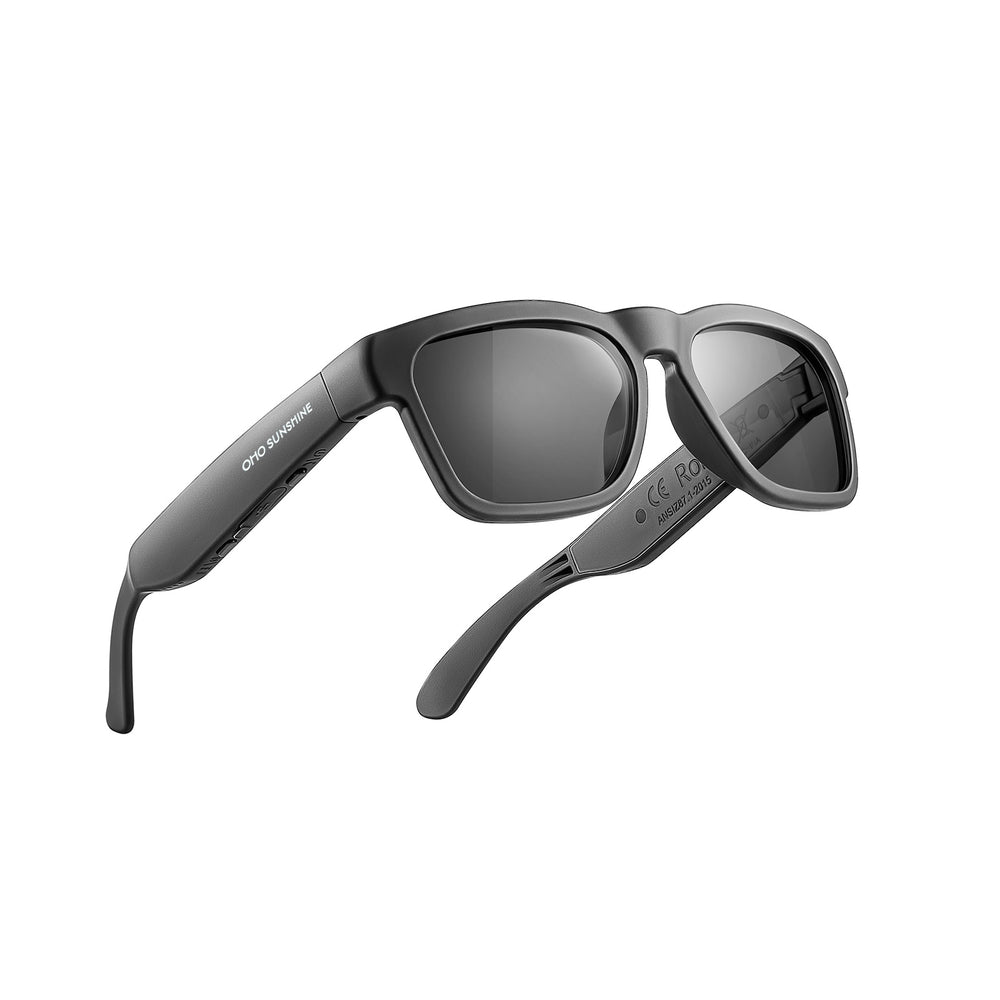
The mechanics are straightforward. Tiny directional speakers sit just in front of each ear, mounted within the temple arms of the frame. Sound is projected toward the ear canal rather than sealed inside it, allowing you to hear your audio clearly while ambient noise from the surrounding environment remains fully audible. A built-in microphone handles phone calls and voice assistant commands, while Bluetooth connectivity pairs the glasses to your smartphone just as any wireless headset would.
What’s changed in recent years is the trajectory from novelty to necessity. Early versions of audio eyewear were bulky, battery-hungry, and sonically mediocre — more of a tech curiosity than a practical daily driver. Today’s smart audio glasses have closed that gap considerably. Improved Bluetooth chipsets deliver stable connections and longer battery life, while advances in micro-speaker engineering have produced audio quality that genuinely competes with entry-level wireless earbuds. Brands like ohosunshine and other dedicated eyewear companies have entered the space, bringing with them better industrial design and broader lens options including prescription compatibility. For commuters, this evolution means the product has finally matured into something worth taking seriously.
Core Advantages: Seamless Bluetooth Connectivity and Audio Integration
The appeal of Bluetooth sunglasses for commuters goes beyond simply avoiding earbuds. At their core, these devices deliver a genuinely capable wireless audio experience that handles everything a daily commuter needs — music streaming, phone calls, and voice assistant access — without requiring anything to touch your ears. That shift in form factor turns out to have significant practical benefits.
Stable Connections for Uninterrupted Audio
Modern Bluetooth sunglasses use the same wireless protocols found in premium earbuds, offering reliable connectivity across typical commuting distances from a paired smartphone. Most current models maintain a stable connection up to 10 meters, which comfortably covers scenarios like slipping your phone into a bag or jacket pocket. Battery life has improved substantially, with many models delivering six to eight hours of continuous playback — enough to cover a full day of commuting without needing a midday charge. Automatic reconnection when you put the glasses on and disconnection when you remove them adds a layer of effortless convenience that wired solutions simply can’t match.
Enhanced Daily Commutes with Integrated Audio Features
Beyond basic playback, today’s smart audio glasses pack in features that streamline commuter interactions considerably. Touch-sensitive temple controls let you skip tracks, adjust volume, or answer calls with a tap, keeping your hands free while navigating turnstiles or holding onto transit handrails. Built-in microphones with wind and background noise reduction make phone conversations clear even on busy streets. Many models also support multi-device pairing, so switching audio between your phone and tablet requires no manual reconnection — a small but genuinely useful feature for commuters who consume different content across devices throughout their journey.
Prioritizing Safety: The Role of Environmental Awareness
The single most compelling argument for Bluetooth sunglasses over traditional headphones isn’t audio quality or convenience — it’s what you can still hear while wearing them. Open-ear audio design means ambient sound flows freely around you at all times, so traffic signals, approaching vehicles, station announcements, and conversations remain fully accessible without any conscious effort on your part. You’re not managing a transparency mode or toggling settings mid-commute; awareness is simply the default state.
This distinction matters enormously in urban commuting environments where the soundscape itself carries critical information. A cyclist’s bell, a driver’s horn, a transit worker calling out a platform change — these are the auditory cues that keep commuters safe and on schedule. Noise-canceling headphones suppress exactly this category of sound, treating environmental audio as interference to be eliminated rather than information to be processed. Bluetooth sunglasses flip that logic entirely, treating your surroundings as part of the experience rather than an obstacle to it.
There’s a social dimension to this as well. Commuters wearing open-ear audio glasses remain approachable and conversationally available in ways that headphone users simply aren’t. You can respond to a fellow passenger, hear a shop assistant, or catch a friend’s greeting without fumbling to pause playback or remove an earbud. For daily commuters who move through shared public spaces, that kind of frictionless integration with the environment isn’t just safer — it makes the entire journey feel less isolating and more human.
Practical Solutions: How Bluetooth Sunglasses Solve Commuter Needs
Switching to Bluetooth sunglasses isn’t just a gear upgrade — it’s a practical shift in how you approach your entire commute. Getting the most out of them requires a few deliberate choices upfront, but once those are made, the experience becomes remarkably effortless. Start by selecting a model that matches your commuting environment: if you cycle or walk outdoors, prioritize polarized lenses and water resistance; if your commute is primarily indoor transit, lens tint and audio quality should take precedence over weather features. Look for frames that fit your face securely without pressure points, since comfort over extended wear is non-negotiable.
Step-by-Step Guide to Hands-Free Commuting
Once you’ve chosen your model, follow these steps to build a seamless daily routine. First, pair the glasses with your smartphone using the manufacturer’s app if available — this typically unlocks EQ settings and touch control customization. Second, set your listening volume to a level where you can still clearly hear someone speaking directly to you; a useful benchmark is keeping ambient street noise audible without straining. Third, enable multi-device pairing if your glasses support it, linking both your phone and any secondary device you use during transit. Finally, establish a simple maintenance habit: wipe the speaker grilles and microphone ports weekly to prevent audio degradation from dust and skin oils. Charging the glasses each evening — whether you’re using a dedicated audio eyewear brand like ohosunshine or another option — ensures you start every commute with a full battery, eliminating the risk of audio cutting out mid-journey. These steps take minutes to implement but pay dividends across every commute that follows.
The Smarter Commuter Audio Choice
The case for Bluetooth sunglasses as the superior commuter audio solution comes down to a simple but powerful idea: you shouldn’t have to choose between enjoying your audio and staying aware of the world around you. Traditional headphones were designed for listening rooms and gym sessions, not for the unpredictable, fast-moving environments that urban commuters navigate every day. Bluetooth sunglasses were built with exactly that context in mind.
Throughout this article, the advantages have been consistent and practical. Open-ear audio keeps you connected to your surroundings without sacrificing sound quality. Hands-free controls and stable Bluetooth connectivity streamline every interaction from the moment you leave home. The safety benefits alone — remaining alert to traffic, announcements, and the people around you — represent a meaningful upgrade over noise-canceling alternatives. And as a piece of everyday eyewear, they eliminate the extra device entirely.
Wearable audio technology is moving in one clear direction: toward devices that integrate invisibly into daily life rather than interrupting it. Bluetooth sunglasses are already well along that path, and as the technology continues to mature, the gap between them and conventional headphones will only widen. If your commute is a daily fixture, this is one switch worth making sooner rather than later — your ears, your safety, and your overall experience on the road will all be better for it.