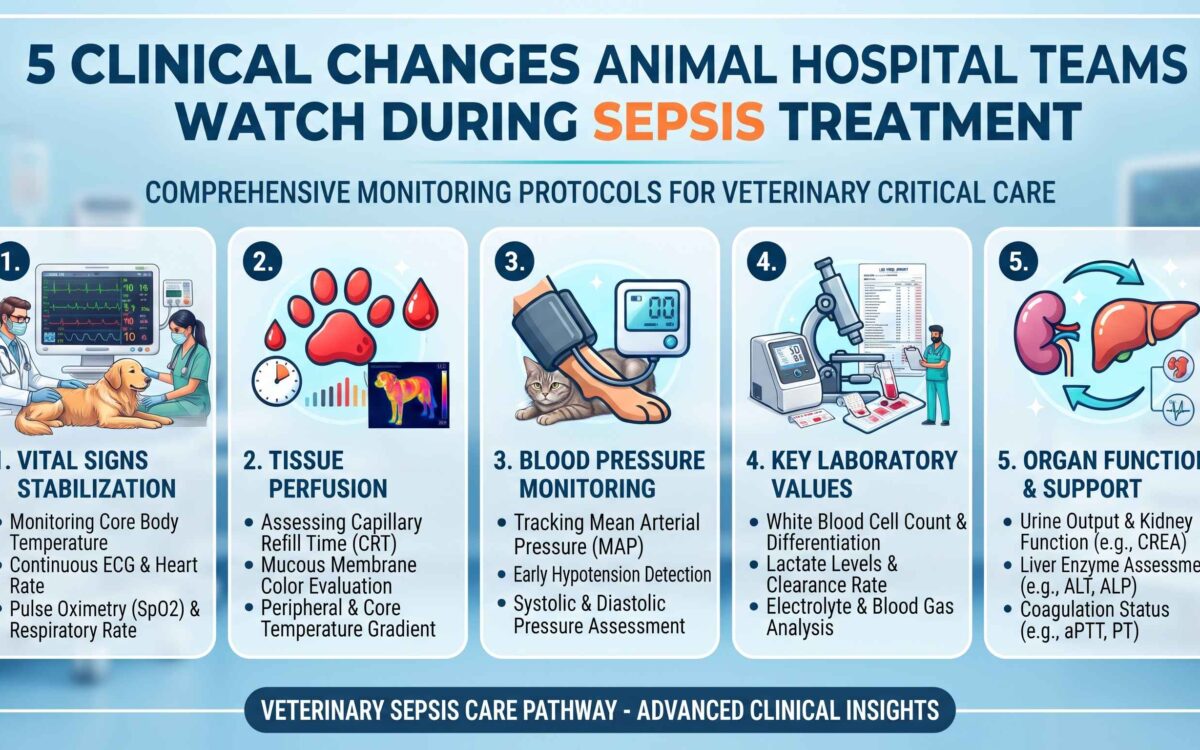
5 Clinical Changes Animal Hospital Teams Watch During Sepsis Treatment

When a pet has sepsis, everything can shift in a matter of hours. You may have brought your dog or cat in because they seemed tired, feverish, weak, or just not right, and then the conversation suddenly turned serious. That kind of change is hard to absorb. Sepsis is the body’s extreme response to infection, and once it starts affecting organs, blood pressure, and breathing, animal hospital teams have to watch for small changes that carry a lot of meaning. In addition to emergency treatment, preventive veterinary services for Bedford pet owners can play an important role in helping detect infections earlier and support overall pet health.
During treatment, the goal is not just to give fluids, antibiotics, and support. The team is tracking whether your pet is moving toward stability or slipping into trouble. That means checking circulation, breathing, mental status, urine output, and lab values again and again. Human medicine describes sepsis care as a process of close monitoring and rapid response, which is why clinical sepsis care guidance from the CDC stresses early treatment and reassessment. The same pattern applies in an Animal Hospital, where staff are watching trends, not single moments.
Blood pressure and circulation show whether the body is still perfusing organs
One of the first clinical changes teams watch during sepsis treatment in animal hospital settings is blood pressure. Sepsis can cause blood vessels to widen and leak, which drops pressure and reduces blood flow to the kidneys, brain, and other organs. A pet can look quiet or tired, but underneath that, the body may be struggling to deliver oxygen where it is needed.
Hospital teams often check gum color, capillary refill time, pulse quality, heart rate, limb temperature, and direct blood pressure readings. If your pet’s paws feel cool, their pulses are weak, or the pressure stays low even after fluids, that can signal worsening shock. If those signs improve after treatment, it suggests circulation is responding. This is one reason veterinary sepsis monitoring is so hands on. A pet may seem a little brighter, yet the numbers still matter because organ injury can continue before it becomes obvious from behavior alone.
Breathing changes can signal worsening inflammation or fluid imbalance
Respiratory rate and effort are another major focus. Sepsis can affect the lungs directly, and aggressive fluid therapy, while often necessary, has to be balanced carefully. A pet that starts breathing faster, using more abdominal effort, or needing oxygen support may be showing signs of lung involvement, pain, fever, acid base imbalance, or fluid overload.
You might hear the team talk about oxygen saturation, chest sounds, or blood gas values. Those details matter because breathing changes often happen before a full crash. In severe cases, sepsis becomes what some clinicians describe as a trajectory rather than a single event, with the body changing over time as inflammation and organ stress build. That idea is echoed in this discussion of sepsis as a clinical trajectory. In a veterinary hospital, that means a pet who looked stable in the morning may need a different level of support by afternoon.
Mental status often changes before owners expect it to
Owners often look first for appetite and tail wags, which makes sense, but hospital teams also watch mentation closely. Is your pet alert, responsive, and interested in their surroundings, or are they dull, disoriented, restless, or hard to rouse? Sepsis can reduce blood flow to the brain, alter blood sugar, and trigger widespread inflammation that changes behavior fast.
This part can be painful to see because it does not always look dramatic. Sometimes the change is subtle. A dog that normally lifts their head when you speak may not react. A cat that usually resists handling may go limp and quiet. Those shifts help the team judge whether treatment is working or whether they need to escalate care. In both human and veterinary medicine, altered mental status is a serious warning sign because it often reflects bigger systemic problems already underway.
Urine output and kidney values reveal whether organ support is keeping up
Sepsis puts the kidneys under strain early. Low blood pressure, dehydration, inflammation, and clotting problems can all reduce kidney function. That is why animal hospital teams measure urine output when possible and monitor bloodwork such as creatinine, BUN, electrolytes, and lactate. According to MedlinePlus information on sepsis, sepsis can progress to organ failure when treatment does not reverse the body’s response quickly enough.
If a pet is making less urine despite fluids, that can suggest poor kidney perfusion or injury. If kidney values climb, medication plans, fluid rates, and prognosis may change. This is one of the hardest parts for families because the treatment itself can become a moving target. What helped six hours ago may need to be adjusted now. That does not mean care is failing. It means the team is responding to what the body is showing in real time.
Temperature, white blood cells, and lactate help track the infection response
Fever gets attention, but sepsis does not always cause a high temperature. Some pets become hypothermic instead, which can be even more concerning. Teams also follow white blood cell counts, blood glucose, and lactate levels to see how the body is handling infection and oxygen delivery. A falling lactate can be reassuring. A rising lactate can point to ongoing shock or poor tissue perfusion, even if a pet looks a little calmer after pain medicine.
This is where clinical changes during sepsis treatment become more than a checklist. Each sign has to be read with the others. A pet whose fever drops but whose blood pressure worsens is not truly improving. A pet whose heart rate settles, urine output rises, and mentation brightens is giving the team a better story.
The most watched changes and what they can mean
| Clinical change | What the team watches | What improvement may suggest | What worsening may suggest |
| Blood pressure and perfusion | BP readings, pulses, gum color, limb warmth | Better organ blood flow, response to fluids or medications | Shock, poor perfusion, higher risk of organ injury |
| Breathing status | Respiratory rate, effort, oxygen levels, lung sounds | Improved oxygenation and better fluid balance | Lung involvement, acid base problems, fluid overload |
| Mental status | Alertness, responsiveness, behavior changes | Better brain perfusion and reduced systemic stress | Worsening inflammation, low oxygen delivery, shock |
| Urine output and kidney markers | Urine production, creatinine, BUN, electrolytes | Kidneys are being perfused and supported | Kidney injury, dehydration, poor circulation |
| Temperature and lab trends | Temperature, WBC count, lactate, glucose | Infection response is stabilizing | Ongoing sepsis, tissue hypoxia, worsening systemic response |
Clear steps help you stay grounded during sepsis care
Ask for trend updates, not one time numbers. A single blood pressure or lab result does not tell the full story. Ask whether your pet is improving, stable, or declining over the last several hours. That gives you a more honest picture of what the team is seeing.
Focus on the top three concerns. If you are overwhelmed, ask the veterinarian which three changes matter most right now. It may be blood pressure, kidney output, and breathing. Narrowing the focus helps you follow the case without getting lost in every detail.
Discuss what the next change in care would be. Ask what happens if your pet improves and what happens if they do not. That may include oxygen, vasopressors, repeat imaging, surgery to control the source of infection, or referral for intensive care. Knowing the next step reduces some of the panic that comes with waiting.
Sepsis treatment is intense because the body can change fast, and animal hospital teams are trained to catch those shifts early. If your pet is in care right now, you are not overreacting by feeling scared. The most useful thing you can do is stay in close contact with the hospital, ask for clear updates, and make decisions based on trends rather than hope alone.