6 Ways Family Dental Teams Can Make Follow Up Instructions Easier To Understand

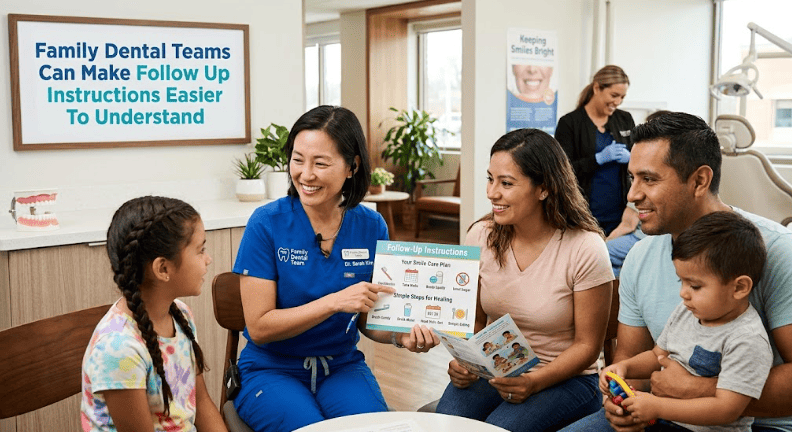
You leave the appointment with a child who is tired, a mouth that is still numb, and a blur of instructions you hope you remember correctly once you get home. Give this medicine at this time. Avoid certain foods. Watch for swelling. Call if bleeding lasts longer than expected. It is a lot, and most people are trying to absorb it while juggling work, school pickup, pain, and stress. Even when searching for information like same-day crowns in West San Jose, it can be hard to focus on next steps.
That is why clear follow up guidance matters so much in family dentistry. If the instructions are hard to read, packed with medical terms, or given too fast, small misunderstandings can turn into missed doses, extra discomfort, and repeat calls to the office. Good follow up care is not just about handing over a paper. It is about making sure patients and caregivers truly know what to do next, and feel calm enough to do it.
Clear follow up instructions reduce confusion after family dental visits
Most dental teams have seen the same pattern. A patient nods in the chair, takes the sheet, and still goes home unsure. That does not mean they were not paying attention. It usually means the timing was hard. People often hear instructions when they are distracted, in pain, embarrassed, or focused on getting out the door.
Families face another layer of pressure. One child had fillings, another needs an orthodontic check soon, and a parent is trying to remember whether soft foods means yogurt only or pasta too. If the wording is vague, every choice feels risky. If the language is too technical, people may ignore parts they do not understand and hope for the best.
Health literacy plays a big role here. The Agency for Healthcare Research and Quality recommends a universal precautions approach to health literacy, which means assuming every patient may have trouble understanding health information at some point. That approach fits dental follow up perfectly. It removes blame and puts the focus where it belongs, on communication that works in real life.
Plain language helps family dentist instructions stick at home
The first fix is simple and often missed. Use plain language. Instead of saying “administer analgesics as needed,” say “give pain medicine if your child says the tooth hurts.” Instead of “avoid mastication on the affected side,” say “chew on the other side of the mouth today.” People follow instructions better when the words sound like everyday speech.
The CDC offers guidance on using plain language in patient materials, and the core idea is direct. Put the main action first, use common words, and keep each step easy to spot. Dental offices do not need polished brochures full of polished jargon. They need wording that still makes sense at 7 p.m. when a parent is looking at a sleepy child and a bottle of medicine.
This is where post treatment dental instructions often break down. The sheet may contain all the right information, but if it is dense, tiny, or written at a reading level that does not match the patient, it does not help much. Strong follow up communication is simple, specific, and easy to scan.
Six practical ways family dental teams can improve patient follow up communication
One, give only the instructions that apply to that patient. Generic handouts create noise. A child who had a cleaning does not need the same sheet as someone who had an extraction.
Two, say the top three actions out loud before the patient leaves. People remember short verbal summaries better than a flood of details. “Soft foods today, no straws, call us if bleeding continues after 30 minutes” is much easier to carry home.
Three, use teach back. Ask the patient or caregiver to repeat the plan in their own words. This is not a test. It is a quick way to catch confusion before it causes trouble.
Four, make the handout visual. Bold key times, use bullet points, and separate food instructions from medicine instructions. A crowded page invites mistakes.
Five, match instructions to the patient’s daily routine. If a prescription says four times a day, explain what that means in real life. Breakfast, lunch, dinner, bedtime. People need usable timing, not just dosage language.
Six, offer one easy way to reach the office for follow up questions. Patients are more likely to ask early when the path is clear, and early questions often prevent bigger problems later. This kind of support strengthens family dental follow up care because it turns a paper handout into an ongoing connection.
Common instruction styles create very different results
| Instruction Style | What Patients Often Experience | Likely Result at Home |
|---|---|---|
| Generic handout with dense text | Feels rushed and hard to scan | Missed details, more confusion, more callback questions |
| Customized handout with plain language | Feels relevant and easier to trust | Better follow through and fewer avoidable mistakes |
| Verbal instructions only | Easy to forget once numbness, stress, or pain sets in | Low recall by the end of the day |
| Verbal summary plus teach back and written steps | Feels clear and supported | Higher understanding and more confidence |
In a busy dental office, it is tempting to think more information is better. Usually the opposite is true. People do better with fewer words, clearer actions, and a format that respects how stress affects memory. That matters across the full range of family dentist services, from cleanings to fillings to oral surgery follow up.
Small changes in dental aftercare instructions can prevent bigger problems
What happens when follow up instructions are unclear is rarely dramatic at first. A parent gives the wrong food too soon. A patient waits too long to call about swelling because they thought it was normal. A teen skips saltwater rinses because the sheet was buried under school papers. Each one sounds minor until it leads to more pain, a delayed recovery, or another visit that might have been avoided.
That is why better communication is not extra. It is part of treatment. When dental teams simplify aftercare, they reduce friction at the exact moment families need calm and clarity most.
Three steps dental teams can take right away
Cut every handout to the essentials. Keep only the actions the patient needs today. Put the most urgent instruction at the top, in plain words, with clear timing.
Use teach back with one sentence. Ask, “Before you go, tell me how you’ll care for this at home.” That one prompt reveals what needs to be explained again.
Build instructions around real life. Replace abstract directions with daily cues like meals, bedtime, and school schedules. Patients remember routines better than clinical phrases.
Families do not need perfect recall. They need instructions that meet them where they are, especially when they are tired, worried, or distracted. The best follow up systems feel simple because someone took the time to make them simple. That effort protects comfort, reduces mistakes, and helps patients heal with more confidence.
When a dental office makes aftercare easier to understand, patients feel cared for long after the appointment ends.