Why Preventive Dentistry Leads To Lower Long Term Costs

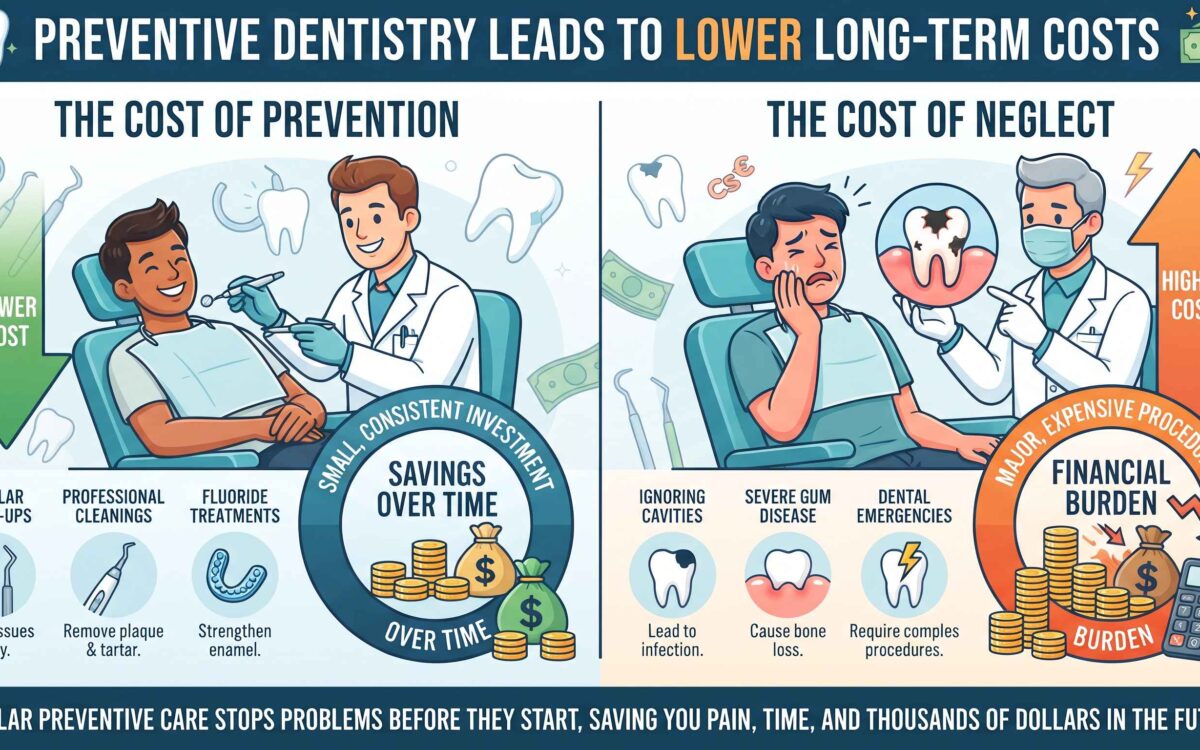
You put off a cleaning because money feels tight, or because nothing hurts, or because life got crowded and Pasadena dental care slid to the bottom of the list. That happens more than most people admit. A lot of families only call the dentist when a tooth starts throbbing, a filling breaks, or a child says something feels “weird.” The trouble is that waiting usually costs more, not less, and that is the heart of why preventive dentistry leads to lower long term costs.
Small dental problems stay small for only so long. Plaque hardens into tartar, early decay turns into a cavity, gum irritation becomes gum disease, and a simple visit that could have been routine turns into treatment that takes more time, more money, and more recovery. A family dentist helps catch those changes early, when the fix is usually faster and less expensive.
Preventive dental care stops expensive problems before they grow
You can feel fine and still have a developing problem. Early tooth decay often does not hurt. Gum disease can start with a little bleeding when you brush, then quietly damage the tissues that hold your teeth in place. By the time pain shows up, the issue is often larger than it first appears.
That is why regular exams, cleanings, X rays when needed, fluoride treatments, and sealants matter. They are not “extra” services. They are the lower cost path. A cleaning is usually far less expensive than a deep cleaning for gum disease. A small filling is far less expensive than a root canal and crown. If a tooth cannot be saved, the costs rise again with an extraction and replacement options.
The public health data supports this. The CDC outlines the return on investment for oral health prevention, showing that preventive measures can reduce later treatment needs and related costs. The CDC also explains how oral disease affects health across the lifespan, which matters because dental problems rarely stay limited to one tooth or one appointment.
Delayed treatment raises both financial and personal costs
The bill is only one part of it. There is also missed work, school absences, child care changes, and the stress of trying to fit urgent treatment into an already packed week. If you have ever had a sudden toothache before a trip, a holiday, or a big work deadline, you already know how quickly a “small” dental issue can take over your day.
Children add another layer. A child with untreated decay may struggle to eat, sleep, or focus in school. Parents end up juggling pain management, emergency appointments, and budget decisions they did not plan for. Adults do the same thing, often while trying to keep the rest of the household moving.
Preventive dentistry lowers those disruptions because it shifts care from emergency mode to maintenance mode. Instead of reacting to pain, you are managing risk. That is the real value behind preventive dental care. It protects your budget by reducing the chances of larger treatment plans later.
Routine dental visits support lower long term dental costs
A routine visit gives your dentist the chance to spot weak enamel, early cavities, bite problems, clenching, gum inflammation, and signs of wear before they become expensive repairs. It also gives you a plan. That matters when costs are a concern. A dentist can tell you what needs attention now, what can be monitored, and what habits at home could prevent another issue from starting.
For families, this kind of planning is one of the strongest arguments for long term savings from preventive dental care. You are not guessing. You are not waiting for pain to decide your next step. You are making smaller, steadier investments that help avoid larger bills.
The CDC has also published findings on school based sealant programs in this oral health report, showing how prevention can reduce cavities and help avoid more involved treatment. The same principle applies in everyday family dental care. Stop decay early, and you usually spend less.
Preventive care compared with delayed treatment
| Situation | Preventive Approach | Common Delayed Outcome | Likely Long Term Effect |
|---|---|---|---|
| Early plaque buildup | Regular cleaning and home care guidance | Tartar, gum inflammation, deeper infection | Higher treatment costs and more visits |
| Small area of decay | Exam and simple filling | Larger cavity, root canal, crown | More complex and expensive repair |
| Child prone to cavities | Sealants, fluoride, routine checkups | Multiple cavities and pain | School absences and larger dental bills |
| Teeth grinding or bite wear | Early detection and night guard if needed | Cracks, fractures, jaw discomfort | Restorative work and repeated repairs |
Simple steps can make family dental costs more manageable
Schedule care before pain forces the issue. Put routine visits on the calendar the same way you handle school forms, annual checkups, or car maintenance. Preventive appointments are easier to budget for than urgent treatment.
Ask for a clear treatment timeline. If your dentist finds a problem, ask what needs attention now and what can be watched. That helps you avoid the trap of delaying care too long and turning a manageable issue into a costly one.
Build stronger home habits. Twice daily brushing with fluoride toothpaste, daily flossing, a lower sugar routine, and replacing worn toothbrushes can prevent a surprising amount of trouble. Good home care does not replace the dentist, but it does reduce the chance that small problems will grow between visits.
Lower dental costs usually start with prevention
If you have been postponing dental care, you are not alone, and you are not failing. You are dealing with the same pressure many families face, trying to balance health needs with time and money. The good news is that prevention works best before things get urgent, and even starting now can help you avoid bigger costs later.
Regular care with a family dentist is often the most affordable path over time. It keeps minor issues from turning into major ones, reduces surprise expenses, and gives you more control over your health and your budget.