Chore Chart for Kindergarteners: 15 Easy Chores + Printable (2026)

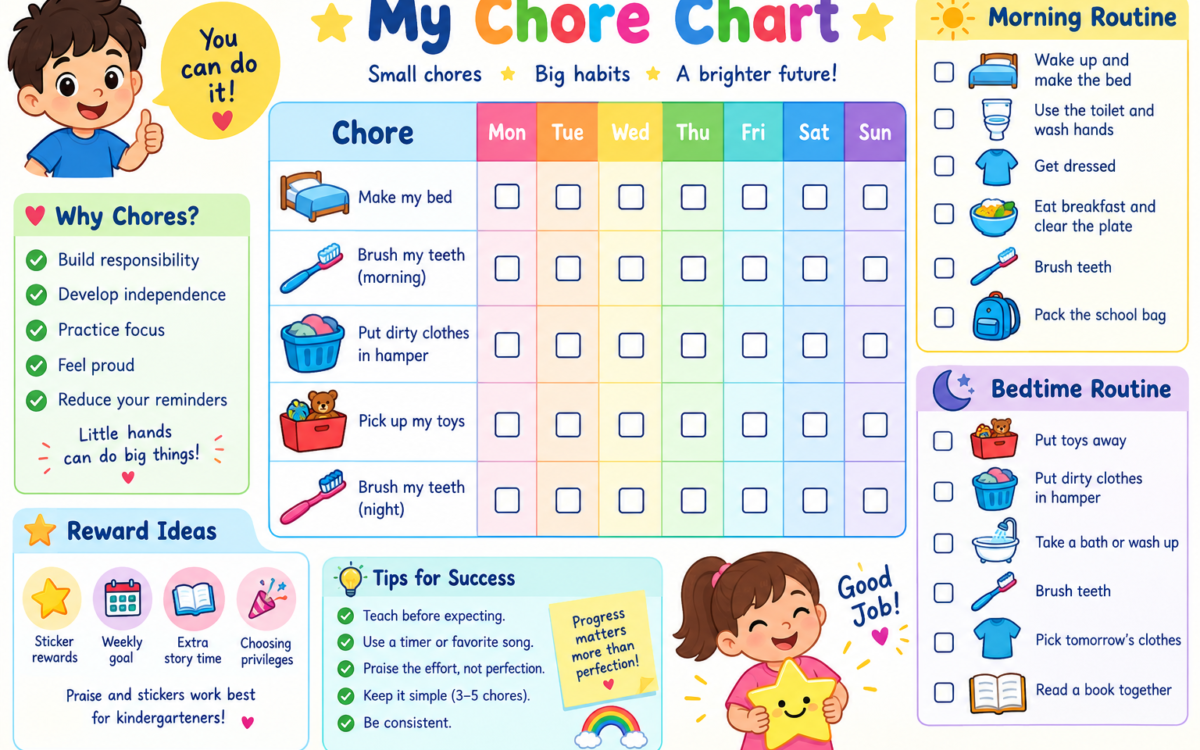
A chore chart for kindergarteners is one of the simplest ways to teach a young child responsibility. At five or six years old, kids love feeling “big.” They want to help, they love stickers, and they enjoy checking things off. A well-designed chart turns that excitement into daily habits.
In this guide you will learn which chores suit kindergarten-age children, how to design a chart that actually works, and how to build a morning and bedtime routine your child can follow without constant reminders.
Why Start a Chore Chart in Kindergarten?
Kindergarten is a big transition. Children begin following school rules, handling their belongings, and working with a routine. Chores at home support all of that.
A simple chore chart helps your child:
- Build responsibility. They learn that every family member contributes.
- Develop independence. Dressing, tidying, and packing a bag become their own jobs.
- Practice focus. Following a few steps in order is good practice for the classroom.
- Feel proud. Checking off a task gives a real sense of accomplishment.
- Reduce your reminders. The chart does the nagging, not you.
Most kindergarteners cannot read well yet, so the chart must be visual. Pictures matter far more than words at this age.
What Chores Can a 5 or 6 Year Old Do?
Kindergarteners can handle small, safe, repeatable tasks. They still need your guidance, so expect to demonstrate each chore first and supervise at the start.
Daily chores for kindergarteners
- Make their bed (a straightened blanket is enough)
- Get dressed with minimal help
- Brush teeth morning and night
- Put dirty clothes in the hamper
- Pack their school bag or put it in its spot
- Put shoes and jacket away
- Clear their own plate after meals
- Pick up toys before bedtime
Weekly chores for kindergarteners
- Help set the table
- Water indoor plants with a small cup
- Feed a pet with pre-measured food
- Wipe the table with a damp cloth
- Match and put away socks
- Dust low shelves with a soft cloth
- Help carry light grocery items
Safety note: Avoid sharp tools, hot items, strong cleaning chemicals, and heavy lifting. Always supervise anything involving water or the kitchen.
Types of Chore Charts That Work for Kindergarteners
1. Picture chore chart
Each task has a simple image: a toothbrush, a bed, a toy box. This is the best format for children who cannot read yet, and it is the one we recommend for most families.
2. Daily chore chart
A single page with morning and evening tasks. It builds routine quickly and works well for school days.
3. Weekly chore chart
Rows are chores and columns are days (Monday to Sunday). Your child puts a sticker or tick in each box. This version helps them see progress across the week.
4. Magnetic or reusable chart
Use magnets, Velcro pictures, or a laminated sheet with a dry-erase marker. It lasts for months and you never need to reprint.
How to Make a Chore Chart for Your Kindergartener
You do not need design skills. Follow these steps.
Step 1: Pick 3 to 5 chores only. Too many tasks will overwhelm a five-year-old. Start small and add more later.
Step 2: Use pictures. Draw simple icons, print clipart, or take photos of your child doing each task.
Step 3: Split by time of day. Group tasks under “Morning” and “Evening.” Children understand routines better than long lists.
Step 4: Make it easy to reach. Hang the chart at your child’s eye level, on the fridge or their bedroom door.
Step 5: Add a tracking method. Stickers, stamps, magnets, or a colored marker all work. The act of marking it themselves is what makes it satisfying.
Step 6: Keep it consistent. Review the chart together at the same time each day.
Sample Kindergarten Chore Chart (Copy and Print)
You can draw this table on paper or recreate it in any free design tool. Replace each chore with a picture for best results.
| Chore | Mon | Tue | Wed | Thu | Fri | Sat | Sun |
|---|---|---|---|---|---|---|---|
| Make my bed | ☐ | ☐ | ☐ | ☐ | ☐ | ☐ | ☐ |
| Brush my teeth (morning) | ☐ | ☐ | ☐ | ☐ | ☐ | ☐ | ☐ |
| Put dirty clothes in hamper | ☐ | ☐ | ☐ | ☐ | ☐ | ☐ | ☐ |
| Pick up my toys | ☐ | ☐ | ☐ | ☐ | ☐ | ☐ | ☐ |
| Brush my teeth (night) | ☐ | ☐ | ☐ | ☐ | ☐ | ☐ | ☐ |
For a printable version, paste this table into a Word or Google Docs file, add pictures next to each chore, and print it on A4 or letter paper.
Morning and Bedtime Routine Checklist
Routines work best when they stay the same each day.
Morning routine
- Wake up and make the bed
- Use the toilet and wash hands
- Get dressed
- Eat breakfast and clear the plate
- Brush teeth
- Pack the school bag
Bedtime routine
- Put toys away
- Put dirty clothes in the hamper
- Take a bath or wash up
- Brush teeth
- Pick tomorrow’s clothes
- Read a book together
Reward Ideas That Actually Work
Rewards keep motivation high, but they should stay small and simple.
- Sticker rewards. A sticker for every completed task is often enough.
- Weekly goal. After a full week of ticks, choose a special activity such as a park visit or family movie night.
- Extra story time. Time with you is often the best prize.
- Choosing privileges. Let them pick the dinner dessert or the weekend game.
A note on money: Most experts suggest waiting on allowance until children are slightly older and understand counting and saving. For kindergarteners, praise and stickers work better than cash.
Tips to Make Chores Fun (and Make Them Stick)
- Teach before expecting. Show your child how to do the task, do it together, then let them try alone.
- Turn on music. A favorite song makes tidying feel like a game.
- Use a timer. “Can we finish before the song ends?” works surprisingly well.
- Praise the effort. Say “Thank you for putting your shoes away” rather than focusing on perfection.
- Stay realistic. A slightly crooked blanket still counts as a made bed.
- Be consistent. Kids follow routines when adults follow them too.
For more age-by-age suggestions, read our guide on age-appropriate chores for kids. If your child is also learning to build good habits at school, our article on kindergarten morning routine ideas pairs perfectly with this chart. And for ideas on motivating your child with small prizes, see reward chart ideas for kids.
Common Mistakes to Avoid
- Adding too many chores. Three to five is plenty.
- Using text only. A chart without pictures will not work for non-readers.
- Expecting perfection. Progress matters more than flawless results.
- Skipping the review. A chart on the wall does nothing if you never look at it together.
- Using chores as punishment. Chores should feel like being part of the team.
Frequently Asked Questions
At what age should kids start doing chores?
Children can begin helping around age two or three with very simple tasks like putting toys in a basket. By kindergarten, they can follow a small daily chart.
How many chores should a kindergartener have?
Three to five daily tasks is a good starting point.
Should I pay my kindergartener for chores?
Most families begin with praise and stickers. Money concepts are easier for slightly older children.
What if my child refuses to do their chores?
Stay calm, keep tasks short, do them together at first, and praise any effort. Consistency usually solves resistance within a few weeks.
How do I make a chore chart for a child who cannot read?
Use pictures or photos for every chore, and keep the layout simple with large boxes for stickers.
Final Thoughts
A chore chart for kindergarteners works best when it is simple, visual, and consistent. Start with a few easy tasks, use pictures instead of words, celebrate small wins, and add new responsibilities as your child grows. Within a few weeks, you will notice more independence, fewer reminders, and a child who feels proud to help at home.