Australia remains a destination of interest for skilled professionals seeking career opportunities, a different lifestyle, and potential long-term settlement. However, moving through the skilled migration process requires more than finding a visa category and submitting an application. Applicants need to understand their eligibility, prepare supporting evidence, and identify a pathway that aligns with their qualifications and circumstances.
A well-planned approach can help applicants make informed decisions, avoid preventable errors, and understand what steps may be required before applying.
Understand Australia’s Skilled Migration Options
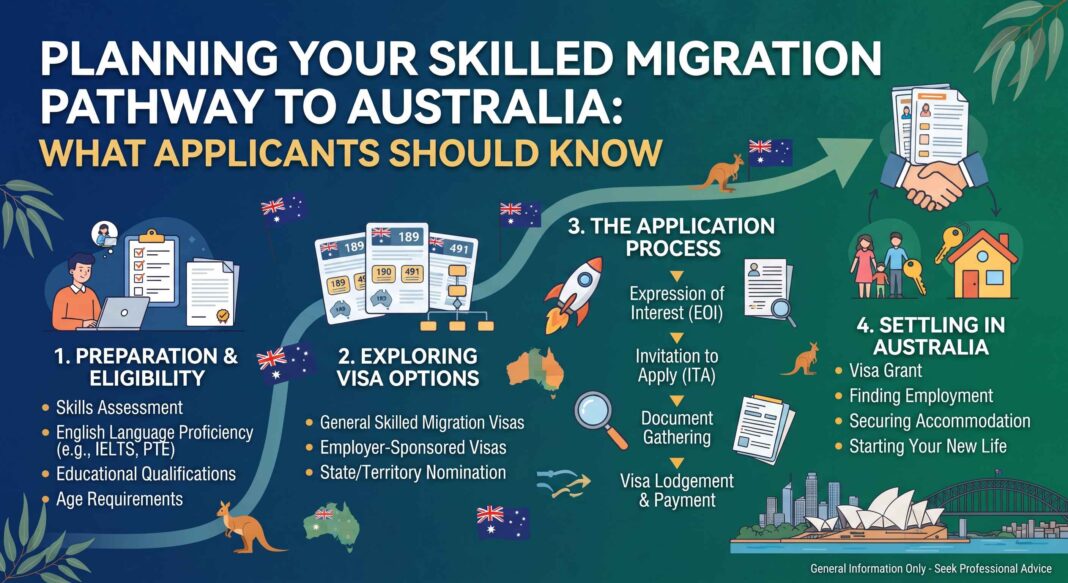
Australia offers several skilled migration pathways, and each has its own eligibility criteria. Depending on an applicant’s circumstances, options may include the Skilled Independent visa (subclass 189), Skilled Nominated visa (subclass 190), or Skilled Work Regional (Provisional) visa (subclass 491).
These visas are not interchangeable. Some pathways involve state or territory nomination, while others have different requirements relating to points, occupations, or regional commitments. Certain provisional visas may also provide a pathway to permanent residency if the applicant meets the relevant requirements.
Before selecting a visa, applicants should review the current criteria and consider how their qualifications, work history, English proficiency, and long-term plans fit the available options.
Check Whether Your Occupation Is Eligible
Occupation eligibility is an important part of skilled migration planning. Applicants should identify the occupation that best reflects their qualifications and actual work experience, then check the relevant occupation list and assessing authority requirements.
Job titles alone may not be sufficient to establish a suitable occupational match. The duties performed, level of responsibility, qualifications, and employment history can all be relevant when determining whether an occupation aligns with the applicable criteria.
Choosing an occupation simply because it appears on a list can lead to problems if the applicant’s background does not support that classification. A careful review at the beginning can help identify potential gaps before significant time and money are committed.
Understand the Skills Assessment Process
Many skilled visa pathways require applicants to obtain a suitable skills assessment from the relevant assessing authority. The process differs by occupation, so applicants should check the authority’s requirements before preparing their submission.
Depending on the occupation, supporting evidence may include educational certificates, academic transcripts, employment reference letters, detailed job descriptions, payslips, tax records, or other documents that demonstrate qualifications and professional experience.
Applicants should ensure that their evidence is accurate, consistent, and relevant to the assessment criteria. For example, an employment reference that lists only a job title and employment dates may not provide enough detail about the duties performed.
It is also important to understand the difference between meeting a skills assessment requirement and meeting all the requirements for a visa. A positive assessment does not, by itself, guarantee an invitation or visa grant.
Review Your Points and English Proficiency
Points-tested skilled visa pathways require applicants to consider factors such as age, English proficiency, qualifications, skilled employment, and other eligible criteria. The points available depend on the applicable rules and the applicant’s circumstances.
Applicants should calculate their potential score carefully and retain evidence supporting each claim. Claiming points without sufficient documentation can create complications during the application process.
English language requirements also deserve early attention. Applicants should check which tests and results are accepted for their intended pathway and whether the relevant score requirements are met. Planning ahead can provide time to prepare for a test or improve a result if needed.
It is important to distinguish between a minimum eligibility threshold and the score that may be competitive in an invitation round. Meeting a minimum threshold does not guarantee an invitation.
Prepare Your Documents Before Applying
Document preparation is often one of the most time-consuming parts of migration planning. Applicants should create a checklist based on their intended pathway and organise records well before the application stage.
Common documents may include:
- Passport and identity documents
- Educational certificates and academic transcripts
- Skills assessment outcome, where required
- Employment references and supporting work records
- English language test results
- Evidence supporting any points claimed
- State nomination or other relevant supporting documents, where applicable
The exact documents required depend on the visa subclass and individual circumstances. Applicants should follow the current official instructions rather than relying entirely on a generic checklist.
Any inconsistencies in names, dates, employment history, or qualifications should be reviewed before submission. If a document is unavailable, applicants should understand what alternative evidence may be accepted rather than submitting incomplete or misleading information.
Consider Professional Migration Guidance
The skilled migration system can involve multiple stages, including occupation selection, skills assessment, points calculation, expression of interest, nomination where applicable, and visa application. The sequence and requirements vary by pathway.
People searching for a Migration Agent Australia service may benefit from having their circumstances assessed before deciding which route to pursue. A professional review can help identify relevant eligibility requirements, potential evidence gaps, and questions that need further investigation.
Similarly, a Migration Consultant Australia search should lead applicants to consider the professional’s registration status, scope of services, communication practices, and approach to explaining risks. Applicants should verify the credentials of anyone they intend to engage for migration assistance and be cautious of claims promising guaranteed visa approval.
For people whose circumstances may align with a skilled pathway, learning more about Skilled migration visa Australia options can be a useful starting point for understanding the process and the factors that may affect eligibility.
Plan for Costs, Timing, and Possible Changes
Skilled migration may involve several expenses, including assessment fees, English testing, visa application charges, document preparation, and other relevant costs. These can vary depending on the applicant’s pathway and circumstances.
Timelines can also differ. Skills assessments, invitation rounds, nomination processes, and visa processing are separate stages, and delays in one stage can affect overall planning. Applicants should avoid making major financial or employment decisions based solely on an estimated processing time.
Migration requirements and government settings can change. It is therefore important to check current official information at each key stage and confirm that documents, test results, and other evidence remain suitable when needed.
Final Thoughts
A successful migration plan begins with accurate information, realistic expectations, and careful preparation. Understanding occupation eligibility, skills assessment requirements, points, English proficiency, and documentation can help applicants approach the process in a more organised way.
Every applicant has a different profile, and no single visa pathway is suitable for everyone. Reviewing the available options before committing to a particular route can help people make better-informed decisions about their future in Australia.
Disclaimer: This article provides general information only and is not individual migration or legal advice. Visa criteria and policies may change. Applicants should consult current official Australian Government information and obtain advice appropriate to their circumstances where required.