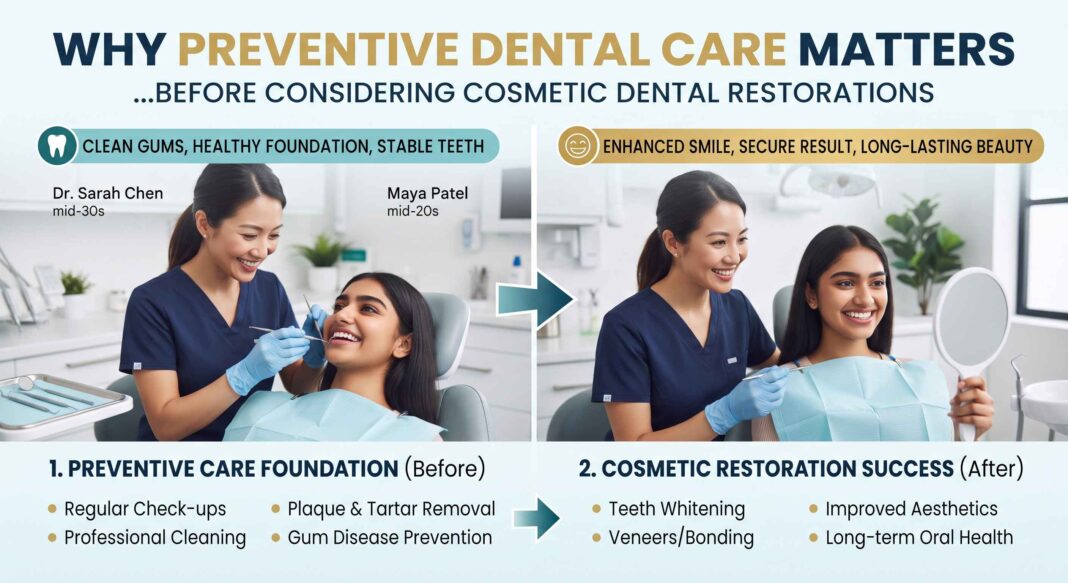
You might be looking at veneers, bonding, whitening, or crowns because you want to feel better when you smile. That makes sense. At Pearl Dental Care in Kingston, a chipped tooth, stains that do not lift, or gaps that catch your eye in every photo can wear on you. The hard part is that cosmetic goals often feel urgent, while the health issues underneath can stay quiet until they get expensive, painful, or hard to reverse.
That is why preventive dental care comes first. If your gums are inflamed, if decay is starting under the surface, or if you grind your teeth at night, cosmetic work can sit on a weak foundation. You are not just paying for the appearance of a smile. You are investing in whether that result can last. Preventive dental care before cosmetic dentistry protects your comfort, your budget, and the long term success of any restoration.
Cosmetic dental restorations last longer when oral health comes first
Cosmetic treatment can improve shape, color, and symmetry, but it does not erase active dental disease. A veneer placed on a tooth with untreated decay will not solve the decay. A beautiful crown will not stop gum disease from progressing around it. If plaque buildup, bleeding gums, or enamel wear are already present, the cosmetic result may fail earlier than expected.
You may have been told that a smile makeover is simple, and sometimes it is. The problem starts when small issues are ignored because they do not hurt yet. Early gum disease can be painless. A cavity can stay hidden between teeth. Clenching can crack bonding or shorten the life of porcelain. The look you want is tied to the health you cannot always see.
The Centers for Disease Control and Prevention explains that daily brushing, flossing, regular cleanings, and routine exams help prevent decay and gum problems before they become larger concerns. Their oral health tips for adults are basic for a reason. The basics are what keep cosmetic work from being built on unstable ground.
Untreated gum disease and decay can undermine cosmetic dentistry
Gum disease changes more than gum color. It can cause swelling, bleeding, bad breath, gum recession, bone loss, and eventually tooth movement or tooth loss. If you are thinking about veneers or crowns because your smile looks uneven, the cause may be inflammation or recession rather than the teeth alone. Covering that up without treatment can leave you with a result that looks off within months.
The CDC notes that gum disease is common and often starts with mild symptoms people brush off. That is where many treatment plans go wrong. You want straighter looking, brighter teeth, but your gums are what frame the smile. If the gums are not healthy, the cosmetic result rarely looks natural for long.
Decay creates a different problem. A tooth that needs a filling, root canal, or stronger structural support may not be a candidate for the cosmetic option you had in mind. You may walk in expecting whitening and leave learning that one dark tooth is discolored because the nerve is damaged. That is frustrating, but it is also useful information. It keeps you from spending money on a fix that was never going to address the real issue.
Preventive care often lowers the total cost of cosmetic dental treatment
Most people do not delay prevention because they do not care. They delay it because life gets busy, dental visits cause anxiety, or the cosmetic issue feels more visible than the health issue. Then the math changes. A cleaning and exam cost far less than replacing a failed veneer, treating advanced gum disease, or rebuilding a cracked tooth that could have been protected earlier.
Oral health before smile makeovers is also about planning. A general and cosmetic dentist can spot habits that threaten your future results, including grinding, dry mouth, poor bite alignment, or old restorations that are starting to leak. MedlinePlus offers a helpful overview of dental health conditions and prevention, and it reinforces the same point. Small problems are easier to treat before they grow under expensive work.
| Condition | If Addressed Early | If Ignored Before Cosmetic Work |
| Mild gingivitis | Often improved with cleaning, better home care, and monitoring | Can progress to gum recession, bleeding, and poor cosmetic framing |
| Small cavity | May need a simple filling before restoration planning | Can spread under a veneer or crown and require more invasive treatment |
| Teeth grinding | Managed with a night guard and bite review | Can chip bonding, crack porcelain, and shorten restoration life |
| Poor hygiene habits | Improved with coaching and routine preventive visits | Can lead to staining, inflamed gums, decay, and disappointing results |
Strong preventive habits support better cosmetic dental restorations
The goal is not to delay treatment forever. The goal is to make sure your cosmetic investment has a fair chance to hold up. Healthy gums create cleaner lines around veneers and crowns. Stable enamel gives bonding a better surface. Reduced plaque and tartar help whitening results look more even. A healthy mouth also makes shade matching, contouring, and long term maintenance more predictable.
This is where cosmetic dental restorations and general dental care work together, not against each other. One improves appearance. The other protects function, comfort, and durability. You need both.
Three steps to take before moving ahead with cosmetic dentistry
Schedule a full diagnostic exam. Ask for an evaluation of your gums, existing fillings, bite, enamel wear, and any signs of decay. Cosmetic planning should start with photos, X-rays when needed, and a clear review of what must be treated first.
Get your preventive care current. If you are overdue for a cleaning, periodontal care, or a basic filling, handle that before elective cosmetic work. This step can change your options for the better and help your final result last longer.
Be honest about habits that affect your teeth. Mention clenching, smoking, frequent snacking, dry mouth, or skipped flossing. None of that is there to judge you. It helps shape the right treatment plan and protects any root service, whether that is whitening, bonding, veneers, or crowns.
A healthy foundation makes cosmetic dentistry worth it
If you have been focused on fixing the part of your smile you can see, you are not missing the point. You just need the full picture. Prevention first does not get in the way of cosmetic treatment. It makes the treatment make sense. When your teeth and gums are healthy, the result usually looks better, feels better, and lasts longer.
If you are considering care from a general and cosmetic dentist, start with the foundation and build from there.