

You know the feeling. Sales are coming in, bills are due, payroll is close, and your bank balance tells only part of the story. You are working hard, but the numbers still feel foggy. That stress is real. As a virtual bookkeeping firm serving Wichita businesses, we know that when your records are behind or unclear, every business choice starts to feel heavier than it should.
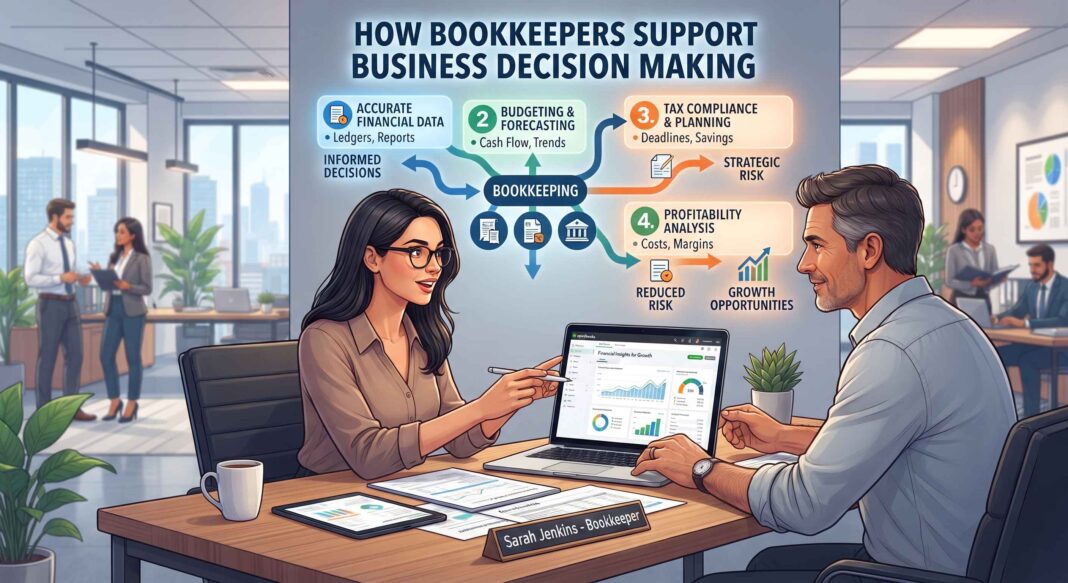
This is where how bookkeepers support business decision making becomes more than a nice idea. Clean books show what you earn, what you owe, where cash is leaking, and whether growth is helping or hurting. A skilled bookkeeper does not just sort transactions. They turn daily financial activity into information you can use, so you can price better, hire at the right time, and avoid costly guesses.
Bookkeeping gives you facts you can act on
Most owners do not struggle because they lack drive. They struggle because they are forced to decide with partial information. You might look at a strong month of deposits and assume the business is healthy, then get hit by sales tax, vendor bills, loan payments, or a slow-paying client. Revenue can look solid while cash is tight. Profit can look healthy while margins are shrinking.
That gap between what looks good and what is actually true is where trouble starts. A bookkeeper closes that gap. By recording income and expenses correctly, reconciling accounts, and keeping reports current, they help you see patterns early. You can spot rising costs before they eat into profit. You can see whether one service line supports the business while another drains it. You can tell whether you need to cut spending, raise prices, or hold off on a purchase.
Financial recordkeeping for decisions also helps remove emotion from hard calls. If you are deciding whether to bring on a new employee, open a second location, or invest in software, current books give you a base to work from. You are no longer deciding from stress or instinct alone. You are deciding from evidence.
Accurate records protect cash flow and reduce tax problems
Cash flow problems rarely appear out of nowhere. They build quietly through missed invoices, duplicate charges, weak expense tracking, and poor timing. If your books are not current, you may not notice the issue until the account balance drops lower than expected. By then, the problem is urgent.
Bookkeepers help prevent that by keeping a close watch on the movement of money. They track receivables, organize payables, and help you understand which obligations are coming next. That makes planning easier. It also lowers the chance of late fees, overdrafts, and rushed borrowing.
Good bookkeeping also matters at tax time. The IRS expects businesses to maintain records that support income, deductions, and credits. Their guidance on why you should keep records makes the reason plain. Records help you monitor progress, prepare financial statements, identify sources of income, track deductible expenses, and support items reported on tax returns.
If you have ever searched for a missing receipt in April, you already know the cost of disorganized records. It is not just wasted time. It can lead to missed deductions, filing errors, and avoidable stress.
Bookkeepers create visibility that supports growth
Growth sounds good until it strains your systems. More customers often mean more invoices, more expenses, more payroll detail, and more chances for mistakes. If your process is still built around memory, spreadsheets, and a stack of receipts, growth can make you less stable, not more.
That is why bookkeeping support for business decisions matters during expansion. A bookkeeper helps build a reliable financial picture month after month. You can compare periods, measure trends, and see whether growth is producing profit or just more activity. If one client type pays faster, that matters. If one product line has a better margin, that matters too. Better records lead to better strategy.
The IRS also outlines how to record business transactions, which reinforces a basic truth. The quality of your decisions depends on the quality of your records.
DIY bookkeeping and professional bookkeeping produce different results
| Area | DIY Bookkeeping | Professional Bookkeeping |
| Time spent | Often handled late at night or on weekends | Managed on a regular schedule |
| Accuracy | Higher risk of miscoding, missed entries, and unreconciled accounts | More consistent categorization and account review |
| Cash flow visibility | Usually reactive, based on bank balance | Clear view of receivables, payables, and trends |
| Decision support | Limited, reports may be outdated or incomplete | Current reports support pricing, hiring, and spending decisions |
| Tax readiness | Can lead to last minute cleanup and missing documents | Better organized records for filing and support |
Some owners handle their own books well, especially early on. The problem is not effort. The problem is capacity. Once the business gets busy, bookkeeping tends to slide to the bottom of the list. Then decisions are made from old numbers, and the cleanup becomes more expensive than the help would have been.
The IRS publication on starting and keeping records for a business gives a useful framework, but many owners still need support applying that guidance in daily operations. That is where a steady bookkeeping process earns its place.
Small changes in your bookkeeping process can improve decision making fast
Get current before you try to plan. If your books are two or three months behind, bring them up to date first. Budgeting, hiring, and pricing decisions are only as good as the numbers behind them.
Review three reports every month. Look at your profit and loss statement, balance sheet, and cash flow activity. Together, they show whether the business is earning money, what it owns and owes, and how cash is moving.
Separate recordkeeping from guesswork. Use a consistent process for receipts, invoices, payroll records, and bank reconciliations. Even basic structure can reduce errors and make your bookkeeping far more useful.
Clear books lead to calmer decisions
You should not have to make big business choices in the dark. When your numbers are current and organized, pressure eases. You can see what is working, what needs attention, and what the business can actually support. That clarity is the real value of bookkeeping. It gives you a steadier ground to stand on when decisions cannot wait.
If your records feel messy or behind, now is a good time to get your bookkeeping in order and start using your numbers with more confidence.