
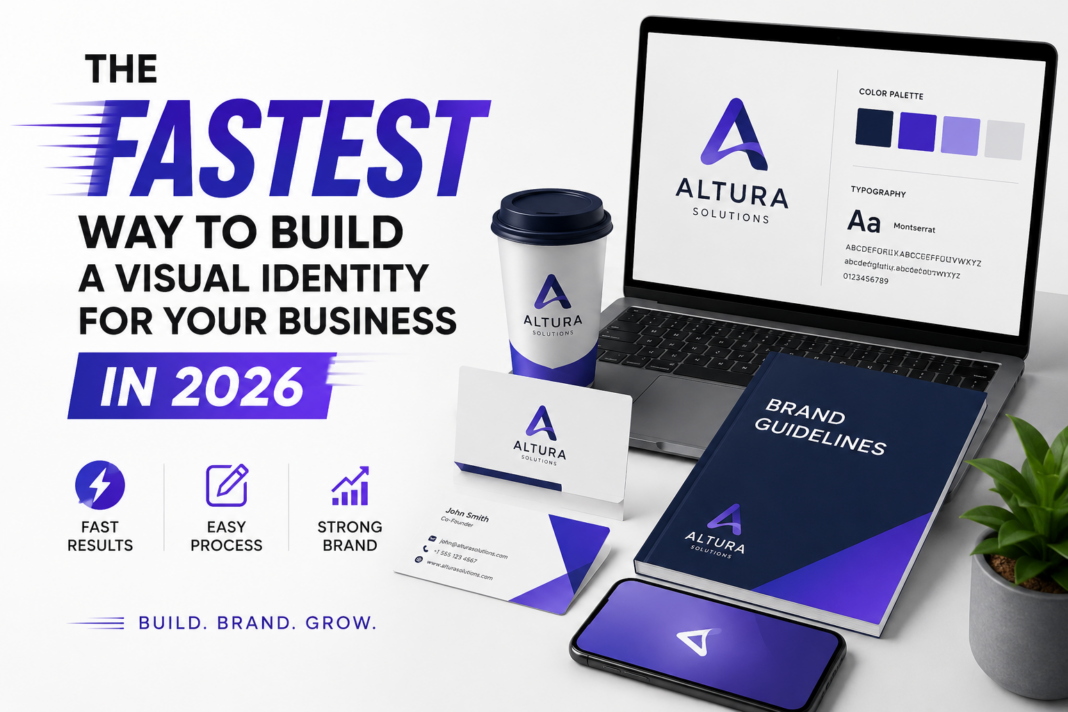

Building a visual identity used to be a slow, expensive process. Businesses would hire designers, go through rounds of revisions, debate color palettes, test typography, and eventually piece together a brand style guide that might take weeks or even months to finalize. For larger companies, that time investment made sense. For small businesses and startups, it often felt out of reach.
In 2026, that process looks very different.
The rise of AI-powered design tools and automated branding systems has made it possible to create a full visual identity in a fraction of the time it used to take. What once required a dedicated design team can now be done by a single person with the right tools and a clear direction.
But speed alone is not the real story. The bigger shift is how accessible professional-level branding has become for businesses of all sizes.
Why Visual Identity Still Matters More Than Ever
Before discussing speed, it is worth understanding why visual identity remains so important.
A brand’s visual identity is often the first impression customers have. Long before they read a description or interact with a product, they see colors, fonts, layouts, and design styles. These visual cues shape perception instantly.
A consistent visual identity helps businesses:
- appear more professional
- build trust faster
- stand out in crowded markets
- create recognition across platforms
- strengthen emotional connection with audiences
Even in a digital world filled with short attention spans, visuals remain one of the most powerful ways to communicate value.
The challenge has always been execution. Many businesses understand the importance of branding but struggle to implement it consistently across websites, social media, ads, and content.
That is where modern tools are changing the process entirely.
The Shift From Manual Design to AI-Driven Branding
In the past, building a visual identity required multiple steps that depended heavily on human designers. You would typically start with mood boards, then move to logo drafts, then refine typography, then define color systems, and finally assemble everything into a formal brand guide.
Each step required time, communication, and revisions.
Now, AI-powered systems can compress much of that workflow.
Instead of building everything from scratch, businesses can generate initial brand directions instantly. These systems analyze inputs such as industry type, audience preferences, and tone, and then suggest cohesive visual styles that feel complete.
This does not replace design thinking, but it removes a significant amount of the early friction.
Instead of starting with a blank page, businesses start with a structured foundation.
Step 1: Defining Your Brand Direction
The fastest way to build a visual identity starts with clarity.
Before choosing colors or fonts, you need to understand what your brand represents visually. This includes:
- personality (modern, playful, premium, minimal, bold)
- target audience
- industry positioning
- emotional tone
These elements influence every visual decision that follows.
In traditional workflows, this stage often took long discussions between founders and designers. Today, AI tools can help generate direction options from simple prompts, giving businesses a starting point in minutes rather than days.
This is where many modern systems function like a smart style guide creator, turning vague ideas into structured design directions that can be applied consistently.
Step 2: Generating Core Visual Elements
Once the direction is defined, the next step is building the core visual system.
This includes:
- primary and secondary color palettes
- typography combinations
- logo concepts or variations
- icon styles
- image direction
In the past, each of these elements required separate design work. Now, AI design platforms can generate multiple cohesive options at once.
The key advantage here is alignment. Instead of mixing disconnected design elements, AI systems tend to produce visually consistent sets that already work well together.
This reduces the need for extensive revisions later in the process.
Step 3: Applying Consistency Across Content
A visual identity is only useful if it is applied consistently.
This is where many businesses struggle. They might have a well-designed logo and color palette, but their social media posts, ads, and website visuals often drift out of alignment over time.
Modern tools solve this by automatically applying brand rules across content.
Once a visual identity is defined, it can be used to:
- format social media posts
- design marketing graphics
- create website visuals
- standardize ad creatives
- maintain consistency across campaigns
This removes the manual effort of reapplying design rules every time content is created.
The result is a more unified brand presence across all channels.
Step 4: Scaling Content Without Losing Identity
One of the biggest challenges in modern marketing is scaling content while maintaining consistency.
As businesses grow, they produce more content across more platforms. Without structure, visual identity can quickly become inconsistent.
AI-driven branding systems help solve this by automatically ensuring that every new piece of content follows the same visual rules.
This means a business can produce dozens or even hundreds of assets without diluting its brand identity.
The speed advantage here is significant, but the consistency advantage is even more valuable.
Step 5: Evolving the Brand Over Time
A visual identity is not something that stays static forever.
As businesses grow, their audience, positioning, and goals often change. In the past, updating a brand identity was a complex process involving rebranding exercises and design overhauls.
Now, AI systems make it easier to evolve gradually.
Businesses can:
- test new visual directions
- refine color palettes
- Adjust typography styles
- Update branding across all content automatically
This flexibility allows brands to stay modern without undergoing full redesign cycles.
Why Speed Matters More in 2026
The reason this entire process has accelerated is not just technology. It is also a competition.
Businesses today operate in environments where attention is limited, and first impressions matter more than ever. A strong visual identity helps capture attention quickly and communicate credibility instantly.
Speed matters because:
- markets move fasterThe
- content volume is higher
- customer expectations are higher
- Competition is more visual than ever.
Being able to build and deploy a visual identity quickly gives businesses a real advantage in launching campaigns, testing ideas, and establishing a presence.
The Balance Between Automation and Human Judgment
Even with all these advancements, human input still plays a critical role.
AI can generate options, suggest systems, and maintain consistency, but it cannot fully replace creative decision-making. The best results come from combining automation with human judgment.
Businesses still need to decide:
- what feels authentic to their brand
- What resonates with their audience
- What aligns with long-term positioning
AI makes it easier to execute those decisions at scale.
Final Thoughts
The fastest way to build a visual identity for your business in 2026 is no longer about long design cycles or expensive agency work. It is about using AI-driven systems to quickly generate structure, apply consistency, and scale branding across every channel.
What used to take weeks can now be done in hours, sometimes even minutes. But the real value is not just speed. It is the ability to maintain a strong, consistent identity as your business grows.
In a world where attention is limited and competition is constant, that consistency is often what separates brands that are remembered from those that are overlooked.