
Recovery isn’t just the downtime between workouts—it’s where actual fitness progress happens. Your muscles rebuild stronger, your nervous system adapts, and your body prepares for the next challenge. Yet for many fitness enthusiasts, slow recovery remains the biggest bottleneck standing between them and their goals. Delayed onset muscle soreness, persistent fatigue, and the risk of overtraining force athletes to choose between pushing through pain or losing precious training days. Enter wireless EMS—Electrical Muscle Stimulation delivered without cables or clinic visits—a technology that promises to accelerate the body’s natural repair processes. But how does this modern approach to muscle stimulation actually stack up against time-tested traditional recovery methods like stretching, foam rolling, and cold therapy? This article provides a direct comparison of wireless EMS and conventional techniques for training recovery, helping you determine which approach delivers faster results with less time investment. Whether you’re a dedicated gym-goer or a competitive athlete, understanding these options can transform how you recover and perform.
Understanding Recovery: The Foundation for Fitness Enthusiasts
Every time you lift heavy, sprint hard, or push through a grueling session, you create microscopic tears in your muscle fibers. This isn’t damage to fear—it’s the trigger for adaptation. During recovery, your body repairs these fibers through a process called muscle protein synthesis, rebuilding them thicker and more resilient than before. Without adequate recovery, this repair cycle stalls, leaving you weaker, more prone to injury, and stuck on a frustrating performance plateau.
 Muscle stimulation, whether through natural movement or external technology, plays a central role in this process by promoting blood flow to damaged tissues. Increased circulation delivers oxygen and nutrients while flushing out metabolic waste products like lactate that contribute to soreness. Training recovery, then, isn’t passive waiting—it’s an active physiological process that can be influenced and accelerated. For fitness enthusiasts juggling demanding schedules, the efficiency of this repair window matters enormously. A method that cuts recovery from 72 hours to 24 hours doesn’t just reduce downtime; it effectively multiplies the number of quality training sessions available each week. That compounding effect is why choosing the right recovery strategy deserves as much attention as programming your workouts themselves.
Traditional Recovery Methods: An Overview of Muscle Stimulation Techniques
For decades, athletes have relied on a familiar toolkit to bounce back after intense training. Static and dynamic stretching remain the go-to for restoring range of motion, while foam rolling—a form of self-myofascial release—targets adhesions and trigger points that develop in overworked tissue. Ice baths and cold water immersion constrict blood vessels to reduce inflammation, and passive rest simply gives the body uninterrupted time to heal. Each of these approaches carries scientific support, though the evidence varies considerably in strength. Cold therapy, for instance, has shown measurable reductions in perceived soreness in multiple studies, yet its effect on actual muscle repair at the cellular level remains debated. Foam rolling reliably improves short-term flexibility and reduces pain perception, but it does little to accelerate the structural rebuilding of damaged fibers.

The clear advantages of traditional methods are their accessibility and minimal cost. A foam roller costs less than a single sports massage, and stretching requires nothing but floor space. However, these benefits come with a significant trade-off: time. A thorough foam rolling session targeting all major muscle groups takes 20 to 30 minutes. Add a proper stretching routine and a 10-minute ice bath, and you’re investing close to an hour daily in recovery alone—time many fitness enthusiasts simply don’t have. Results also depend heavily on technique and consistency; poor foam rolling form or insufficient cold exposure duration can render these methods largely ineffective. For athletes seeking time-saving training methods that deliver reliable, repeatable outcomes, traditional recovery often falls short of the efficiency they need to maintain high training frequency.
Wireless EMS Technology: A Deep Dive into Modern Muscle Stimulation
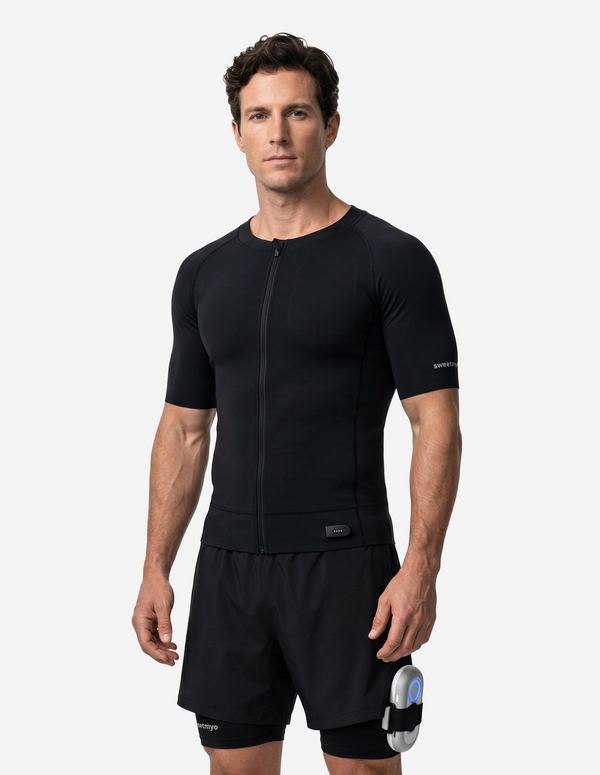
Wireless EMS represents a fundamental shift in how athletes approach recovery. Rather than waiting for the body to passively restore itself, this technology actively drives the repair process by delivering controlled electrical impulses directly to muscle tissue through electrode-equipped garments. These impulses mimic the signals your central nervous system sends during voluntary contractions, but at intensities and frequencies specifically calibrated for recovery rather than exertion. Low-frequency stimulation in the 1 to 10 Hz range promotes blood flow and lymphatic drainage without creating additional muscle fatigue, effectively flushing metabolic waste while delivering fresh oxygen and nutrients to damaged fibers. The “wireless” distinction matters because it eliminates the tethered, clinical feel of older EMS units. Modern full-body wearable devices allow users to move freely, continue light activities, or simply relax during a recovery session—no tangled cables, no bulky machines, and no appointment at a physiotherapy clinic required.
What makes current-generation wireless EMS particularly compelling for fitness enthusiasts is the integration of intelligent software that transforms a simple stimulation device into a comprehensive recovery system. Built-in sensors track muscle response, session duration, and usage patterns, building a data profile that informs future protocols. This data-driven approach removes the guesswork that plagues traditional methods, where effectiveness depends entirely on subjective feel and individual technique. A 20-minute wireless EMS recovery session can target multiple muscle groups simultaneously with precision that foam rolling or stretching simply cannot replicate, making it one of the most efficient muscle recovery techniques available to athletes training on tight schedules.
How Full-Body Wearable and AI Coach Enhance Recovery
Full-body wearable suits elevate wireless EMS beyond isolated muscle treatment by stimulating entire kinetic chains at once. Instead of addressing your quads, hamstrings, and calves in separate passes—as you would with a foam roller—a wearable suit activates all targeted areas simultaneously, cutting session time dramatically. Systems like sweetmyo pair this full-body approach with an AI coach component that analyzes your training load, recovery history, and real-time muscle response data to generate personalized stimulation protocols. After a heavy leg day, the AI might prescribe longer, lower-frequency pulses to your posterior chain while applying lighter recovery patterns to less taxed upper-body muscles. Over time, these algorithms learn your individual recovery curve, adjusting intensity and duration to match your evolving fitness level. This synergy between comprehensive hardware and adaptive software creates a time-saving recovery solution that adapts to the athlete rather than demanding the athlete adapt to it.
Comparative Analysis: Wireless EMS vs Traditional Methods for Faster Recovery
When recovery time is the primary metric, wireless EMS holds a clear advantage. A full-body EMS recovery session takes 20 minutes and simultaneously addresses every muscle group you trained, while achieving comparable results through traditional methods requires stacking multiple techniques—foam rolling, stretching, and cold therapy—into a routine that easily consumes 45 to 60 minutes. For a fitness enthusiast training five days per week, that difference adds up to nearly three hours saved weekly, time that can be redirected toward additional training, mobility work, or simply living your life outside the gym.
Effectiveness tells a more nuanced story. Traditional methods excel at specific tasks: cold therapy reduces acute inflammation effectively, and stretching restores range of motion that tight muscles restrict. However, these approaches work on the surface level of recovery—managing symptoms like soreness and stiffness rather than actively accelerating cellular repair. Wireless EMS drives blood flow deep into muscle tissue at controlled frequencies, promoting the nutrient delivery and waste removal that fuel actual fiber reconstruction. In practical terms, an athlete using EMS after a heavy squat session often reports feeling ready to train legs again within 36 hours, compared to the 48 to 72 hours typical with stretching and foam rolling alone.
Ease of use favors wireless EMS as well, particularly for consistency. Traditional methods require learned technique—incorrect foam rolling applies pressure to joints rather than muscle bellies, and poorly executed stretching can increase injury risk. Wireless EMS with AI-guided protocols eliminates technique dependency entirely; you wear the device, select your recovery program, and the technology handles precision targeting. The cost barrier is where traditional methods maintain their edge, since foam rollers and ice require minimal investment compared to a wearable EMS system. Yet when measured as cost per effective recovery hour saved over months of consistent use, wireless EMS delivers substantial return for serious athletes who value training frequency above all else.
Practical Steps to Implement Wireless EMS for Optimal Training Recovery
Getting started with wireless EMS requires a deliberate approach to maximize its recovery benefits. First, assess your training schedule and identify your most demanding sessions—these are where EMS recovery will deliver the greatest return. Choose a full-body wearable system that covers the muscle groups you train most frequently, ensuring the electrode placement aligns with your primary movement patterns. Before your first session, familiarize yourself with the device’s app interface and complete any initial calibration the AI coach requires, including inputting your training history, fitness level, and recovery goals.
Integration works best when you treat EMS as a non-negotiable post-training habit rather than an occasional supplement. Within 30 minutes of finishing your workout, put on the wearable suit and run a 20-minute recovery protocol at low frequency. Let the AI coach adjust parameters over your first two weeks as it gathers data on your muscle response patterns—resist the urge to manually override intensity settings during this learning phase. Track your perceived readiness each morning and note how quickly soreness dissipates compared to your previous baseline. After the initial adaptation period, begin experimenting with timing: some athletes benefit from a second brief session the morning after heavy training days. Review your progress data weekly through the app dashboard, paying attention to trends in recovery speed and training volume capacity. This feedback loop allows you to fine-tune session frequency and confirm that your investment in wireless EMS is translating directly into more productive training days.
Building Your Optimal Recovery Strategy with Modern Technology
The comparison between wireless EMS and traditional recovery methods reveals a clear pattern: while conventional techniques like stretching, foam rolling, and cold therapy remain valuable tools with proven benefits, they demand significant time and technique mastery to deliver consistent results. Wireless EMS, powered by full-body wearable technology and AI-driven personalization, compresses the recovery timeline by actively driving blood flow, nutrient delivery, and waste removal across multiple muscle groups simultaneously. For fitness enthusiasts who measure progress in training frequency and quality, that efficiency gap translates directly into more productive sessions and faster long-term gains.
This doesn’t mean abandoning traditional methods entirely—cold therapy after acute injuries and stretching for mobility still serve important roles. However, making wireless EMS the cornerstone of your recovery strategy positions you to train harder, bounce back faster, and spend less time managing soreness. The technology has matured beyond novelty into a practical, data-informed system that adapts to your body’s unique demands. As recovery science continues advancing alongside wearable innovation, athletes who embrace these tools now will build a compounding advantage over those still relying solely on foam rollers and ice baths. The future of training recovery is intelligent, personalized, and wireless—and it’s already here for those ready to use it.