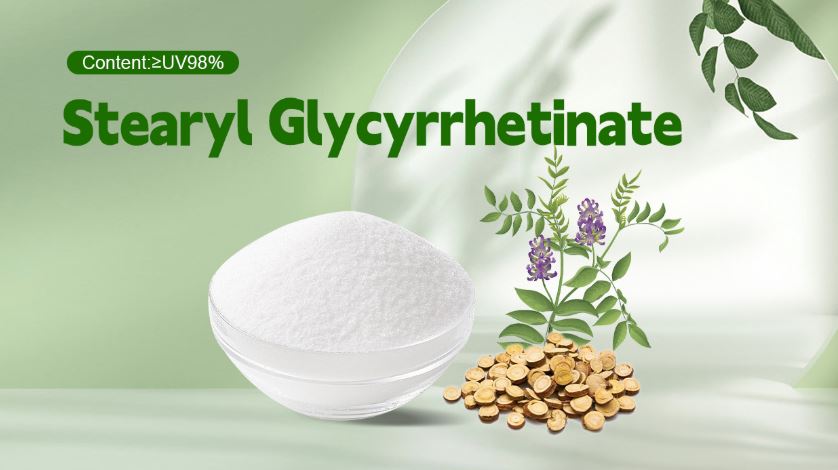
In the sophisticated world of active skincare ingredients, Stearyl Glycyrrhetinate stands out as a high-performance oil-soluble derivative of glycyrrhetinic acid. Sourced from the roots of the licorice plant (Glycyrrhiza glabra), this compound represents a pinnacle of cosmetic chemistry, designed to overcome the limitations of traditional water-soluble licorice extracts. While the industry has long valued licorice for its soothing properties, Stearyl Glycyrrhetinate offers enhanced stability and skin penetration, making it an indispensable raw material for premium skincare formulations. This article provides a professional and objective analysis of Stearyl Glycyrrhetinate, focusing on its chemical structure, its biological role in skin aesthetics, and its technical advantages as a functional ingredient.
Chemical Composition and Superiority of the Stearyl Ester
To understand why Stearyl Glycyrrhetinate is preferred in many professional formulas, one must look at its molecular structure. It is the ester of stearyl alcohol and glycyrrhetinic acid. This chemical modification is significant because it transforms the naturally hydrophilic glycyrrhetinic acid into a lipophilic (oil-loving) substance. In the context of active skincare ingredients, lipophilicity is crucial for several reasons. First, the outermost layer of the human skin, the stratum corneum, is lipid-rich. Stearyl Glycyrrhetinate has a natural affinity for this layer, allowing it to integrate more seamlessly and penetrate deeper than its water-soluble counterparts. Second, the attachment of the stearyl group increases the molecule’s stability against oxidation and heat, which are common challenges during the manufacturing and storage of cosmetic products.
Mechanisms of Soothing and Skin Comfort
The primary cosmetic function of Stearyl Glycyrrhetinate is its profound ability to soothe the skin and reduce visible signs of irritation. In the daily environment, the skin is subjected to numerous stressors, including UV radiation, temperature fluctuations, and chemical irritants. These factors can lead to the appearance of redness and a feeling of discomfort. Stearyl Glycyrrhetinate acts as a calming agent by modulating the visible markers of skin stress. Unlike many aggressive active skincare ingredients that might cause sensitivity, Stearyl Glycyrrhetinate works to restore a sense of equilibrium. It is frequently utilized in products designed for sensitive skin profiles, post-sun care, and barrier-recovery creams, where its role is to maintain a calm and uniform complexion.
Addressing the Appearance of Redness and Uneven Tone
Beyond its soothing capabilities, Stearyl Glycyrrhetinate plays a secondary but vital role in enhancing skin radiance and tone. While it is not a primary bleaching agent, its ability to calm the skin has a direct impact on skin clarity. Often, uneven skin tone is a result of prolonged environmental stress. By mitigating the visible impact of these stressors, Stearyl Glycyrrhetinate helps to prevent the dullness and blotchiness associated with reactive skin. This makes it a strategic addition to brightening formulations, where it supports the efficacy of other active skincare ingredients like Vitamin C or Arbutin by ensuring the skin remains in a non-agitated state, which is optimal for pigment correction.
Synergy with Other Active Skincare Ingredients
One of the hallmarks of a professional-grade raw material is its ability to work in harmony with other components of a formula. Stearyl Glycyrrhetinate is exceptionally versatile in this regard. Because it is oil-soluble, it can be easily incorporated into the oil phase of emulsions, anhydrous balms, and facial oils. It is often paired with other lipid-soluble actives such as Vitamin E (Tocopherol) or Squalane to bolster the skins natural moisture barrier. Furthermore, it is frequently used to buffer the potential irritation of more potent active skincare ingredients, such as Retinoids or Alpha Hydroxy Acids (AHAs). By including Stearyl Glycyrrhetinate in these formulations, chemists can deliver high-performance results while minimizing the visible redness or dryness that consumers often experience with intensive treatments.
Technical Advantages for Product Formulators
For the cosmetic scientist, Stearyl Glycyrrhetinate offers several technical advantages that contribute to its high E-E-A-T standing. It is a white to pale yellow crystalline powder that is odorless, ensuring it does not interfere with the sensory profile or fragrance of the final product. Its melting point and stability make it suitable for a wide range of processing conditions, including high-shear emulsification. In terms of usage levels, it is effective at relatively low concentrations, typically ranging from 0.1 percent to 1.0 percent. This high potency-to-weight ratio allows formulators to achieve significant results without compromising the texture or stability of the emulsion. Its compatibility with a broad spectrum of cosmetic oils and waxes further cements its status as a reliable and flexible active ingredient.
Safety Profile and Regulatory Global Compliance
Stearyl Glycyrrhetinate is recognized globally for its excellent safety and tolerability. It is widely approved for use in all major cosmetic markets, including the European Union, the United States, Japan, and China. Unlike some botanical extracts that may contain high levels of impurities or allergens, the purified ester form ensures a consistent and predictable safety profile. It is non-comedogenic and non-sensitizing, making it suitable for long-term daily use in a variety of product types, from lip balms and eye creams to high-potency facial serums. This regulatory stability provides brands and consumers with the confidence that they are utilizing a material that meets the highest standards of international safety.
The Role of Stearyl Glycyrrhetinate in Clean Beauty and Sustainability
As the industry shifts toward more transparent and nature-inspired solutions, Stearyl Glycyrrhetinate fits perfectly into the clean beauty narrative. Although it is a refined derivative, its origin is the licorice root, a sustainable and widely cultivated botanical resource. The process of esterification used to create Stearyl Glycyrrhetinate is a clean chemical process that results in a biodegradable ingredient. Consumers who look for active skincare ingredients that are both effective and derived from natural sources will find Stearyl Glycyrrhetinate to be a compelling choice. It bridges the gap between traditional herbal wisdom and modern dermatological performance.
Conclusion and Future Outlook for Licorice Derivatives
Stearyl Glycyrrhetinate remains a cornerstone among active skincare ingredients due to its unique combination of lipophilicity, stability, and soothing efficacy. As consumer demand for barrier-supportive and sensitivity-focused skincare continues to grow, the importance of this licorice derivative will only increase. Future research into the molecule may explore its potential in advanced delivery systems like nano-emulsions or its role in protecting the skin against the specific oxidative stress caused by blue light and urban pollution. For now, it continues to serve as a reliable, professional, and indispensable tool for creating products that prioritize skin comfort and long-term aesthetic health.