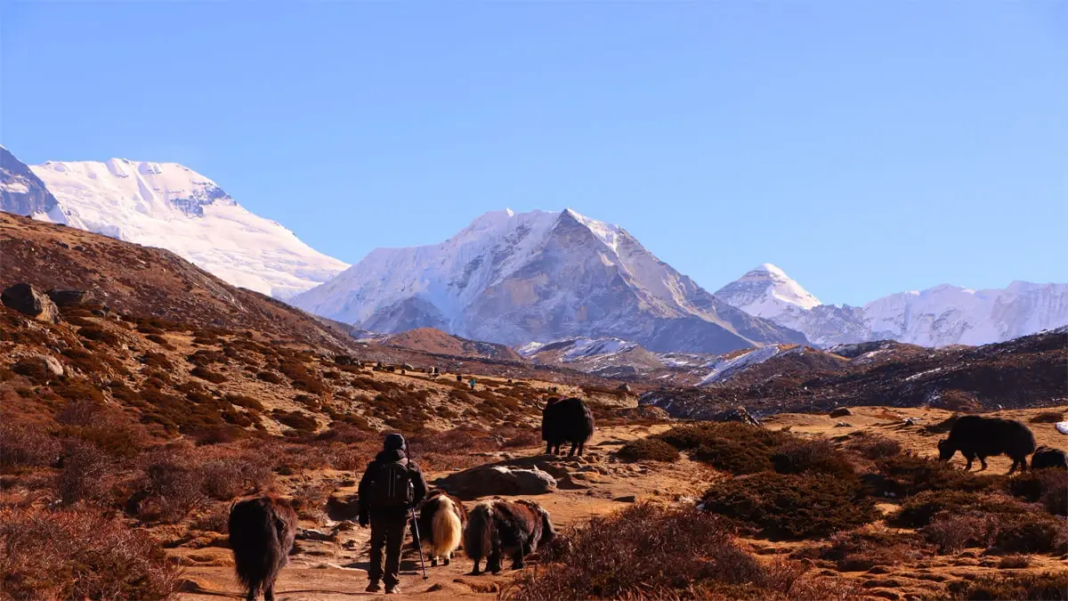
If you are planning your first peak climbing experience in Nepal, the two names you will keep hearing again and again are Island Peak and Mera Peak. At first, they sound similar. Both are popular trekking peaks, both sit in the Himalayas, and both are often labeled as “beginner friendly.”
But in reality, they are very different experiences. The right choice depends less on which one is “better” and more on what kind of challenge you actually want.
Island Peak: More Technical, More Hands-On Climbing
Island Peak is often the first real introduction people get to technical climbing in Nepal. It is not just walking uphill. There are sections where you use ropes, crampons, and basic climbing techniques, especially near the summit.
The climb feels more structured and guided, with a clear sense of progression from trekking to actual mountaineering. The final push is steep and exposed, which is where many beginners realize this is not just a high altitude hike.
It is physically demanding, but what makes it challenging is not only altitude. It is also the technical section near the top that requires focus and confidence on steep ice and rock.
Island Peak is usually chosen by people who want a proper introduction to climbing skills, not just high altitude trekking.
Island Peak feels like a technical introduction to climbing
Island Peak is usually the first step for people who want to feel what real mountaineering is like.
The trek itself builds gradually, but the real difference shows near the summit. You are not just walking anymore. You are using fixed ropes, climbing on steeper ice sections, and moving in a more controlled technical environment.
This is why questions like how difficult are the Island Peak Climbing? Come up so often. It is not extreme mountaineering, but it is definitely not just a hike either.
The difficulty here is more about technique and confidence. If you are comfortable with heights, ropes, and slow controlled movement, Island Peak feels challenging but achievable.
Mera Peak is less technical but much higher
Now Mera Peak looks easier at first glance because it has fewer technical sections. But that is where people get misled.
Mera Peak is all about altitude. You are pushing above 6000 meters, and that changes everything. Your pace slows down, breathing becomes harder, and even simple walking feels heavy for long periods.
This is why Mera Peak Climbing Difficulty is such a common search. On paper it looks like a trekking peak, but in reality, it is a long endurance test at extreme altitude.
So while it is not technically complicated, it demands patience, fitness, and strong acclimatization.
What Is the Biggest Difference Between Island Peak and Mera Peak?
If you remove all the technical language, the choice becomes clearer.
Island Peak is about learning basic climbing skills in a controlled high altitude environment. Mera Peak is about testing how your body handles extreme altitude over time.
One challenges your technique. The other challenges your endurance.
This is why both are often included in lists of the Best Peak Climbing in Nepal, but they attract very different types of climbers.
Comparing the Summit Experience
The summit day is where the difference between these two peaks becomes most obvious.
On Island Peak, the summit push feels intense and technical. There is a stronger sense of climbing, especially during the final sections where ropes and equipment come into play. Reaching the top often feels like completing a mountaineering objective rather than simply standing on a high point.
Mera Peak is different. The summit day is usually longer and more physically draining because of the altitude. The challenge comes from endurance rather than technical movement. Every step can feel slow and heavy as your body works in thin air.
Many climbers say Island Peak gives a greater feeling of adventure during the climb itself, while Mera Peak delivers a stronger sense of achievement because of its extreme elevation.
Best Season for Both Peaks
No matter which peak you choose, timing matters. The Best Peak Climbing Season in Nepal is generally spring and autumn, when weather conditions are more stable, mountain views are clearer, and climbing routes are usually safer. These seasons also offer more comfortable temperatures and a higher chance of successful summit attempts.
For both Island Peak and Mera Peak, poor weather can make the climb much more difficult. Snow, strong winds, and low visibility affect not only the summit day but the entire expedition. That is why experienced climbers pay close attention to seasonal conditions before deciding when to go.
Which Peak Is Right for You?
There is no universal “better” option between Island Peak and Mera Peak climbing in Nepal. The mistake many people make is trying to find the easier peak instead of the one that matches their goals.
If you want a climbing introduction with ropes, crampons, and a more technical summit day, Island Peak is usually the better choice. If you want to experience one of Nepal’s highest trekking peaks and focus more on altitude than technical climbing, Mera Peak makes more sense.
Once you understand what kind of challenge you are looking for, choosing between the two becomes much easier.
Final Thoughts
Island Peak and Mera Peak are often compared because they sit at a similar level in Nepal’s climbing scene, but they test climbers in very different ways.
Island Peak rewards those who want to learn technical climbing skills and experience a more hands on mountaineering challenge. Mera Peak rewards those who are prepared for a demanding high altitude journey where endurance becomes the biggest obstacle.
Neither choice is wrong. The best peak is the one that matches your goals, fitness level, and the type of experience you want from your first Himalayan climb. Once you understand that, the decision becomes far easier than most comparison articles make it.