How Septic Pumping Works and Why Every Septic Tank Needs It on Schedule

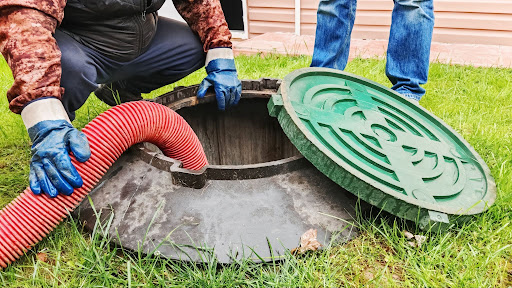
A septic tank is the one appliance in a house that does its job best when nobody thinks about it. Water goes down the drain, the toilet flushes, and the tank in the yard quietly deals with everything. That silence is also the problem. Nothing reminds you that solids are building up inside the tank until a drain slows down or the lawn over the leaching bed turns an odd shade of green.
This article explains what is happening inside a septic tank, what septic pumping removes, why the schedule matters more than most owners expect, and what a thorough pump out should include. It is written for homeowners on a private septic system anywhere, with notes for cold climates where the ground freezes for part of the year.
What Is Inside a Septic Tank?
A working septic tank holds three layers. Scum floats on top, made of fats, oils, grease and anything lighter than water. Sludge settles on the bottom, made of the solids that bacteria cannot digest. Between them sits a layer of relatively clear liquid called effluent, and that is the only layer that is supposed to leave the tank.
Effluent flows out through the outlet to the leaching bed, also called the drain field, where soil finishes the treatment. The tank’s job is to keep the scum and sludge inside so the bed only ever receives liquid. Baffles at the inlet and outlet, and on most modern tanks an effluent filter, exist for that one purpose.
Bacteria inside the tank do break down part of the waste, which is why a tank does not fill up in a month. They cannot break down all of it. The sludge layer grows a little every day, the scum layer thickens, and the space left for liquid shrinks. That shrinking working volume is the whole reason pumping exists.
What Does Septic Pumping Actually Remove?
Septic pumping removes everything in the tank: the scum, the sludge and the liquid between them. A vacuum truck lowers a hose through the access lid and draws the contents out, then the material is hauled to an approved treatment facility.
A common misconception is that pumping only takes the liquid off the top. If that were the case, the sludge that causes the trouble would stay behind. A proper pump out breaks up the sludge layer, often by washing the sides of the tank back into the liquid, and removes it with the rest. When the technician finishes, the tank is empty apart from a small amount of residue, and it begins refilling with normal household water use within hours.
Pumping does not reset the bacteria. New waste brings new bacteria, and the biological process restarts on its own. Additives sold to “restore” a tank after pumping are not needed, and some can push solids out into the bed.
How Often Does a Septic Tank Need Pumping?
Most household septic tanks are pumped every three to five years. The United States Environmental Protection Agency lists four factors that decide the real interval for a given house: household size, the total wastewater generated, the volume of solids in that wastewater, and the size of the tank. A family of five on a 3,000 litre (800 gallon) tank will reach the limit far sooner than a couple on a 6,000 litre (1,500 gallon) tank.
The EPA also gives a measurable test. The tank should be pumped when the top of the sludge layer is within 30 centimetres (12 inches) of the outlet, when the bottom of the scum layer is within 15 centimetres (6 inches) of the outlet, or when sludge and scum together make up more than a quarter of the liquid depth. A service technician measures these layers with a gauge during an inspection. If your tank has never been measured, the three to five year rule is the safe default.
Systems with pumps, float switches or advanced treatment units need more frequent attention, usually an inspection every year, because mechanical parts fail in ways a gravity tank does not.
Why Does the Schedule Matter So Much?
Because the expensive part of a septic system is not the tank. It is the leaching bed buried under the lawn.
When a tank is overdue, the sludge rises toward the outlet and the scum layer thickens down toward it. Solids begin leaving with the effluent. They settle in the perforated pipes and in the stone and soil of the bed, and over time they seal the soil so it can no longer absorb water. A clogged bed does not drain. Effluent surfaces on the lawn, backs up into the house, or both. Pumping the tank at that point empties the tank but does nothing for the bed, and a bed cannot be pumped clean.
Replacing a leaching bed is a construction project, with excavation, new stone, new pipe, permits and an inspection, and in many regions a tank in reasonable condition will outlast two beds. Regular pumping is cheap by comparison. It is the single maintenance task that protects the part of the system you cannot see and cannot easily fix.
There is a second reason. A tank that overflows or a bed that fails releases partly treated sewage into the ground, and on rural properties that ground is often the same ground a well draws from. Provincial and state authorities treat septic maintenance as the owner’s responsibility for that reason. In Ontario, for example, the Government of Ontario states plainly that the owner is responsible for the operation of their septic system, and the Ontario Building Code sets the rules for how systems are installed and repaired.
What Should a Proper Pump Out Include?
An empty tank is the minimum. A good septic pumping service does several other things while the lid is open, and they are the reason to use a licensed, experienced hauler rather than the cheapest truck.
- Locate the tank and expose the access lids, if the owner has not already done so.
- Note the liquid level before pumping. A level above the outlet suggests the bed is not accepting water. A level below the outlet suggests the tank is leaking.
- Pump the full contents, breaking up and removing the sludge layer rather than skimming the liquid.
- Inspect the inlet and outlet baffles. A broken or missing outlet baffle lets scum flow straight to the bed.
- Clean the effluent filter, if the tank has one, and reinstall it.
- Look for cracks, root intrusion, corrosion at the waterline and signs of groundwater entering the tank.
- Watch for backflow from the outlet pipe while the tank is empty, which points to a saturated bed.
- Record the sludge and scum depths, the tank condition and any repairs recommended, and give the owner a copy.
That written record is worth keeping. Two or three reports in a row show how fast your particular tank fills, which lets you set a pumping interval based on evidence instead of a rule of thumb.
Pumping is also the right moment to find problems early. Technicians who pump septic tanks regularly see the same warning signs over and over: a high liquid level, a filter clogged solid, a baffle gone, water trickling back from the bed. Caught during a routine pump out, most of these are small repairs. Found after a backup, they rarely are. Companies that handle septic pumping alongside repair and installation tend to catch these earlier, because the technician knows what a failing system looks like from the inside.
How Should You Prepare for Septic Pumping?
A little preparation saves money on the day, because most haulers charge for time spent finding and digging.
- Know where the tank is. The permit drawing, the previous owner or the municipality’s records usually show it. If nothing does, a hauler can locate it, but that is billable time.
- Expose the lids before the truck arrives, or have risers installed so the lids sit at ground level permanently. Risers pay for themselves within a couple of pump outs.
- Clear a path. The truck needs to park within hose reach, typically 30 metres (100 feet), on ground that will hold its weight.
- Keep children and pets away from an open tank. The lid will be off for a while, and the gases inside are dangerous.
- Have the last service report handy if you have one, so the technician can compare levels.
What Happens If You Skip Pumping Altogether?
That usually means a large tank, very low water use, or a bed that has been slowly degrading without anyone noticing. When it fails, it backs up into the lowest drain in the house or onto the lawn as sewage, often on a weekend.
The cost comparison is not close. Routine pumping every few years is a modest, predictable expense. A leaching bed replacement is a major one, and a contaminated well is worse than either. Treating pumping as optional does not remove the cost from the system. It moves the cost downstream, to the part that is hardest and most expensive to fix.
About the Author
Nick Acchione, General Manager, Allto Construction
Nick Acchione is General Manager of Allto Construction, a family-owned contractor in Orangeville, Ontario, that has designed, installed, pumped and repaired private septic systems across South Central Ontario since 1969. Allto services conventional and advanced treatment systems for residential, commercial and institutional properties.