You may have noticed the small signs first. Bad breath that lingers. A dog that drops kibble. A cat that still wants dinner but chews on one side and walks away sooner than usual. It is easy to tell yourself it can wait, especially when your pet still seems playful and mostly fine. Dental disease often hides in plain sight, and that is what makes it expensive, painful, and stressful later. Pet owners looking for vaccine care for dogs and cats in Cape Coral should also remember that oral health is an important part of overall wellness.
That is where animal hospitals support preventive dental programs in ways that matter long before a crisis starts. They do more than clean teeth. They track changes over time, teach you what normal looks like, catch disease below the gumline, and build a plan that fits your pet’s age, breed, health, and home routine. Good prevention lowers the chance of painful extractions, helps pets eat comfortably, and gives you clearer choices instead of last minute decisions.
Preventive pet dental care works best before pain becomes obvious
Most pets do not show dental pain the way people expect. They keep eating. They keep greeting you at the door. They adapt. A pet with inflamed gums or a loose tooth may still act normal because survival instincts are strong, and that quiet coping can fool even attentive owners. By the time there is heavy tartar, drooling, pawing at the mouth, or a strong odor, disease may already be advanced.
Preventive pet dental care changes that pattern. Animal hospitals build these programs around routine exams, risk checks, home care coaching, and professional treatment when needed. During wellness visits, the team looks for plaque, tartar, red gums, fractured teeth, oral masses, and signs of pain. They also consider the pet’s age, diet, breed, and medical history. Small breed dogs, flat faced breeds, and older pets often need closer monitoring because crowding, retained baby teeth, and gum disease can progress fast.
Prevention also protects more than the mouth. Ongoing oral infection can affect comfort, appetite, and daily behavior. A pet that seems “slower” may simply be living with chronic mouth pain. When a hospital keeps dental care on a schedule instead of treating it as an occasional add on, those changes are easier to spot and easier to address.
Animal dental prevention programs combine home care with clinical care
The strongest programs do not rely on one cleaning a year and hope for the best. They connect what happens at home with what happens in the clinic. That usually starts with simple coaching. Many owners want to brush but feel clumsy, or they tried once and got nowhere. A veterinary team can show you how to lift the lip, where to place the brush, how long to work, and how to stop before your pet gets overwhelmed. The goal is consistency, not perfection.
You can review the AVMA’s pet dental care brochure for a clear overview of what daily care should include. If you want a brushing routine you can actually follow, this step by step pet teeth brushing guide lays out the process in a practical way.
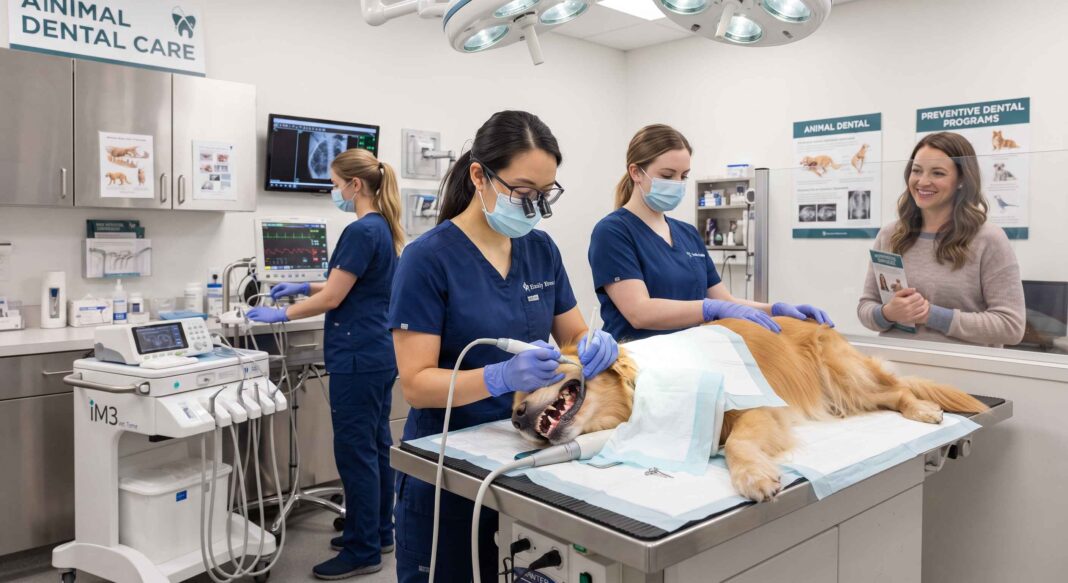
Home care still has limits. Plaque hardens into tartar, and disease often develops under the gumline where you cannot see it. That is why professional care matters. A true dental procedure at an animal clinic includes an oral exam, scaling above and below the gumline, polishing, and often dental X rays when indicated. That is very different from cosmetic scraping on an awake pet. The American Veterinary Dental College explains why dental scaling without anesthesia is not an adequate dental cleaning and can miss painful disease.
Daily brushing and professional dental care serve different purposes
| Approach | What It Helps With | Limits | Best Use |
| Daily tooth brushing at home | Reduces plaque buildup, freshens breath, supports gum health | Does not remove tartar under the gumline, depends on pet tolerance and owner consistency | Ongoing prevention between veterinary visits |
| Dental chews or approved oral products | Can lower plaque and tartar in some pets, adds support when brushing is hard | Not a substitute for brushing or exams, not right for every pet | Supplement to a home care plan |
| Professional dental cleaning at an animal clinic | Removes tartar above and below gumline, allows full oral exam and treatment planning | Requires scheduling, cost, and anesthesia for a proper procedure | Detecting and treating disease that home care cannot reach |
This comparison is where many owners feel stuck. Daily care sounds manageable until life gets busy. Professional care sounds smart until the estimate arrives. A prevention program helps because it spreads decision making over time. Instead of reacting to a painful mouth and a large bill, you and your veterinary team can plan for checkups, budget for cleanings when they are due, and adapt the routine if your pet has health changes.
Small changes in routine can prevent larger dental problems
Schedule oral checks with regular wellness visits. Ask your veterinary team to score your pet’s dental condition at each exam and explain what they are seeing. That creates a baseline. If tartar, gingivitis, or a cracked tooth appears later, you are not starting from zero.
Build a home routine your pet will actually tolerate. Start with touching the muzzle, then lifting the lip, then a finger brush or pet toothbrush for a few seconds. Reward every step. If brushing never becomes easy, ask about rinses, wipes, diets, or chews that fit your pet’s needs. A real routine beats an ideal routine you cannot keep.
Ask for a written dental plan, not just a one time recommendation. Good veterinary dental care is ongoing. Ask when rechecks should happen, whether imaging is likely to be needed, what signs mean you should come in sooner, and how to prepare financially for future cleanings or treatment.
Preventive dental support gives pets comfort and owners clarity
You are not overreacting by paying attention to your pet’s mouth. You are catching one of the most common problems in companion animals before it steals comfort one meal, one chew toy, and one quiet day at a time. Animal hospitals make prevention workable because they combine exams, education, and treatment into a plan you can follow. That is how animal hospitals support preventive dental programs in a way that protects both your pet and your peace of mind.
If your pet has bad breath, visible tartar, bleeding gums, or changes in eating, schedule a dental evaluation with an animal clinic and get a prevention plan in place.