
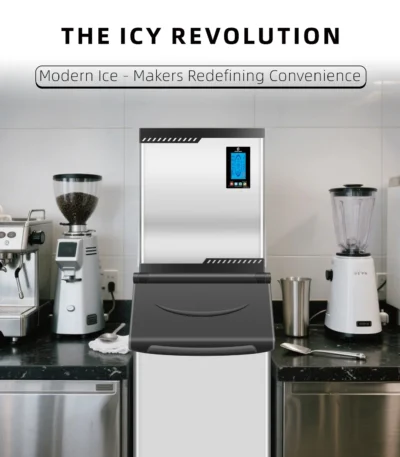
Picture a Saturday night rush — every table full, the bar three deep, and your kitchen staff scrambling because the ice machine gave out an hour ago. Drinks sit warm, food safety margins shrink, and customers grow impatient. It’s a scenario that plays out more often than restaurant owners would like to admit, and the ripple effects on revenue and reputation can be significant.
Ice is far more than a simple commodity in a restaurant environment. It keeps beverages refreshing, preserves perishable ingredients, supports food display presentations, and underpins the basic standards of food safety. When the supply runs dry, operations stall — and every minute of stalled service translates directly into lost profit.
The root cause is often the same: outdated, undersized, or unreliable ice-making equipment that simply cannot keep pace with real-world demand. The good news is that modern ice maker machines offer a practical, scalable solution designed to match the intensity of commercial kitchen life. This guide will walk restaurant owners through understanding why consistent ice production matters, what types of machines are available, how to choose the right fit for your operation, and how to integrate ice-making equipment into a cohesive, efficient kitchen setup.
The Critical Role of Ice in Modern Restaurants
Walk through any high-volume restaurant kitchen and you’ll quickly realize that ice is woven into nearly every aspect of daily operations. At the bar, it keeps cocktails, sodas, and water at the temperatures customers expect. In the kitchen, it chills ingredients during prep, maintains safe holding temperatures for seafood and proteins, and supports the cold chain that food safety regulations demand. On the dining floor, it elevates presentation — from seafood towers to chilled dessert displays — adding a visual appeal that influences how guests perceive quality.
When that supply runs short, the consequences spread faster than most owners anticipate. Bartenders slow down as they ration what’s left. Servers field complaints about lukewarm drinks. Kitchen staff improvise around compromised cold storage, introducing food safety risks that no health inspection should ever uncover. Meanwhile, table turnover drops, ticket times stretch, and the cumulative revenue loss from even a two-hour shortage can be substantial on a busy Friday night.
Consistency is the operative word here. A restaurant’s operational flow depends on predictable inputs — reliable linen deliveries, consistent food suppliers, dependable refrigeration — and ice production is no different. An undersized or aging machine that struggles to recover between rushes creates a bottleneck that ripples outward, affecting staff performance, customer satisfaction scores, and ultimately repeat business. Restaurant owners focused on kitchen efficiency understand that removing these bottlenecks is not an optional upgrade; it’s a foundational requirement. Investing in reliable ice-making capacity means one less variable working against the team during the moments that matter most.
Understanding Ice Maker Machines: Types and Features for Reliability
Modern ice maker machines have evolved well beyond the basic under-counter units of decades past. Today’s commercial models are engineered specifically for the relentless pace of restaurant service — producing consistent volumes of ice, recovering quickly between rushes, and integrating cleanly into kitchen workflows that already rely on equipment like commercial refrigerated prep tables for cold storage continuity. Where a prep table keeps ingredients chilled and ready for the line, an ice maker ensures the downstream demand — drinks, displays, seafood beds — never runs short. Together, they form the backbone of a kitchen’s cold chain.
The core function of any ice maker is straightforward: water flows in, refrigeration cycles freeze it into a usable form, and the finished product drops into a storage bin. What separates reliable commercial machines from consumer-grade alternatives is production capacity, recovery speed, and the durability to sustain that output through a twelve-hour service day without faltering.
Different Types of Ice Maker Machines
Ice type matters more than most owners initially expect. Cube ice makers produce the hard, slow-melting cubes that work best in cocktails and soft drinks, preserving flavor without rapid dilution. Flake ice makers generate soft, moldable ice ideal for seafood displays, salad bars, and injury treatment — anywhere you need ice to conform to a surface. Nugget ice, sometimes called chewable or pellet ice, has surged in popularity for fountain drinks and blended beverages, offering a texture customers actively seek out. Beyond these core formats, specialized machines like slushy machines serve frozen drink programs, while soft-serve and unmanned ice cream machines support dessert menus — all operating on related refrigeration principles but serving distinctly different service needs.
Essential Features for Efficient and Reliable Performance
When evaluating machines, four features deserve the most scrutiny. Production capacity — measured in pounds of ice per 24 hours — must exceed your peak daily demand by a comfortable margin, accounting for ambient temperature fluctuations that reduce output in warm kitchens. Energy efficiency directly affects operating costs; look for machines with credible efficiency ratings that signal lower electricity and water consumption over years of daily use. Durability comes down to the quality of internal components — stainless steel evaporators, robust compressors, and corrosion-resistant bin liners all extend service life in demanding environments. Brands like Smartool have built their commercial ice maker lineup around exactly these priorities, offering units designed to withstand the sustained demands of daily restaurant service. Finally, ease of maintenance determines how quickly your team can clean, sanitize, and troubleshoot the unit without pulling a technician for routine tasks.
Space is also a legitimate constraint in most commercial kitchens. Modular ice makers — where the ice-making head sits atop a separate storage bin or an existing piece of equipment — offer flexibility for tight layouts. Countertop models suit lower-volume stations like coffee bars or prep areas. Matching the machine’s physical footprint to available space, while still meeting capacity requirements, is a balancing act that pays dividends in daily workflow efficiency.
How to Choose the Right Ice Maker Machine: A Step-by-Step Solution
Assessing Your Restaurant’s Ice Needs and Space Constraints
Start by tracking actual ice consumption across a full week, including your busiest service periods. A general benchmark is three pounds of ice per customer per day for beverage service alone, but seafood displays, prep cooling, and blended drink programs can push that figure significantly higher. Measure the physical space available for the unit — floor footprint, overhead clearance, and proximity to existing equipment like commercial refrigerated prep tables — since positioning your ice maker adjacent to cold prep zones shortens the distance staff travel during service and keeps the cold chain tight.
Step-by-Step Selection and Implementation Guide
Once your assessment is complete, work through selection methodically. First, convert your daily consumption estimate into a required production capacity, then add a 20 percent buffer to account for hot kitchen conditions that reduce output. Second, match ice type to your primary use case — cube for the bar, flake for food displays, nugget if your customer base actively requests it. Third, compare shortlisted models on energy ratings, warranty length, and the availability of local service technicians, since a five-year warranty means little if parts take weeks to arrive. Fourth, plan installation before the unit arrives: confirm water line access, drainage routing, and electrical load capacity so day-one setup runs without delays. Fifth, build a maintenance schedule into your kitchen SOPs from the start — weekly exterior wipes, monthly deep cleans of the evaporator and bin, and quarterly filter replacements. Machines that receive consistent care consistently outperform neglected ones, delivering reliable output through years of daily service rather than degrading quietly until a costly breakdown forces the issue.
Integrating Ice Maker Machines with Other Equipment for Maximum Efficiency
A well-designed commercial kitchen functions as a system, not a collection of isolated appliances. Ice maker machines deliver their greatest value when positioned thoughtfully within that system — physically close to the equipment and stations they serve, and operationally aligned with the cold chain that runs from refrigerated prep tables through to the finished plate or glass. Placing your ice maker adjacent to the bar and within reasonable reach of prep zones eliminates the small but cumulative inefficiencies of staff crossing the kitchen repeatedly during a rush.
The same principle applies when your menu includes frozen beverage or dessert programs. Slushy machines and soft-serve or unmanned ice cream machines all draw on related refrigeration infrastructure, and grouping them in a dedicated cold beverage station creates a logical workflow cluster. Staff assigned to that station can manage multiple outputs — ice, slushies, frozen desserts — without breaking stride, while the concentrated utility connections keep plumbing and electrical runs clean and serviceable. Compact modular ice makers are particularly well-suited to this kind of integration, since their stackable or side-by-side configurations adapt to the available footprint without sacrificing production capacity. In tighter kitchens, a countertop ice maker positioned directly above a low-profile storage bin can free up valuable floor space while still meeting the volume demands of a busy service period. The goal is a layout where ice moves the shortest possible distance to where it’s needed, every piece of cold equipment supports the next, and the entire station can be cleaned and restocked efficiently between services.
Investing in Reliable Ice Production for a More Resilient Restaurant
Ice may seem like a background detail in the larger picture of running a restaurant, but as this guide has shown, it’s anything but. From keeping beverages at the temperatures customers expect to maintaining the cold chain that food safety depends on, a reliable ice supply is a non-negotiable operational input — one that directly affects service speed, staff efficiency, and the bottom line when it fails.
Modern ice maker machines offer restaurant owners a practical path to eliminating that vulnerability. By understanding the different ice types available, prioritizing the right features — capacity, energy efficiency, durability, and ease of maintenance — and integrating equipment thoughtfully within your kitchen layout, you can build a cold chain that supports every station from the prep table to the bar without interruption. The step-by-step selection process outlined here removes the guesswork, giving you a clear framework to match the right machine to your specific operation.
The next step is straightforward: audit your current setup honestly. Measure your peak ice demand, assess your available space, and evaluate whether your existing equipment is genuinely keeping pace. If it isn’t, investing in quality ice-making equipment now prevents the far costlier disruptions that aging or undersized machines inevitably deliver. Reliable ice production isn’t just an equipment upgrade — it’s a commitment to running a tighter, more resilient restaurant.