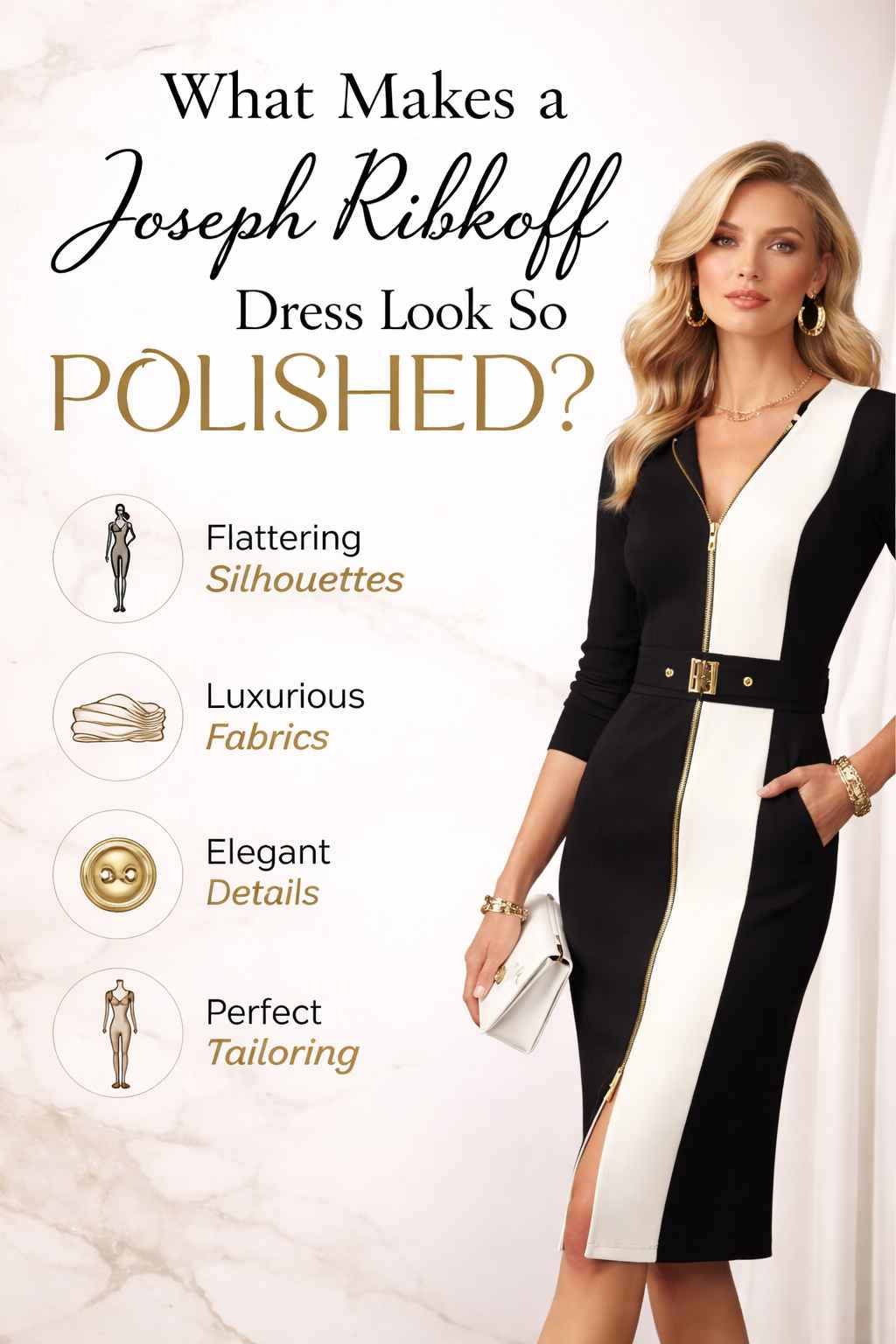
The Meaning Behind “Polished”
When people describe Joseph Ribkoff dresses as polished, they are usually reacting to how complete the dress looks on its own. It falls smoothly, holds its structure, and appears composed whether standing still or moving. The effect does not come from branding alone. It results from consistent design decisions that shape how the garment fits, drapes, and wears over time.
Understanding those design elements makes it easier to recognize quality while shopping and choose a dress that stays sharp from afternoon through evening.
Fabric That Supports the Design
The foundation of a polished dress is fabric that behaves properly. Even a beautifully cut silhouette can lose impact if the material wrinkles easily, clings awkwardly, or sags after sitting.
Three fabric traits often create that refined look:
- Controlled drape that falls cleanly without looking limp
- Stretch with recovery so the shape returns after movement
- A smooth surface finish that looks elevated in both daylight and evening lighting
A structured knit or crepe, for example, helps a simple sheath appear more substantial than a thinner fabric that lacks stability.
Seaming That Shapes Without Bulk
A dress can create definition without heavy structure. Strategic seam placement often replaces the need for rigid tailoring.
Design elements that enhance polish include:
- Princess or angled seams that contour the torso
- Waist shaping positioned to lengthen the silhouette
- Panels that guide the eye without pulling tightly
These subtle construction choices create balance and proportion while maintaining comfort. The result feels flattering without requiring constant adjustments.
Necklines and Sleeves That Frame the Look
Necklines and sleeves strongly influence whether a dress reads refined or distracting. Well-proportioned shapes tend to look intentional rather than trendy.
Common examples include:
- V-necks cut to elongate without plunging too deeply
- Boat necklines that offer clean, professional lines
- Structured high necks suited for evening settings
Sleeves often follow the same thoughtful approach, using three-quarter lengths or soft tapers to maintain clean lines. When these elements are proportioned correctly, the dress looks complete without heavy accessorizing.
Details That Stay Focused
Polish often comes from restraint. Rather than layering embellishments everywhere, a refined dress concentrates interest in one area.
This might appear as:
- A single ruffle near the neckline
- A defined waist detail paired with a smooth skirt
- Minimal embellishment placed at the shoulder or cuff
When detail acts as punctuation instead of decoration overload, the dress feels composed and elevated.
Construction That Holds Up
Small finishing details make a noticeable difference after hours of wear.
Signs of strong construction include:
- Even hems that hang straight
- Necklines that lie flat
- Closures that do not pucker
- Linings that prevent cling
These features help a dress maintain its shape and eliminate the need for constant readjustment.
Choosing a Polished Dress
When shopping, test movement. Sit, walk, and raise your arms. Observe how the fabric responds and whether seams remain straight. A polished dress should return to shape quickly and maintain clean lines.
With balanced silhouettes, structured fabrics, and restrained detailing, Joseph Ribkoff dresses consistently create that intentional finish. The polish becomes recognizable once the construction principles behind it are understood.