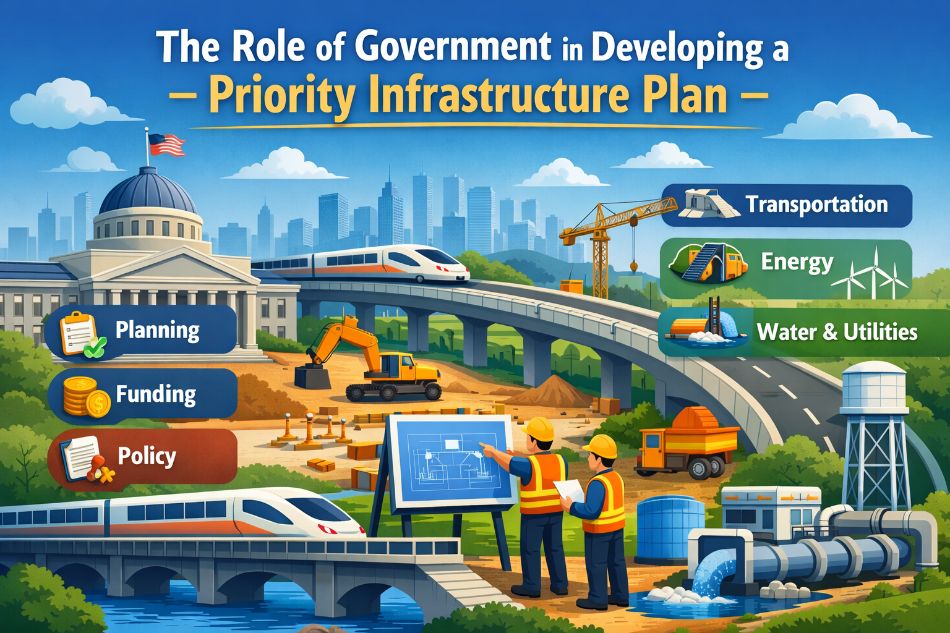
Have you ever driven down a smooth new road, turned on a tap for clean water, or relied on a stable internet connection and wondered, “How did this all happen?” Behind every bridge, hospital, and high-speed internet line sits a complex process of decision-making. And at the heart of that process is something called a priority infrastructure plan.
This article explains what this plan is, why it matters to you, and how your government creates one. We will keep things simple and show you how your tax dollars turn into the roads, pipes, and wires you use daily.
What Is a Priority Infrastructure Plan?
Think of a priority infrastructure plan as a community’s to-do list for big building projects. But it is not just any list. It is a carefully thought-out document that answers three important questions:
-
What do we need to build?
-
When do we need to build it?
-
How will we pay for it?
Governments cannot build everything at once. Money is limited, and needs are many. So they must choose which projects come first. A bridge that might collapse gets higher priority than a new park bench. A water treatment plant serving 50,000 homes matters more than repainting a public building.
The word “priority” is key here. A good plan ranks projects based on urgency, cost, and how many people they help. It looks at today’s problems and tomorrow’s needs. And it tries to spend public money wisely.
Why Governments Must Lead the Way
Private companies build things all the time. They put up apartment buildings, shopping malls, and office towers. So why do we need the government for infrastructure? The answer comes down to three things: scale, fairness, and long-term thinking.
Seeing the Big Picture
No single company can see everything a city or region needs. A business builds what benefits its bottom line. A government must think about everyone.
Take roads as an example. A private developer might build streets inside their new housing project. But who connects those streets to the highway? Who builds the overpass or the traffic lights? That job falls to the government because it requires coordinating many different groups and neighborhoods .
A priority infrastructure plan lets government leaders step back and look at the whole picture. They see where people live, where they work, and what routes they take. They study population trends and economic data. Then they decide where to put resources for the greatest good.
Making Sure Everyone Benefits
Infrastructure should serve all citizens, not just those who can pay. A priority infrastructure plan ensures that projects reach underserved areas.
In Panama, for example, government planners realized that indigenous rural areas lacked basic water and sanitation services. While urban projects often showed better economic returns, planners deliberately included rural communities in their infrastructure priorities . They understood that fairness matters alongside efficiency.
Your government makes similar choices. It builds schools in poorer neighborhoods. It extends water lines to remote towns. It adds bus routes where people need them most. Without government leadership, these projects might never happen because they do not turn an immediate profit.
Thinking Beyond Election Cycles
Politicians face elections every few years. This can create pressure to deliver quick results. But major infrastructure projects take years, sometimes decades, to complete.
A solid priority infrastructure plan bridges the gap between short-term politics and long-term needs. It creates a roadmap that survives chanleadership changesen new officials take office, they inherit a plan already in motion. This stability matters for big projects like dams, highways, or rail systems.
How Governments Build a Priority Infrastructure Plan
Creating this plan involves much more than picking projects from a hat. It follows a structured process that considers data, public input, and practical realities.
Step 1: Assessing Current Conditions
Before deciding what to build, planners must know what exists already. They inventory every bridge, water pipe, school, and power line. They check ages and conditions. They note which assets are failing and which still have years of life left.
This assessment often reveals surprises. A city might discover it has lead pipes nobody mapped. A state might find hundreds of bridges past their design life. Knowing these facts shapes the priority infrastructure plan significantly.
Step 2: Forecasting Future Needs
Communities change over time. Populations grow or shrink. Industries rise and fall. Climate patterns shift. Good planning looks ahead.
Governments study demographic trends to predict where children will need schools in ten years. They analyze economic data to determine where new business parks might be located. They model climate impacts to see which roads might flood more often.
In the United Kingdom, for instance, planners must consider how major projects will affect communities decades into the future. Their Nationally Significant Infrastructure Projects process requires extensive forecasting before construction begins.
Step 3: Consulting the Public
You have a voice in infrastructure planning, even if you do not realize it. Most governments seek public input before finalizing their infrastructure priorities.
This input takes many forms. Town hall meetings let residents voice concerns directly. Online surveys gather wider feedback. Advisory committees include community leaders in discussions.
During the pre-application stage for major UK projects, developers must consult local communities and publish statements explaining how they will engage residents. They advertise in local papers and hold meetings where anyone can ask questions or raise objections.
Step 4: Evaluating Project Options
Not every good idea makes the final cut. Governments evaluate proposed projects against several criteria:
-
Cost: How much will this project cost to build and maintain?
-
Benefit: How many people will use it? What problems will it solve?
-
Risk: Could something go wrong? What are the downsides?
-
Timing: Can we start soon, or must we wait?
-
Alignment: Does this match our broader goals?
The World Bank has helped countries like Panama develop formal frameworks for this evaluation. These tools score projects objectively, so political favorites do not automatically winfundingn.
Step 5: Securing Funding
Even the best plan fails without money. Governments must identify funding sources for their priority infrastructure plan.
Funding can come from many places. Tax revenues pay for many projects. Bonds let governments borrow against future income. Public-private partnerships bring private capital into public projects. Grants from higher levels of government help with specific needs.
In Pakistan, the Central Development Working Party recently approved billions of rupees for infrastructure projects across multiple sectors. They allocated funds for health programs, urban development, and flood-damaged road repairs. Each project had its own funding mix of federal money, provincial contributions, and foreign assistance.
Real-World Examples of Infrastructure Planning
Let us look at how priority infrastructure planning works in practice.
Canberra, Australia
The Australian Capital Territory government maintains an infrastructure plan covering ten years of projects. Their plan responds to specific drivers of demand, including changing demographics, aging infrastructure, climate change, and economic needs.ds
The plan covers multiple sectors: health, education, transport, housing, justice, water, energy, and arts. For each area, it identifies what will be completed in two years, what the priorities are for five years, and what needs consideration over ten years .
Importantly, this plan is not a funding document. It guides strategic thinking and stakeholder engagement. Actual budget decisions happen separately, showing how planning and funding work together but remain distinct processes.
Sindh, Pakistan
After devastating floods in 2022, Pakistan’s Sindh province needed major infrastructure repairs. The government developed a comprehensive flood assistance project covering seventeen districts. Objectives included restoring road connectivity, improving market access, reducing travel times, and supporting economic recovery.
This response shows how priority infrastructure plans must adapt to emergencies. While long-term plans guide routine investments, governments also need flexibility to address unexpected crises.
Challenges in Infrastructure Planning
Creating a priority infrastructure plan is not easy. Governments face several common challenges.
Data Gaps
Good planning requires good data. Yet many governments lack complete information about their existing assets. They may not know the exact condition of underground pipes or the true cost of maintaining older facilities.
Modern technology helps fill these gaps. Digital twins and smart sensors provide real-time data about infrastructure performance. Unified data platforms connect information from different agencies. But collecting this data takes time and money.
Political Pressure
Elected officials naturally want to deliver popular projects quickly. This can push them toward visible but less critical work. A new community center might win votes, while replacing old water mains might not. Yet the water mains matter more for public health.
Strong planning processes protect against this pressure by basing decisions on data rather than politics.
Coordination Problems
Infrastructure projects often involve multiple agencies. One department builds roads while another lays water pipes. Without coordination, they might tear up the same street in consecutive years. Good planning ensures dthat ifferent groups work together.
Uncertainty
No one knows exactly what the future holds. Technology changes. Economies shift. Populations move. Good plans build in flexibility to adapt when conditions change.
How You Can Get Involved
You do not need to be an engineer or politician to influence infrastructure planning. Ordinary citizens can participate in several ways.
Attend public meetings when your community discusses new projects. Speak up about what you see as needs in your neighborhood. Write to elected officials about infrastructure concerns. Respond to surveys from planning departments.
Your local knowledge matters. You know which intersections feel dangerous. You know where flooding happens. You know which bus routes work and which do not. Sharing this information helps planners make better decisions .
Conclusion
A priority infrastructure plan might sound like boring government paperwork. But it shapes the world around you in profound ways. It determines whether your child’s school has enough classrooms. It decides whether your commute takes twenty minutes or an hour. It influences whether your community can withstand floods and heat waves.
Government plays an essential role in this planning because no one else can see the whole picture. Only the government can balance competing needs, ensure fair access, and think beyond short-term profits.
The next time you drink clean water or drive on a smooth road, remember the plan that made it possible. Years of thinking, debating, and prioritizing stood behind that simple convenience. And your voice, if you choose to use it, can help shape the next plan that builds your community’s future.