For coffee lovers who refuse to compromise on quality, even when venturing into the great outdoors, the right equipment makes all the difference. While many focus solely on brewing methods, the grinding process is equally crucial to achieving that perfect cup. An ergonomically designed coffee grinder transforms what could be a tedious manual task into a smooth, effortless experience, whether you’re perched on a mountain summit or relaxing at a campsite.
Portable coffee grinders have become essential gear for hiking enthusiasts, campers, and travelers who demand fresh-ground coffee wherever their adventures take them. However, not all portable grinders are created equal. The difference between a frustrating grinding experience and an enjoyable one often comes down to ergonomic design. A well-designed grinder reduces hand fatigue, operates efficiently with minimal effort, and fits seamlessly into your outdoor kit. Understanding what makes a grinder truly ergonomic helps you select equipment that enhances rather than hinders your outdoor coffee ritual, ensuring every cup tastes as exceptional as the view.
Understanding the Importance of Ergonomic Design
Ergonomic design directly determines whether grinding coffee outdoors becomes an enjoyable ritual or a physical challenge. When you’re manually grinding beans at altitude or after a long hike, poor design quickly leads to hand cramping, wrist strain, and arm fatigue. A well-engineered grinder distributes force efficiently, requiring less energy per rotation while maintaining consistent grind quality. The handle position, grip diameter, and overall weight distribution work together to create natural motion patterns that align with your body’s mechanics. This becomes especially critical during longer grinding sessions needed for multiple cups or when working with harder, light-roasted beans. Compact dimensions matter too—a grinder that fits comfortably in your pack without awkward bulk integrates seamlessly into your gear system. Beyond comfort, ergonomic design enhances grinding consistency because reduced fatigue means you maintain steady pressure and rotation speed throughout the process, resulting in more uniform particle size and better extraction when brewing.
Key Features of Ergonomic Coffee Grinders
Several design elements distinguish truly ergonomic grinders from basic portable models. The handle mechanism stands as the primary interface—look for crank arms with comfortable grip materials, optimal length for leverage, and smooth rotation without wobble or resistance. Body shape matters significantly; cylindrical designs with contoured surfaces fit naturally in your palm for stable holding during grinding. Adjustment mechanisms should operate easily with one hand, allowing quick grind size changes without fumbling through complex procedures. Burr quality and spacing affect the force required—ceramic or stainless steel conical burrs with proper alignment grind efficiently without binding. Capacity should balance between sufficient volume and compact size, typically holding enough beans for two to three cups without becoming bulky. The grinder’s center of gravity influences stability during use; well-balanced models don’t tip or require constant readjustment. Finally, assembly and disassembly should be intuitive for cleaning in field conditions, with parts that lock securely yet separate easily without tools or excessive force.
Lightweight and Portable
Weight becomes critical when every ounce counts in your pack. Quality ergonomic grinders typically weigh between 300-500 grams, striking a balance between durability and portability. Aluminum and high-grade plastics reduce weight without sacrificing structural integrity, while still protecting internal burrs during transport. The compact profile should fit easily in side pockets or nestle between other gear without creating pressure points. Lightweight construction also reduces arm fatigue during grinding—you’re supporting less mass while cranking, making the process noticeably easier after physically demanding activities. Consider how the grinder’s dimensions complement your existing camp kitchen setup, ensuring it doesn’t dominate limited space in your pack or cooking area.
Ergonomic Handle
The handle design directly impacts grinding comfort and efficiency. Optimal handles feature a crank arm length of 10-15 centimeters, providing sufficient leverage without requiring excessive circular motion. Grip materials should offer texture for secure holding even with damp hands, using rubber, silicone, or knurled metal surfaces. The handle attachment point matters—folding designs save space but must lock firmly during use to prevent slippage. Ball-bearing mechanisms create smooth, consistent rotation that requires minimal force, reducing hand strain during extended grinding sessions. Some advanced designs incorporate ergonomic angles that align with natural wrist position, eliminating the awkward twisting motion common in basic grinders. The handle should rotate freely without catching or requiring pressure adjustments mid-grind, maintaining steady momentum throughout the process.
Top Picks for Ergonomic Coffee Grinders
Several manual and electric grinders excel in ergonomic design for outdoor use. Manual options with conical burr systems and optimized crank mechanisms deliver consistent results without power requirements, featuring textured grips and balanced weight distribution that minimizes strain during grinding. These typically incorporate aluminum or stainless steel construction with folding handles for compact storage. Electric alternatives eliminate physical effort entirely, using rechargeable batteries or replaceable cells to power grinding mechanisms. The best ergonomic grinders share common traits: intuitive adjustment dials for grind size, stable bases that prevent tipping, transparent chambers for monitoring progress, and easy-access burrs for field cleaning. Premium models include features like ball-bearing handle systems, anti-slip rubber bases, and protective carrying cases. Consider grinders with modular designs that allow component replacement rather than full unit disposal. Weight capacity matters—models holding 25-35 grams suit solo travelers, while 50-gram capacities serve small groups. Prioritize grinders with established reliability in outdoor conditions, backed by user reviews confirming durability through extended backcountry use and resistance to moisture, dust, and temperature variations.
Battery-Operated Options
Battery-powered grinders eliminate manual effort, operating on standard AA or AAA cells readily available at most locations. These models suit travelers who prioritize convenience and grinding speed, processing beans in 30-60 seconds with consistent particle size. The ergonomic advantage lies in one-button operation requiring minimal hand involvement—simply hold the unit steady while it works. Replaceable battery systems offer reliability in remote areas where recharging isn’t feasible, and spare batteries add negligible weight. Look for models with efficient motors that maximize grinding sessions per battery set, typically yielding 15-25 uses before replacement becomes necessary.
Rechargeable Options
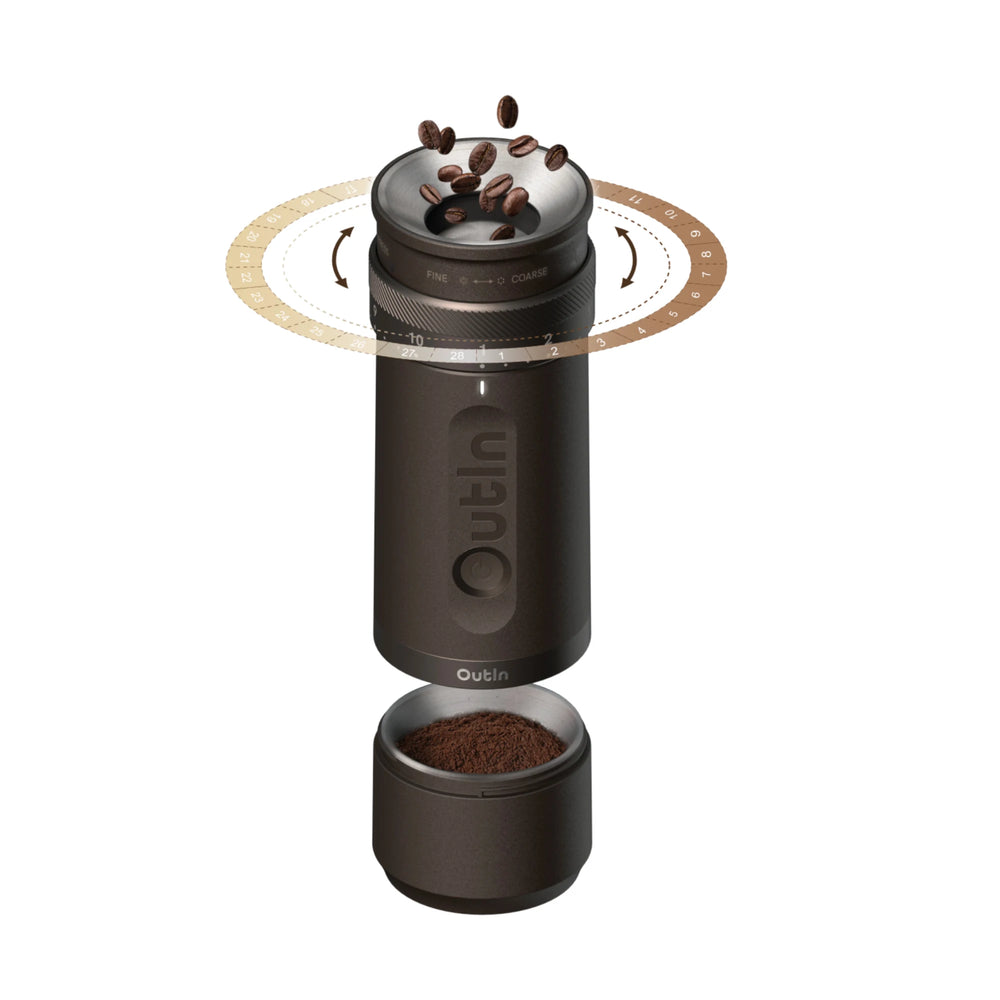
USB-rechargeable grinders combine electric convenience with sustainable operation, eliminating disposable battery waste. These units charge from power banks, solar panels, or vehicle ports, making them ideal for extended trips with renewable energy sources. Lithium-ion batteries provide multiple grinding sessions per charge—quality models deliver 20-30 uses before requiring recharge. The ergonomic benefit includes lightweight construction since rechargeable batteries often weigh less than equivalent disposable cell holders. Built-in charge indicators prevent unexpected power loss, and many models feature auto-shutoff to preserve battery life. Brands like OutIn have developed compact rechargeable grinders specifically for outdoor enthusiasts, with designs that emphasize both portability and charging flexibility in remote environments. Consider charging time and capacity when selecting—faster charging and longer runtime enhance field usability during multi-day adventures.
Using Your Ergonomic Coffee Grinder
Maximizing your grinder’s performance starts with proper technique and positioning. Hold the grinder body firmly against a stable surface or secure it between your knees when sitting, preventing movement that wastes energy and creates inconsistent grinds. Load beans to recommended capacity—overfilling increases resistance and strain, while underfilling causes beans to bounce rather than grind efficiently. Turn the handle at a steady, moderate pace rather than rushing; consistent speed produces uniform particle size and reduces wear on burr mechanisms. Adjust grind settings before adding beans to avoid jamming, and make incremental changes rather than drastic shifts between settings. For manual grinders, establish a comfortable rhythm that you can maintain throughout the session—typically one complete rotation per second works well for most models. Position yourself so your grinding arm moves naturally without reaching or twisting awkwardly. When grinding for multiple servings, take brief pauses to prevent hand fatigue and maintain grinding quality throughout.
Maintenance Tips
Regular cleaning preserves grinding performance and extends grinder lifespan. After each use, disassemble accessible components and brush away residual grounds using a small soft-bristled brush or compressed air. Deep clean burrs weekly during heavy use by removing them completely and wiping with a dry cloth—avoid water on metal burrs to prevent rust. Check adjustment mechanisms monthly for coffee oil buildup that can affect precision, cleaning threads with a dry brush. Inspect the handle attachment point periodically, tightening any loose connections before they cause wobble or damage. Store the grinder with burrs in the coarsest setting to reduce spring tension and maintain calibration accuracy over time.
Storage
Proper storage protects your grinder between adventures and maintains its ergonomic functionality. Keep the grinder in a protective case or padded pouch that prevents impact damage to burrs and adjustment mechanisms during transport. Store in a dry location away from extreme temperatures that can warp plastic components or affect burr alignment. Remove any remaining beans before storage to prevent oil accumulation and stale odors. If your grinder has a folding handle, secure it in the collapsed position to prevent accidental deployment that could bend or break the mechanism. For long-term storage, place silica gel packets nearby to absorb moisture and prevent corrosion on metal parts.
Elevating Your Outdoor Coffee Experience
Ergonomic design transforms portable coffee grinders from simple tools into essential companions for outdoor adventures, directly impacting your comfort, efficiency, and overall coffee experience. The right coffee grinder for espresso eliminates physical strain through thoughtful engineering—optimized handle mechanisms, balanced weight distribution, and intuitive operation that works seamlessly in field conditions. Whether you choose manual models that rely on clever mechanical advantages or electric options that eliminate effort entirely, prioritizing ergonomics ensures that grinding fresh beans remains an enjoyable ritual rather than a burdensome chore, even after demanding physical activities.
For outdoor enthusiasts who value quality coffee as much as their adventures, investing in an ergonomically designed grinder pays dividends with every use. The combination of lightweight portability, comfortable operation, and consistent grinding performance means you never sacrifice quality for convenience. By understanding key ergonomic features and selecting equipment that matches your specific needs—whether weekend camping trips or extended backcountry expeditions—you create a reliable coffee system that enhances rather than complicates your outdoor experiences. With proper use and maintenance, a well-designed ergonomic grinder becomes a trusted piece of gear that delivers exceptional coffee for years of adventures ahead.