Delta Flight DL275 Diverted to LAX: What Really Happened and Why It Matters

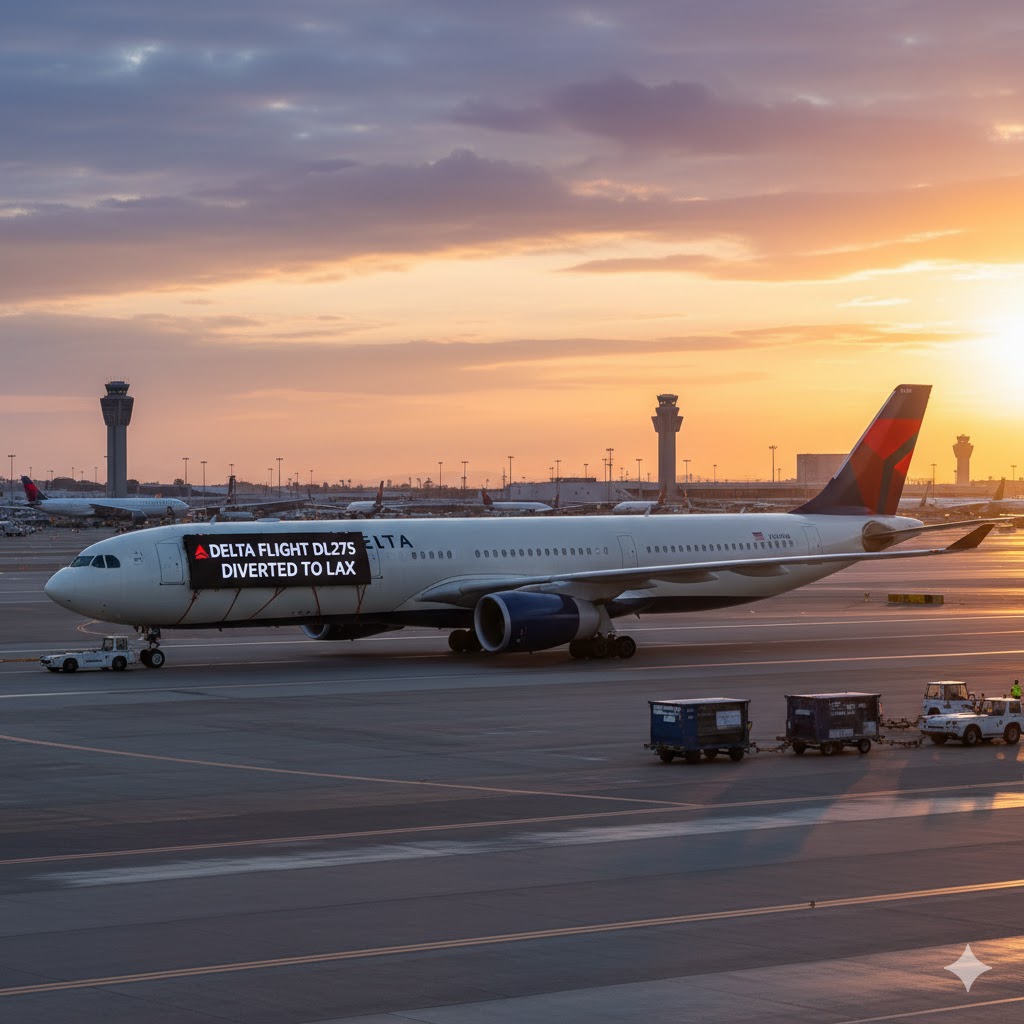
When Delta Flight DL275 diverted to Los Angeles International Airport (LAX) on May 27, 2025, it drew attention across the aviation world. The long-haul Airbus A350-900, flying from Detroit (DTW) to Tokyo Haneda (HND), was forced to land unexpectedly after pilots detected a malfunction in the aircraft’s engine anti-ice system—a critical safety mechanism in high-altitude flight.
This wasn’t a simple delay or rerouting it was a $2.3 million emergency event that revealed how modern aviation still depends on rapid human judgment and how technology could play a stronger preventive role.
Quick Summary of the DL275 Diversion
Flight Route: Detroit (DTW) → Tokyo Haneda (HND)
Aircraft Type: Airbus A350-900 (Registration N508DN)
Diverted To: Los Angeles International Airport (LAX)
Primary Issue: Engine anti-ice system failure
Flight Duration Before Landing: 12 hours and 15 minutes
Estimated Cost to Delta: $2.3 million
Timeline of the Emergency Landing
The flight departed Detroit at 3:53 PM local time, already behind schedule due to a late-arriving aircraft from Amsterdam. Passengers expected a routine overnight journey to Japan, but after several hours into the flight, the pilots noticed an anomaly in the Rolls-Royce Trent XWB engine’s anti-ice system.
At an altitude of 38,000 feet, roughly 620 nautical miles southwest of Anchorage, Alaska, sensors indicated the system wasn’t functioning correctly—a serious concern when flying through cold upper-atmosphere regions where ice formation can threaten engine performance.
After consulting with Delta’s operations team and air traffic control, the crew made a strategic decision: divert to Los Angeles International Airport, where Delta maintains one of its most advanced maintenance facilities.
By 1:08 AM on May 28, DL275 safely touched down at Runway 06R in LAX, concluding a tense 12-hour flight. No injuries were reported, and all 300+ passengers disembarked safely.
Why LAX Was Chosen as the Diversion Airport
The decision to land in Los Angeles instead of returning to Detroit or continuing to Tokyo was based on multiple technical and operational factors.
1. Advanced Technical Facilities
LAX is a major Delta hub with specialized Airbus A350 maintenance infrastructure. The airport also hosts 24/7 Rolls-Royce engine support, giving engineers direct access to spare parts and diagnostic equipment for the Trent XWB engine.
2. Passenger Rebooking and Convenience
Given Delta’s frequent international flights out of Los Angeles, it was far easier to rebook passengers onto later departures for Tokyo or provide hotel accommodations locally.
3. Emergency Readiness
LAX’s long runways, favorable weather conditions, and full-scale emergency response teams made it the safest choice for a large aircraft carrying heavy fuel reserves on a trans-Pacific route.
How Technology Could Have Prevented the Diversion
Aviation analysts argue that the problem with DL275 highlights a growing need for AI-driven predictive maintenance in the airline industry.
If the anti-ice system fault had been identified during pre-flight checks through real-time engine monitoring, Delta could have avoided the flight entirely—saving fuel, time, and potential risk.
Smart Tech Solutions That Could Have Helped:
-
Predictive Analytics: Detecting irregular performance in the Trent XWB’s components before takeoff.
-
AI Maintenance Alerts: Flagging small deviations in sensor readings hours before flight.
-
Data-Driven Decision Tools: Providing early warnings to maintenance crews and pilots about possible system degradation.
This type of technology isn’t theoretical it’s already being tested across major airlines. The challenge now is implementing it consistently to reduce unexpected diversions like this one.
What This Means for Passengers
For travelers following LAX to DTW or Japan to Detroit Delta flights today, some minor schedule adjustments are likely while aircraft N508DN undergoes inspection and repair.
Passengers are advised to:
-
Check the Delta mobile app or website for real-time updates.
-
Expect potential rebookings or short delays on affected routes.
-
Contact Delta support for hotel vouchers or compensation, depending on itinerary disruptions.
Delta’s proactive communication during the event, according to passenger social media posts, helped maintain calm and confidence throughout the diversion.
Airline Response and Crew Performance
Although Delta has not yet issued a detailed public statement, internal communications indicate the following:
-
All passengers and crew are safe.
-
Flight attendants followed emergency procedures precisely and maintained professionalism.
-
Engineering teams are collaborating with Rolls-Royce to determine the exact mechanical cause.
Passengers praised the pilots’ steady communication and the cabin crew’s composure, which helped turn a potentially frightening situation into a controlled and safe landing.
Broader Impact: A Lesson in Aviation Safety
The DL275 diversion may seem like a one-off technical fault, but it reflects a larger industry challenge. As aircraft systems become increasingly digital and complex, airlines must evolve beyond reactive maintenance.
Proactive, AI-assisted safety protocols can identify issues before they affect flight performance. With predictive data, airlines could optimize scheduling, minimize emergency landings, and enhance both safety and operational efficiency.
This event could become a case study for predictive maintenance innovation, illustrating how integrating data science and machine learning can protect passengers and reduce costly mid-flight diversions.
Looking Ahead: What to Watch
Passengers and industry watchers should monitor:
-
Delta’s maintenance reports on the Airbus A350 involved in the incident.
-
FAA investigations or safety bulletins regarding engine anti-ice systems.
-
Delta’s adoption of new predictive monitoring tools for its A350 fleet.
As air travel continues to rebound globally, events like this underscore how smart technology will define the next era of aviation reliability.
Final Thought
The Delta Flight DL275 diversion to LAX serves as both a success story in crisis management and a warning for the industry. While Delta’s pilots and crew handled the situation flawlessly, the incident exposed the limitations of traditional maintenance systems.
The takeaway is clear: with the integration of AI-driven diagnostics, real-time engine monitoring, and predictive analytics, the future of air travel can be not just safer—but smarter.