Introduction
Human survival has always depended on adaptation and innovation. In two very different but equally vital areas—camouflage technology and organ transplantation—advances continue to save lives. Tarnplanen, a groundbreaking approach to concealment, is transforming outdoor and military strategies, while organ transplantation offers hope to thousands awaiting life-saving procedures. Together, these fields show how science reshapes the way we live and protect life.
What is Tarnplanen?
Tarnplanen is an advanced camouflage fabric designed to blend with surrounding environments, making detection difficult for human vision and surveillance devices. Unlike traditional camouflage, Tarnplanen is based on scientific principles of optics, pattern disruption, and adaptive coloration.
-
Meaning: Tarnplanen translates roughly to “camouflage tarpaulin” in German.
-
Purpose: Its main goal is to hide or disguise objects, equipment, or people in different environments.
-
Why it’s unique: It doesn’t just copy natural patterns—it adapts them using research on human and animal vision.
Why Was Tarnplanen Developed?
-
Military Need: During World War I and II, soldiers required more effective concealment against enemies.
-
Nature-Inspired: Researchers studied how animals like chameleons, zebras, and tigers hide themselves.
-
Technological Push: Advancements in printing and fabrics gave rise to durable, lightweight, and effective camouflage.
How Does Tarnplanen Work?
Tarnplanen relies on three core scientific methods:
-
Pattern Disruption
-
Breaks up the outline of an object so it doesn’t look like a recognizable shape.
-
Example: Jagged edges and broken lines confuse the eye.
-
-
Color Blending
-
Uses natural tones (greens, browns, grays, desert shades) to match environments.
-
Example: A soldier in the forest disappears into foliage.
-
-
Multi-Spectral Adaptation
-
Works not only in visible light but also under infrared or low-light conditions.
-
Example: Effective against night-vision devices.
-
What Makes Tarnplanen Better Than Traditional Camouflage?
-
Traditional camouflage is fixed-pattern and works only in limited environments.
-
Tarnplanen adapts to multiple conditions and remains durable longer.
Key Advantages:
-
Lightweight and portable.
-
Weather-resistant and durable.
-
Works in forest, desert, snow, and even urban areas.
-
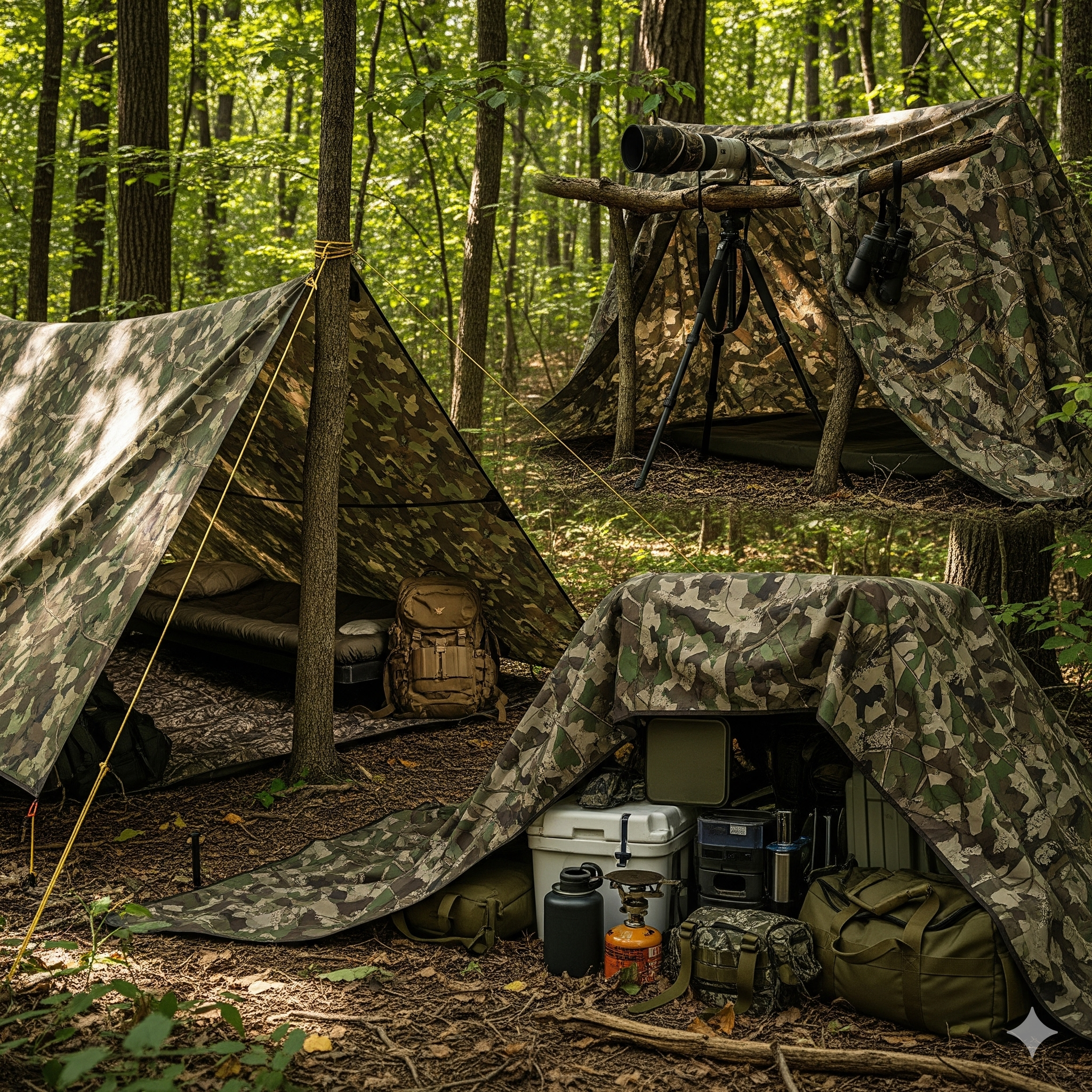
Versatile: Can be used for tents, uniforms, vehicles, or observation hides.
Where Can Tarnplanen Be Used?
Tarnplanen is not restricted to the military—it’s finding applications in many fields:
-
Military and Defense
-
Conceal soldiers, vehicles, and equipment.
-
Create field shelters that blend into landscapes.
-
-
Outdoor Enthusiasts
-
Hunters use Tarnplanen as blinds or covers.
-
Campers set it up as weatherproof shelter.
-
-
Wildlife Photography and Research
-
Photographers use it to get closer to animals without disturbing them.
-
-
Urban Security
-
Covert surveillance teams use it for discreet operations.
-
How is Tarnplanen different from ordinary camouflage?
Ordinary camouflage usually uses static patterns (like woodland or desert print). Tarnplanen, however, applies advanced disruptive science and sometimes even multi-spectral properties to remain effective under multiple conditions.
Can Tarnplanen be used in everyday life?
Yes. Besides military use, Tarnplanen is popular for:
-
Camping tents and tarps.
-
Concealment shelters for hunting.
-
Shade covers in gardens or construction sites.
-
Photography blinds.
Is Tarnplanen waterproof?
Most modern Tarnplanen fabrics are water-resistant or fully waterproof, making them reliable in rain, snow, and harsh weather.
Does Tarnplanen work at night?
Yes. Advanced Tarnplanen includes infrared-resistant coatings, making it harder to detect with night-vision devices.
How durable is Tarnplanen compared to normal fabric?
Tarnplanen is made from reinforced, tear-resistant materials. It withstands:
-
Rough handling.
-
Harsh climates.
-
UV light exposure without quick fading.
Benefits of Tarnplanen in Outdoor Survival
Using Tarnplanen outdoors gives several advantages:
-
Shelter: Acts as a roof, groundsheet, or windbreaker.
-
Concealment: Keeps you hidden during hunting or wildlife observation.
-
Durability: Protects against rain, sun, and snow.
-
Portability: Lightweight and easy to fold.
Limitations of Tarnplanen
Even though Tarnplanen is highly advanced, it has some challenges:
-
May not perfectly match every environment.
-
Can wear out with long-term harsh use.
-
Still detectable by thermal imaging in some cases.
-
Requires proper placement to be effective.
The Future of Tarnplanen
Looking ahead, Tarnplanen may become even more powerful with modern research:
-
Smart Fabrics: Materials that automatically change color to match surroundings.
-
Nanotechnology: Ultra-light, self-repairing Tarnplanen.
-
Sensor Integration: Built-in sensors to detect drones and adjust camouflage.
-
Civilian Fashion: Clothing and gear that combine camouflage with urban style.
The Rise of Tarnplanen
-
History: Tarnplanen originated in the early 20th century during World War I to improve concealment. It evolved in World War II with new materials and patterns.
-
Science: Its effectiveness lies in optical disruption and adaptive designs that confuse human vision.
-
Applications: Military, outdoor sports, wildlife photography, security surveillance, and even architecture.
-
Benefits: Lightweight, durable, versatile, and cost-effective.
-
Challenges: Limited adaptability in different environments, vulnerability to modern surveillance, and a learning curve for users.
-
Future: Smart fabrics, nanotechnology, and sensor-driven textiles may revolutionize camouflage.
Organ Transplantation: Extending Human Life
While Tarnplanen focuses on survival in nature, organ transplantation addresses survival within the human body.
What is Organ Transplantation?
Organ transplantation is the medical process of replacing a failing organ with a healthy one from a donor. Organs that can be transplanted include the kidney, heart, liver, pancreas, lungs, and intestines.
Key Milestones
-
The first successful kidney transplant was performed in 1954 in the United States.
-
Since then, surgical methods and immunosuppressant drugs have made transplants safer and more common.
Main Points of Tarnplanen
-
Tarnplanen: Advanced camouflage fabric with military and civilian uses.
-
Organ Transplantation: Life-saving medical practice helping thousands worldwide.
-
Donations: Living and deceased donors make transplantation possible.
-
Challenges: Tarnplanen faces tech limitations; transplantation faces donor shortages.
-
Future: Smart camouflage textiles and artificial or bioengineered organs.
Who Can Donate and How?
Both living and deceased individuals can be donors. A living person can donate one kidney, part of their liver, or bone marrow. Deceased donors, meanwhile, can give multiple organs and tissues, saving or improving several lives.
Kidney Paired Donation
When a willing donor’s kidney does not match their intended recipient, a paired exchange program allows two or more donor-recipient pairs to “swap” matches, making transplants possible.
Organ Transport and Allocation
Time is critical. Organs are transported using specialized preservation systems and distributed through a national allocation system. Factors like blood type, tissue compatibility, urgency, and geographic distance determine priority.
The Waiting List
As of today at 12:36 p.m. EDT, 106,507 people are waiting for a life-saving organ transplant in the U.S., with 59,894 actively listed. Patients join the list after medical evaluation at transplant hospitals.Common Questions About Transplantation
-
Am I too old or sick? Age alone does not disqualify someone; overall health is the key factor.
-
Can I list at multiple hospitals? Yes, patients may list at more than one hospital to increase chances.
-
How many are successful? Most organ transplants succeed, with kidney transplants having among the highest success rates.
-
Cost coverage? Insurance, Medicare, or charitable programs often help, though costs vary.
Challenges Facing Both Fields
-
For Tarnplanen: Effectiveness may be reduced by drones, thermal imaging, and environmental changes.
-
For Organ Transplantation: Shortage of donors, long waiting times, and financial burdens remain obstacles.
The Future Ahead!
-
Tarnplanen: Research into nanotechnology and smart fabrics could lead to adaptive camouflage that changes in real time.
-
Organ Transplants: Bioprinting and artificial organs may reduce dependency on human donors. Paired exchanges and global cooperation may also expand access.
Conclusion
Tarnplanen and organ transplantation may exist in different worlds—one in the field of defense and exploration, the other in medicine but both are bound by the same mission: survival. Tarnplanen ensures safety through concealment, while organ transplantation saves lives through science and generosity. Both highlight how human ingenuity continues to push the boundaries of protection and preservation in an ever-changing world.