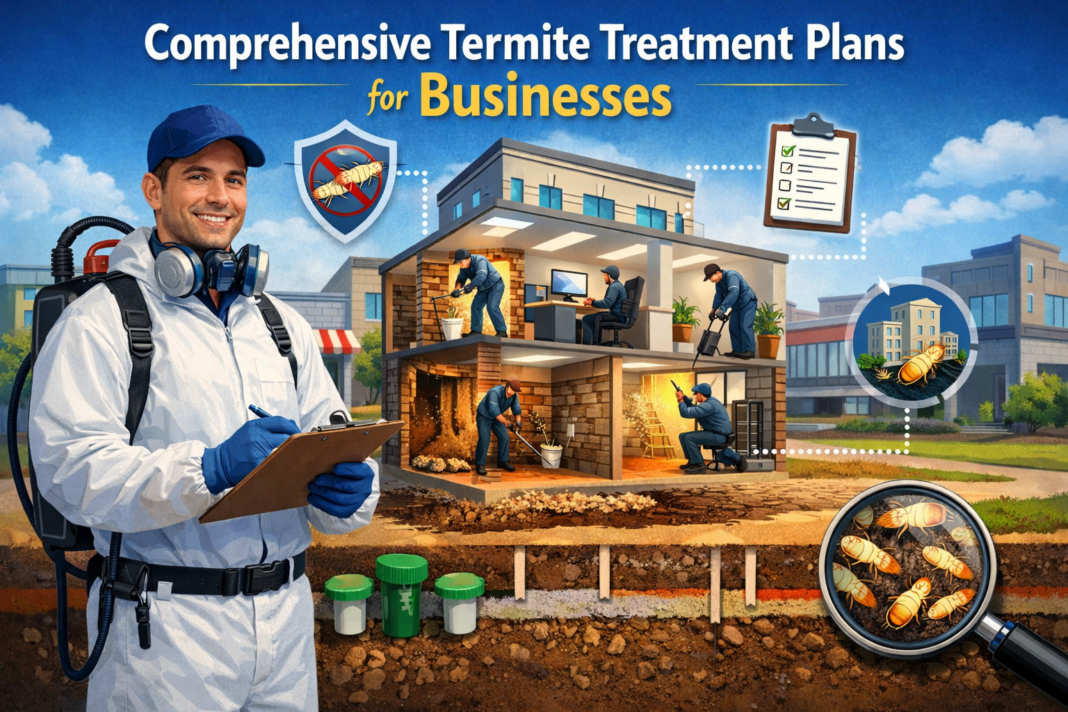
Termites are one of the most destructive pests that can infiltrate a business establishment, causing significant structural damage and leading to costly repairs. For businesses, the presence of termites not only threatens the integrity of the building but also the company’s reputation, particularly if clients or customers become aware of the infestation. Therefore, a comprehensive termite treatment plan is essential for protecting business assets and ensuring long-term operational integrity.
Understanding Termite Threats in Commercial Settings
Unlike residential properties, commercial buildings often have unique architectural features and varied construction materials that may be susceptible to termite infestation. Termites are silent invaders and can go unnoticed for years, steadily eating away at wood, insulation, and even paper products. This can compromise the safety of the structure and necessitate expensive repairs.
Businesses must be proactive in addressing termite threats by implementing robust treatment plans tailored to their specific needs. An effective termite management strategy involves regular inspections, immediate treatment of active infestations, and preventive measures to deter future infestations.
Components of a Comprehensive Termite Treatment Plan
A successful termite treatment plan for businesses typically includes several key components:
- Inspection and Assessment: A thorough inspection by a professional pest control service is the first step in identifying the extent of the infestation and the specific species of termites involved. This assessment helps in formulating a targeted treatment plan.
- Treatment Application: Depending on the type of termites and the level of infestation, different treatment methods may be employed, including liquid termiticides, bait stations, or physical barriers. Each method is designed to eliminate active termites and prevent new colonies from establishing.
- Monitoring and Maintenance: After the initial treatment, ongoing monitoring is crucial to ensure the effectiveness of the treatment and to detect any new termite activity. Regular maintenance can include replenishing bait stations and reapplying termiticides as needed.
- Preventive Measures: Implementing preventative strategies such as moisture control, sealing entry points, and reducing wood-to-ground contact can significantly decrease the likelihood of future infestations.
Choosing the Right Pest Control Partner
For businesses, selecting an experienced and reliable pest control partner is critical. Not only should the company have expertise in termite management, but they should also offer comprehensive pest control services that include Rodent control Huntsville and other pest management solutions. This holistic approach ensures that all potential pest threats are addressed, protecting the business from various types of infestations.
Conclusion
Investing in a comprehensive termite treatment plan is essential for any business looking to safeguard its property and reputation. By understanding the unique challenges posed by termites in commercial environments and partnering with a competent pest control provider, businesses can effectively manage and mitigate the risks associated with termite infestations. Regular inspections, targeted treatments, and preventive measures form the backbone of a successful termite management strategy, ensuring the long-term protection of business assets.