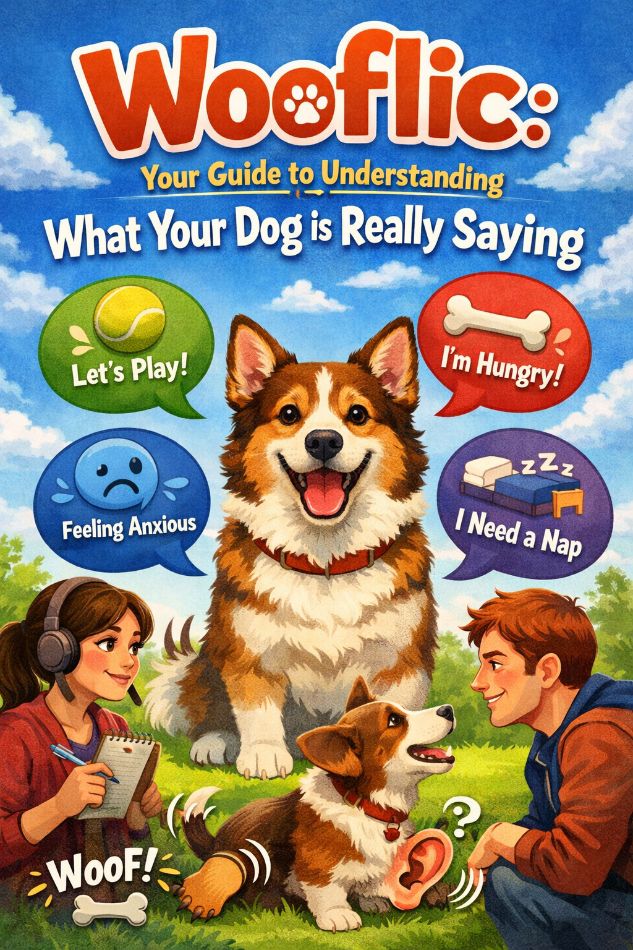
Have you ever wished your dog could talk? Imagine if they could tell you why they’re barking at the vacuum cleaner or what they really dream about. While they might not use words, dogs are master communicators. They speak a rich, silent language of movement, sound, and energy. Learning this language—let’s call it wooflic—is one of the most rewarding things you can do as a pet owner. It transforms guesswork into understanding and deepens your bond in incredible ways.
This guide will help you become fluent in the basics of dog communication. Forget complex jargon; we’re focusing on simple signals you can see every day. By the end, you’ll start to see the world from your dog’s perspective.
It’s More Than Just a Wagging Tail
Most of us think a wagging tail means a happy dog. But what if the tail is stiff and high, wagging in short, fast strokes? Or low and slow? The tail is just one part of a bigger story. True understanding comes from reading your dog’s entire body.
The Tale of the Tail
A tail is like a mood barometer. A relaxed, mid-level wag often signals a happy, comfortable dog. A high, stiff tail can indicate alertness, excitement, or even potential aggression. A tail tucked low or between the legs is a clear sign of fear, anxiety, or submission. Remember, a wag is not always an invitation. Always look at the whole picture.
Ears: The Directional Dish Antennas
Your dog’s ears are incredible tools for expression. Pricked-forward ears mean they are fully engaged and interested in something. Ears flattened sideways or back against the head often signal fear, nervousness, or submission. Soft, relaxed ears that flop naturally show a dog at ease.
Eyes and Face: The Window to Their World
You know that soft, relaxed look your dog gives you when you’re cuddling? Their eyes are slightly squinted, their faces are loose. This is a sign of trust and contentment. On the flip side, a hard, direct stare can be a challenge or threat in the dog world. You might also see “whale eye”—when a dog shows the whites of their eyes while looking away. This usually means they are uncomfortable and anxious.
The Overall Posture: The Full Sentence
Putting it all together is key. A confident, relaxed dog has a loose, wiggly body. They might do a playful “bow” with their front end down and rear end up. A fearful dog makes itself look small—crouched low, tail tucked, head down. An agitated or assertive dog tries to look big: standing tall, chest out, weight forward, with stiff movements.
Bark, Whine, and Groan: The Soundtrack of Canine Life
While body language is the main event, vocalizations add important context. Think of them as the tone of voice in a sentence.
The Many Meanings of a Bark
A bark is not just a bark. A rapid series of barks, often with pauses to listen, is an alert: “Something’s happening!” A continuous string of barks at a lower pitch can mean, “I think there’s a problem. Someone check this out.” A high-pitched, single yelp usually means surprise or pain. Playful barks are often higher and paired with that bouncy, playful posture.
Whines, Whimpers, and Sighs
Whining can be tricky. It often expresses excitement (like when you’re preparing their food) or acute stress (like at the vet). A soft whimper can signal pain or fear. But don’t forget the happy sounds! A long, deep sigh when they lie down is often a sign of pure contentment.
The Power of the Growl
This is one of the most important signals to understand correctly. A growl is not a “bad” behavior; it is crucial communication. It’s your dog saying, “I am uncomfortable. Please give me space.” It could be a warning over a bone, during an uncomfortable hug, or when they are scared. Punishing a growl teaches a dog to skip the warning, which is dangerous. Instead, see it as valuable feedback and figure out what is making them uneasy.
The Invisible World: Nose and Scent
Dogs experience the world through their nose in a way we can hardly imagine. When your dog stops to sniff a fire hydrant for five minutes, they’re reading the neighborhood newsletter. They learn who’s been there, their health, and their mood. Sniffing is mentally stimulating and calming for them. Allowing your dog time to “read” these scent messages on walks is a key part of respecting their native wooflic and their need for mental exercise.
Real-World Scenarios: Putting It All Together
Let’s look at two common situations through this new lens.
Scenario 1: Meeting a New Dog
You see a dog on a walk and want to say hello. The dog’s body is stiff, its tail is high and vibrating, and it’s giving a direct stare. Its owner says, “He’s friendly, he’s just wagging his tail!” But you now see the full picture: this dog is not inviting play. It is alert and possibly stressed. The polite thing to do is give a gentle nod and move on, avoiding a tense interaction.
Scenario 2: Your Own Dog’s “Guilty” Look
You come home to a chewed shoe. Your dog is crouched, ears back, avoiding eye contact. This isn’t a display of “guilt” as we know it. Dogs don’t feel guilt over past actions. They are reacting to your current body language—your tense posture, your stern voice. They are showing appeasement signals, saying, “You seem angry, please don’t be mad at me.” Understanding this can help you manage your frustration and focus on preventing the behavior in the future instead of blaming the dog.
Becoming a Better Conversation Partner
Now that you’re starting to understand your dog, how can you communicate back?
Use Your Own Calm, Confident Energy
Dogs are experts at reading our tension and excitement. Moving calmly and confidently helps your dog feel secure. If you are nervous during a storm, your dog will sense it and think there’s a real reason to be scared.
Respect Their “No”
If your dog walks away when you pet them, turns their head, or licks their lips, they might be saying, “I’m done for now.” Forcing interaction can break trust. Let them come to you.
Pair Words with Actions Consistently
When training, use clear, short words and consistent hand signals. Say “yes!” or use a clicker the exact moment they do what you want, followed by a treat. This builds a shared vocabulary.
Building a Deeper Bond Through Understanding
Learning your dog’s unique dialect of wooflic is a journey. Every dog is an individual. What signals calm in one might mean something slightly different in another. The key is to watch, learn, and listen with your eyes.
When you start to understand why your dog is barking, what that slight ear flick means, or when they need space, you stop fighting against their nature and start partnering with it. You reduce misunderstandings that lead to stress for both of you. You build a relationship based on mutual trust and respect, not just commands and obedience.
So, the next time your dog looks at you, take a moment to read the full message. That connection, that silent conversation, is the true magic of sharing your life with a dog. And it all starts with taking the time to listen.