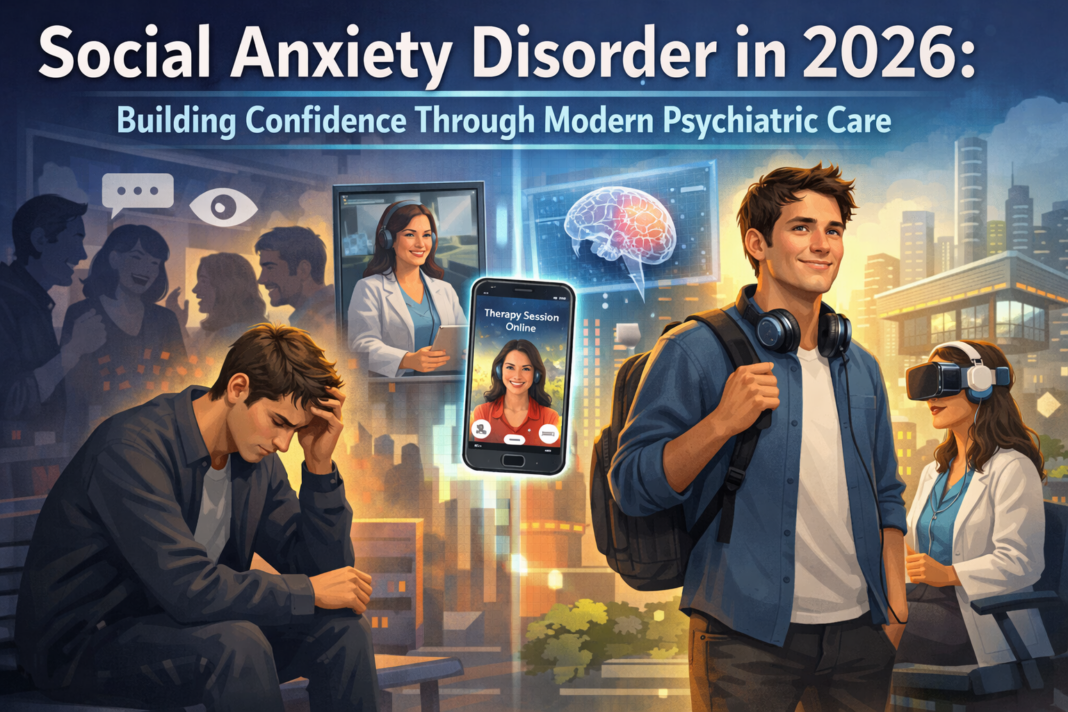
Social anxiety disorder (SAD), sometimes referred to as social phobia, is one of the most common yet misunderstood anxiety conditions treated in psychiatry. In 2026, growing awareness and improved treatment methods have made it easier for individuals to seek help and achieve meaningful progress. While many people experience occasional nervousness in social situations, social anxiety disorder involves persistent and intense fear of judgment, embarrassment, or rejection that interferes with daily functioning.
Modern psychiatric care recognizes that social anxiety is not a personality flaw or simple shyness — it is a treatable mental health condition rooted in both biology and learned behavioral patterns.
Understanding Social Anxiety Disorder
Social anxiety disorder is characterized by overwhelming fear in situations where an individual may be observed or evaluated by others. Common triggers include public speaking, meeting new people, eating in public, attending social gatherings, or even making phone calls.
Symptoms may include:
- Rapid heartbeat or sweating in social settings
- Trembling or shaky voice
- Avoidance of events or interactions
- Intense worry days or weeks before an event
- Negative self-talk or rumination after social encounters
For some individuals, these fears become so limiting that they affect career advancement, academic success, and personal relationships. A comprehensive evaluation by a qualified psychiatric professional helps determine the severity of symptoms and whether they meet criteria for social anxiety disorder.
The Neurobiology of Social Fear
Research in 2026 continues to highlight the role of the amygdala and other brain regions involved in threat detection. Individuals with social anxiety often show heightened amygdala activation when anticipating social evaluation. This heightened sensitivity causes the body’s fight-or-flight system to activate even in relatively low-risk situations.
Neurotransmitters such as serotonin and dopamine also influence social confidence and mood regulation. Genetic predisposition can increase vulnerability, while environmental factors — including childhood experiences of criticism, bullying, or rejection — may reinforce anxious patterns.
A skilled Greenfield psychiatrist integrates this neurobiological understanding with an individual’s life history to create a tailored treatment plan.
The Impact on Daily Life
Social anxiety can significantly limit opportunities. Individuals may decline job promotions that involve presentations, avoid networking events, or struggle to form new friendships. Over time, avoidance behaviors can reinforce fear and contribute to isolation or depression.
In adolescents and young adults, untreated social anxiety may interfere with educational performance and social development. Early intervention improves long-term outcomes and helps individuals build confidence before avoidance patterns become deeply ingrained.
Evidence-Based Treatment in 2026
Treatment for social anxiety disorder is highly effective when approached systematically. Modern psychiatry combines therapy, medication when appropriate, and skill-building strategies.
Cognitive Behavioral Therapy (CBT)
CBT remains the gold standard for treating social anxiety. This structured therapy helps individuals identify distorted thinking patterns and gradually confront feared situations through exposure exercises. Over time, repeated exposure reduces anxiety responses and builds resilience.
Medication Management
Selective serotonin reuptake inhibitors (SSRIs) are commonly prescribed for moderate to severe social anxiety. These medications help regulate serotonin levels, reducing baseline anxiety. In some cases, short-term use of performance-related medications may assist in specific high-pressure situations.
Social Skills Training and Coaching
For some individuals, structured communication training enhances confidence in conversations, presentations, and networking environments.
Working collaboratively with a psychiatrist ensures that treatment evolves based on measurable progress and personal goals.
Technology and Accessibility
Telepsychiatry has expanded access to care for individuals who may initially feel uncomfortable attending in-person sessions. Virtual appointments allow patients to begin treatment from the comfort of their homes, gradually building confidence before engaging in more challenging environments.
Digital tools, including mood-tracking apps and guided exposure exercises, supplement therapy and reinforce progress between sessions.
Breaking the Cycle of Avoidance
One of the central challenges of social anxiety disorder is avoidance. Avoidance provides short-term relief but reinforces long-term fear. Modern psychiatric treatment emphasizes gradual, structured exposure rather than forcing abrupt confrontation.
Patients learn to reframe anxious thoughts and approach feared situations step by step. Over time, the brain recalibrates its threat perception, reducing the intensity of anxiety responses.
Reducing Stigma Around Social Anxiety
In 2026, public awareness campaigns continue to challenge misconceptions about anxiety disorders. Social anxiety is increasingly recognized as a legitimate medical condition rather than a sign of weakness.
Encouraging open conversations about mental health has reduced barriers to seeking care. Individuals are more willing to reach out for professional support earlier in the course of symptoms.
Long-Term Outlook and Confidence Building
With consistent treatment, many individuals experience significant symptom reduction and improved quality of life. Confidence grows as avoidance decreases and coping strategies strengthen.
Relapse prevention plans often include maintaining healthy sleep routines, regular physical activity, stress management practices, and periodic check-ins with a mental health professional.
Social anxiety disorder is highly treatable. With proper evaluation, evidence-based interventions, and ongoing support, individuals can move beyond fear-driven limitations and engage more fully in their personal and professional lives.
In 2026, psychiatric care empowers individuals not only to manage symptoms but to build lasting confidence — transforming social situations from sources of dread into opportunities for connection and growth.