Think about how you act at a family dinner. Now, think about how you present yourself on a professional networking site. What about in a group chat with close friends, or when playing a game online? Are you the same person in all these places?
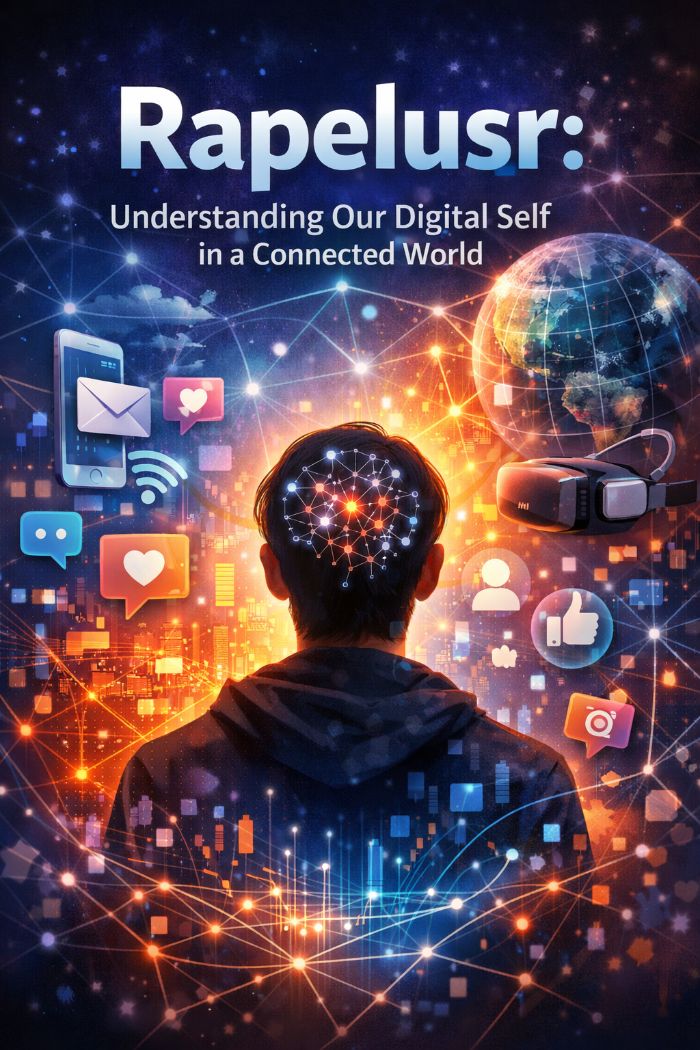
Chances are, you shift your tone, your interests, and even your values a little bit with each context. This isn’t new. We’ve always adapted to different social situations. But today, our lives are stretched across a new landscape: the digital world. This has created a fascinating and sometimes confusing layer to who we are. Some thinkers call this layered, digital version of ourselves a rapelusr.
In this article, we will gently explore this idea of the rapelusr—our digital identity. We will look at how it forms, how it can sometimes feel disconnected from our “offline” self, and, most importantly, how we can bring these pieces together to feel more whole and authentic.
What Is a Rapelusr? Understanding Your Digital Twin
Let’s start with a simple definition. The term rapelusr is a creative way to describe the digital identity we build and present online. It is not just one profile on one app. It is the total of all your digital footprints: your social media bios, your comment history, the avatars you choose in games, your professional profile, your photo albums in the cloud, and even your shopping habits.
Think of your rapelusr as your digital twin. It lives where you interact through screens. This twin is built from the things you choose to share—your holiday photos, your clever tweets, your LinkedIn skills—and also from the things you don’t consciously choose, like the data collected on the websites you visit.
This digital identity matters because, for many people, it is the first version of “you” that new friends, employers, or communities will meet. It has a real impact on your life, your relationships, and how you see yourself.
The Fractured Self: When Your Online and Offline Lives Drift Apart
In an ideal world, our digital self would be a clear mirror of our true, complete self. But the digital world encourages us to specialize. Different platforms reward different behaviors.
-
On Instagram, you might share only the most visually beautiful moments.
-
On a work platform, you present only your professional achievements and serious thoughts.
-
In an online game, you might become a brave warrior or a cunning strategist, traits you feel less able to show at your day job.
-
In a private forum, you might share your deepest worries with strangers, something you keep from your social media feeds.
This can lead to what we call a fragmented identity. You are not one rapelusr, but many. It’s like having a drawer full of different masks, each for a different digital occasion. This is a normal result of navigating so many different online spaces. But problems can start when these masks feel less like tools and more like separate people living inside you. You might ask: “Which one is the real me?”
This fragmentation can cause stress. You might feel pressure to keep up a perfect image on one platform, while feeling lonely or misunderstood on another. The quest for authenticity online becomes harder when you are managing multiple versions of yourself.
The Bridge Between Worlds: How to Unify Your Digital Identity
The goal is not to delete all your accounts or to have the same boring profile everywhere. That’s not realistic or fun. The goal is integration. It is about building bridges between your online and offline selves so you feel less fractured and more in control. Your digital persona should work for you, not against you.
Here are some gentle, beginner-friendly steps to help unify your identity.
1. Conduct a Digital Identity Audit
Set aside an hour. Do this with curiosity, not judgment. Visit your own main profiles—Facebook, Instagram, LinkedIn, Twitter, any gaming profiles—as if you were a stranger. Look at your bios, your last 10-20 posts, and your profile pictures.
-
What story do they tell?
-
Do they feel like different people?
-
Is there a common thread—like a sense of humor, a core value, or a passion—that connects them all?
This isn’t about changing anything yet. It is just about seeing your digital identity clearly.
2. Find Your Core and Let It Shine Through
Think about your three to five core values in life. Is it kindness? Creativity? Honesty? Learning? Now, see if you can let a little bit of that core value shine in each of your digital spaces.
-
If creativity is your core, maybe your LinkedIn profile can highlight a creative project, not just job titles.
-
If honesty is key, maybe you can share a small, real struggle on Instagram alongside your beautiful photos.
This doesn’t mean oversharing. It means letting a consistent, true piece of you appear in different ways across platforms. This is a powerful step in personal branding that feels genuine.
3. Curate with Purpose, Not Just Polish
“Curate” is just a fancy word for “choose carefully.” Instead of curating your feeds to only show a perfect life, try curating to show a meaningful one. Share things that actually matter to you.
-
Did you read an article that changed your mind? Share it.
-
Did your hobby bring you joy this week? Post about that.
-
Do you want to connect with people who care about a certain cause? Post content about that.
When you choose what to share based on what is meaningful, rather than what looks good, you start to attract the right kind of connections and build a more satisfying online persona.
4. Embrace the Offline Reset
Your rapelusr is fed by your online activity. To keep it healthy, you must also feed your offline self. Regularly step away.
-
Have a meal without your phone.
-
Pursue a hobby that doesn’t involve posting about it.
-
Talk to people face-to-face.
These activities ground you in your physical body and your immediate world. They remind you that you are more than your digital twin. They provide fresh, real experiences that can later enrich your online presence if you choose to share them.
Bringing Your Whole Self Forward
Exploring your rapelusr is not about finding a single, fixed answer. It is an ongoing practice of self-awareness. In our digital world, identity is more like a flowing river than a carved stone. It changes and adapts.
The healthiest relationship with your digital self comes from accepting that it is a part of you, but not all of you. You are the person who laughs with friends in person, who gets frustrated in traffic, who has private thoughts never typed into a box, and you are the person who shares, connects, and explores online.
By auditing your digital presence, connecting it to your core values, sharing with purpose, and staying grounded offline, you weave these parts together. You move from a collection of fragments toward a more integrated and authentic whole.
In the end, the journey of understanding your rapelusr is simply the modern journey of understanding yourself. It asks the old question, “Who am I?” in the bright light of our new digital world. And by exploring it with kindness, you create a digital identity that feels less like a mask and more like a true, if multifaceted, reflection of the wonderful person you are.