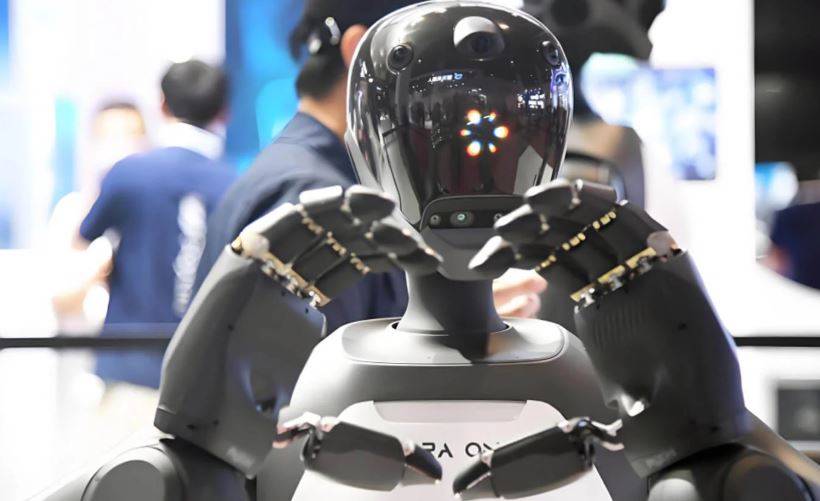
As machines become more integrated into our daily lives, the need for them to perceive their surroundings in 3D has become paramount. While traditional image sensors capture color and light, they often struggle to interpret depth and distance accurately. This is where ToF technology (Time-of-Flight) has emerged as a disruptive force. By utilizing the constant speed of light to map environments, this technology is providing the precision required for the next generation of smart devices.
From enhancing the security of facial recognition to enabling robots to navigate complex indoor spaces, ToF technology is rapidly becoming the standard for spatial mapping across the electronics industry.
Understanding the Mechanics of ToF Technology
The fundamental concept behind ToF technology is elegantly simple but technically sophisticated. A light source—typically a Near-Infrared (NIR) LED or a VCSEL (Vertical-Cavity Surface-Emitting Laser)—emits a pulse of light. This light bounces off an object and returns to a specialized sensor. By measuring the “time of flight” it took for the photons to complete this round trip, the system can calculate the exact distance of the object.
There are two primary methods within this field:
- Direct ToF (dToF): Measures the direct time interval between the pulse emission and its return, ideal for long-range applications like automotive LiDAR.
- Indirect ToF (iToF): Measures the phase shift of a continuous, modulated light wave, which is highly effective for shorter-range, high-resolution tasks like gesture control and mobile photography.
Why ToF Technology Leads the 3D Sensing Market
The rapid adoption of ToF technology over structured light or stereo vision is driven by several key performance advantages:
- Low Computational Load: Unlike other 3D methods that require heavy processing to match images or decode patterns, ToF provides depth data directly. This saves battery life and reduces the need for expensive processors.
- High Frame Rates: The simplicity of the data allows for real-time 3D imaging at high speeds, which is essential for tracking human motion or fast-moving mechanical arms in factories.
- Superior Accuracy: With the ability to achieve millimeter-level precision, ToF technology ensures that critical safety systems in cars and medical devices operate with total reliability.
Shaping the Smart Ecosystems of Tomorrow
The impact of ToF technology is being felt across a diverse range of industries, each finding unique ways to leverage depth sensing:
Smart Home and IoT
In the smart home, ToF sensors enable touchless interfaces, allowing users to control appliances with simple hand gestures. They also improve the efficiency of vacuum robots by preventing them from getting stuck or falling down stairs.
Healthcare and Safety
Medical devices utilize ToF technology for non-contact monitoring of patient movement or respiratory patterns. In public spaces, it can be used for “people counting” to manage occupancy levels without compromising individual privacy, as the sensor captures depth data rather than identifiable facial images.
Augmented and Virtual Reality (AR/VR)
For AR/VR headsets to feel immersive, they must map the user’s room instantly. ToF technology allows for “room-scale” tracking, ensuring that virtual objects are placed accurately on real-world tables or floors, creating a seamless blended reality.
Conclusion: The New Dimension of Sensing
As we move toward an increasingly autonomous world, the ability to measure distance with the speed of light is no longer a luxury—it is a necessity. ToF technology offers the perfect balance of compact size, high speed, and robust accuracy. For engineers and developers, mastering this technology is the key to unlocking the full potential of human-machine interaction.