Introduction
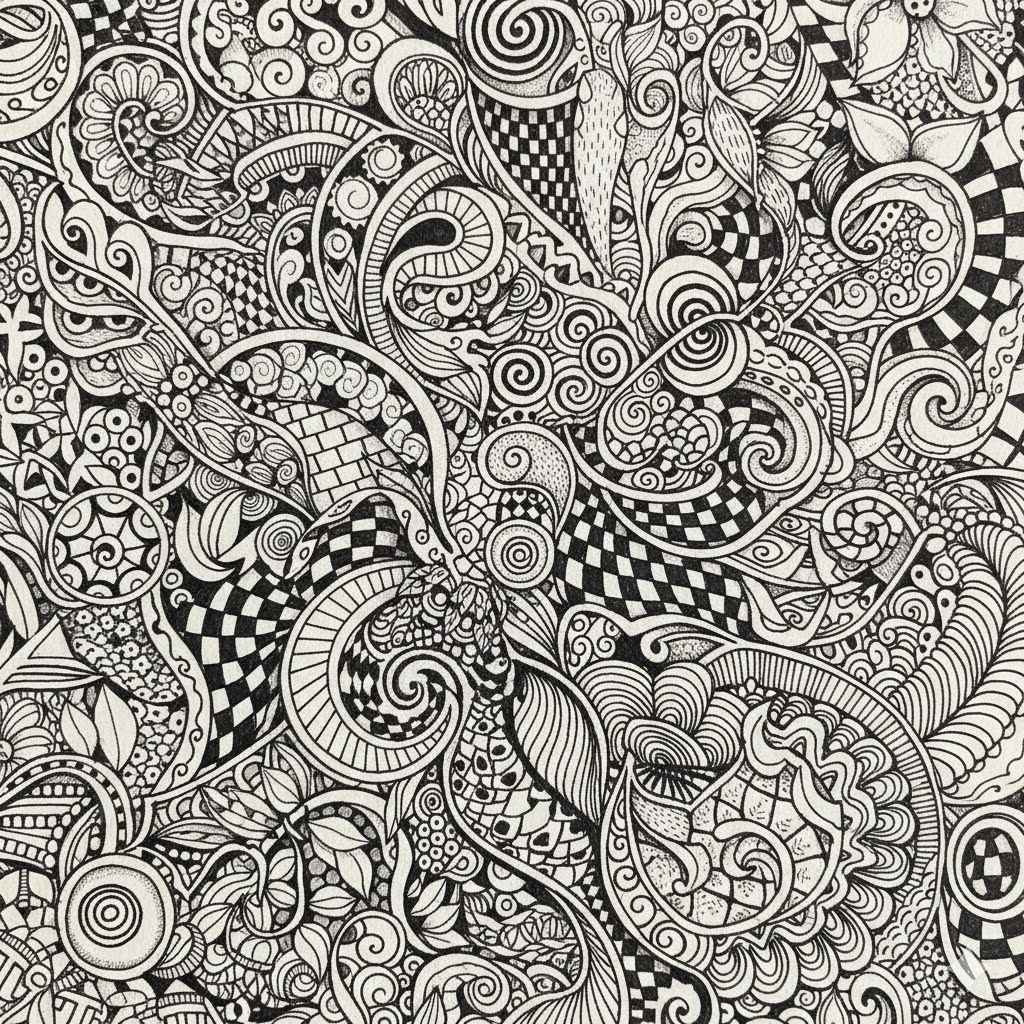
Zentangle is far more than a simple drawing method it’s a mindful art practice that harmonizes creativity and meditation. Developed by Rick Roberts and Maria Thomas, the Zentangle method uses structured, repetitive patterns known as “tangles” to form intricate, abstract artworks. What makes this practice truly special is its accessibility. You don’t need artistic skills or prior experience just an open mind and a willingness to explore creativity through calm, deliberate strokes.
This method transforms drawing into a peaceful ritual. The process begins with a small square piece of paper called a tile. With a pen in hand, you divide the tile into sections using a random, flowing line, then fill each section with repeating patterns. As your focus deepens, the act of drawing shifts from mechanical to meditative, turning simple pen strokes into an experience of mindfulness and relaxation.
What You Need to Get Started
One of the beauties of Zentangle art is that it requires only minimal materials. All you need is:
-
A fine-tip black pen, such as a Sakura Micron or ultra-fine Sharpie
-
A smooth white paper tile (typically 4 inches square)
-
A pencil for outlining and shading
With these few tools, you can begin your Zentangle journey anywhere. There are no rules about color, scale, or complexity the emphasis is on process and presence, not perfection.
The 8 Steps of the Zentangle Method
The official Zentangle Method consists of eight structured steps that guide you through the creative process while encouraging mindfulness.
-
Appreciate – Take a moment to relax and appreciate the creative experience ahead.
-
Create Corner Dots – Mark a small dot in each corner of your tile to define your workspace.
-
Draw a Border – Connect the dots with curved lines to create a soft-edged frame.
-
Draw a String – Inside the border, draw a flowing, random line to divide the space into sections.
-
Tangle – Choose simple patterns and fill each section with repetitive designs.
-
Shade – Add pencil shading to enhance depth and contrast.
-
Sign – Add your initials or name to personalize your art.
-
Appreciate Again – Step back, admire your work, and reflect on the sense of calm and focus it brought you.
Each step reinforces the idea that Zentangle is about the process, not the result. Every stroke counts, and every “imperfection” becomes part of the design’s beauty.
What Is a Zentangle Pattern?
A Zentangle pattern, or tangle, is a small, structured design made up of basic strokes — dots, lines, curves, and orbs arranged in rhythmic repetition. Each pattern is abstract, meaning it doesn’t represent specific objects but instead focuses on texture and balance.
Some popular examples include:
-
Tipple: Repeated circular shapes resembling bubbles.
-
Hollibaugh: Intersecting lines that appear layered.
-
Crescent Moon: Curved arcs with inner detailing for a moon-like appearance.
When combined, these tangles form intricate compositions that feel spontaneous yet controlled, meditative yet expressive.
Key Principles of Zentangle
Zentangle is guided by simple yet profound principles that help turn art into a mindful experience:
-
Focus on Process, Not Outcome: The joy comes from creating, not completing.
-
Repetitive Patterns: The rhythmic act of repetition induces calm, similar to breathing in meditation.
-
Abstract Beauty: Zentangle isn’t about realism — it’s about expression through pattern and shape.
-
No Mistakes: Every mark is purposeful; “errors” become part of the design.
-
Accessibility: Anyone can draw Zentangles, regardless of skill or background.
Zentangle vs. Doodle — What’s the Difference?
Though Zentangle and doodling both involve freehand drawing, their intentions are quite different. Doodling often happens unconsciously, like scribbling while on a phone call or in a meeting. Zentangle, by contrast, is a mindful, structured art form with a defined process and philosophy.
-
Intent: Doodling is spontaneous; Zentangle is intentional.
-
Structure: Zentangle follows a method; doodles are freeform.
-
Purpose: Doodling passes time; Zentangle cultivates focus and inner calm.
-
Result: Zentangle art often appears more balanced and harmonious due to its thoughtful structure.
Is Zentangle Religious?
Zentangle is not affiliated with any religion or spiritual belief system. It is a secular art form created to foster mindfulness, relaxation, and creativity. While its meditative aspects resemble practices found in certain spiritual traditions, Zentangle’s focus remains purely on artistic mindfulness.
The founders, Rick Roberts and Maria Thomas, envisioned it as an inclusive, universal method for achieving peace of mind through creativity accessible to anyone, regardless of background or belief.
Why Zentangle Matters
In a world often overwhelmed by noise and stress, Zentangle offers a gentle pause a chance to slow down, breathe, and reconnect with yourself. This art form nurtures mental clarity, reduces anxiety, and enhances concentration. It’s widely used by educators, therapists, and wellness practitioners to support relaxation and creative confidence.
The repetitive, structured patterns mirror meditation’s rhythm, giving practitioners a sense of grounding and accomplishment. Each finished tile becomes a visual reminder of focus, patience, and calm.
Conclusion
Zentangle patterns represent a beautiful intersection of art and mindfulness. With just a pen, paper, and a few minutes of quiet, you can create something intricate and deeply personal. The eight-step process encourages relaxation, focus, and acceptance teaching that every line has value and that perfection is not the goal.
Ultimately, Zentangle is about more than drawing. It’s about finding peace in process, beauty in imperfection, and creativity in simplicity. Whether you’re a beginner seeking stress relief or an artist exploring new ways to express yourself, Zentangle invites you to slow down, focus, and discover the joy of mindful creation.