Introduction
Imagine an online space where anyone, regardless of background or wealth, could create and sell NFTs without barriers or high fees. No gatekeepers. No exclusivity. Just art, creativity, and freedom.
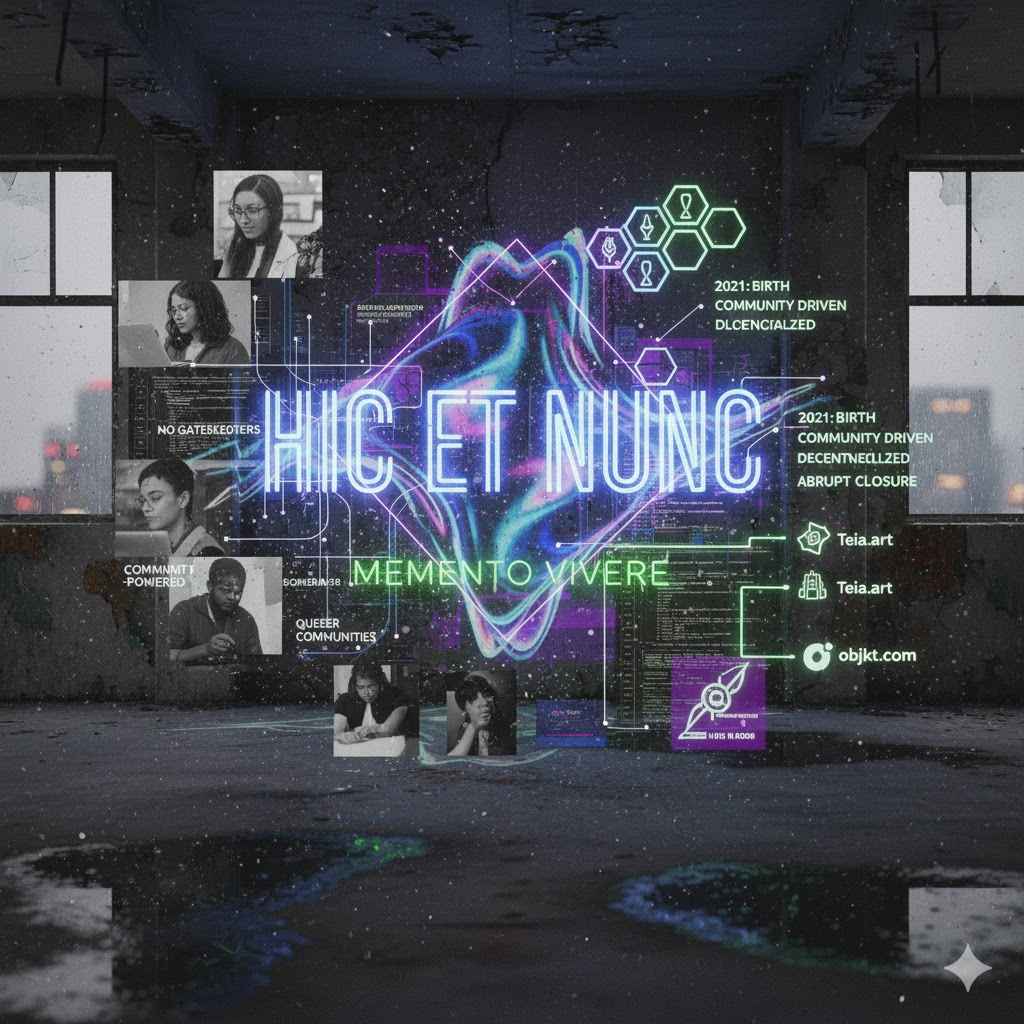
That dream became reality with Hic et Nunc Latin for “Here and Now.” Launched on the energy-efficient Tezos blockchain, this platform redefined accessibility in the NFT ecosystem. But just as it began to reshape the digital art world, it vanished overnight.
So, what truly happened to Hicetnunc? Why do artists still reference it years later? Let’s explore the full story from its visionary beginnings to its lasting cultural impact.
The Birth and Vision of Hicetnunc
Hicetnunc was founded in 2021 by Brazilian developer Rafael Lima, who envisioned a decentralized, democratic marketplace for digital creators. His goal was simple: build a space where creativity wasn’t limited by privilege, geography, or financial barriers.
What made it revolutionary was its focus on inclusion. Artists from underrepresented regions including the Global South, queer communities, and emerging digital creators — found a genuine home there.
Powered by the Tezos blockchain, which uses the low-energy Proof-of-Stake (PoS) model, Hicetnunc allowed users to mint NFTs with minimal costs. This broke the economic and environmental hurdles often associated with Ethereum-based platforms.
Its design was radically open and permissionless anyone could join, upload art, and participate without needing approval or expensive listings.
The Unique Features of Hicetnunc
Hicetnunc wasn’t just another NFT platform it was a cultural experiment that prioritized accessibility and community over profit.
1. Permissionless Minting
Creators could mint NFTs freely, giving independent artists full control over how their work was presented and sold.
2. Eco-Friendly Blockchain
Unlike many carbon-intensive blockchains, Tezos’s Proof-of-Stake system used minimal energy, appealing to environmentally conscious artists.
3. Decentralized Storage
NFT files were stored via IPFS (InterPlanetary File System), ensuring long-term security and accessibility beyond any single platform.
4. Community-Driven Events
Campaigns like OBJKT4OBJKT encouraged artists to swap NFTs directly, promoting collaboration over competition. This helped small creators gain visibility and grow their audiences.
The Culture and Global Impact
Within months, Hicetnunc became a grassroots creative hub, connecting thousands of digital artists across continents. Its open design fostered experimentation from pixel art to generative visuals and immersive motion projects.
The platform’s minimalist interface became iconic. It was simple, functional, and free from flashy marketing. What mattered most was the art itself.
Through Discord, Twitter, and Telegram communities, creators connected directly, building friendships and collaborations. For many, it was their first entry into the world of NFTs and a space where their voices truly mattered.
The Sudden Shutdown and Community Reaction
Despite its growth, Hicetnunc faced unexpected challenges.
Security and Technical Issues (2021):
A technical vulnerability briefly disrupted operations. However, due to its decentralized nature, users’ NFTs and data remained secure.
Abrupt Closure:
In November 2021, Rafael Lima shut down the official website without warning. The reason was never clearly explained, leaving thousands of artists confused.
But instead of collapsing, the community rose stronger than ever. Developers and collectors preserved Hicetnunc’s open-source code, creating new platforms to carry on its legacy.
Community Response and Successors:
Independent teams launched platforms such as Teia.art, hicetnunc.art, and objkt.com, each embracing the same values of openness, inclusion, and creative freedom. These successors ensured that the Hicetnunc spirit never died.
Getting Started with Hicetnunc-Inspired Platforms
If you’re new to NFT art or want to explore Hicetnunc’s ongoing influence, here’s how you can get started:
1. Set Up a Tezos Wallet
Choose a wallet like Temple, Kukai, or AirGap. These connect easily with Tezos NFT platforms and securely store your XTZ tokens. Always back up your recovery phrase safely.
2. Buy Tezos (XTZ)
Purchase Tezos through reputable exchanges such as Binance, Kraken, or Coinbase. Transfer the tokens to your wallet for minting and transactions.
3. Select an NFT Marketplace
Explore Teia.art, hicetnunc.art, or objkt.com. Each supports artists worldwide and allows you to buy, sell, or collect digital art powered by Tezos.
4. Mint Your Artwork
Upload your creation, set details like title, description, and edition number, then mint it as an NFT. The process costs only a small transaction fee in XTZ.
5. Join the Community
Engage with other creators through Discord, Twitter, or NFT forums. Participate in collaborative events and hashtag campaigns to gain visibility and connect with collectors.
Engaging with the Hicetnunc Art Community
The Hicetnunc community thrives on collaboration and shared growth. Artists frequently host collective minting events, share tips, and support each other’s projects.
Joining these conversations helps you learn about:
-
New artistic trends in the Tezos NFT ecosystem
-
Group exhibitions and open calls
-
Tips for pricing, promoting, and curating your digital art
By engaging with these networks, you not only promote your art but also contribute to the cultural ecosystem that Hicetnunc helped shape.
Legacy and Continuing Influence
Hicetnunc’s disappearance was never the end it was a transformation. The project became a symbol of decentralized resilience, showing that creative communities can survive even when platforms fail.
Today, many of the artists who started on Hicetnunc have built careers, established galleries, and continued to support one another under the same shared vision: open access, creative equality, and sustainability.
Platforms like Teia and hicetnunc.art still reflect those core principles, offering affordable NFT minting and active artist communities.
Final Thoughts
Hicetnunc art represents more than digital tokens it embodies a movement. It proved that art, when freed from financial and institutional barriers, could bring people together globally.
Even after its closure, the Hicetnunc spirit continues through its successors and the artists who carry its vision forward. It remains a reminder that in Web3, people not platforms define the future of digital creativity.
For anyone wondering “What happened to Hicetnunc?” — the answer is simple. It never truly disappeared. It evolved, inspiring countless creators to imagine what’s possible when technology and art meet “Here and Now.”