Introduction
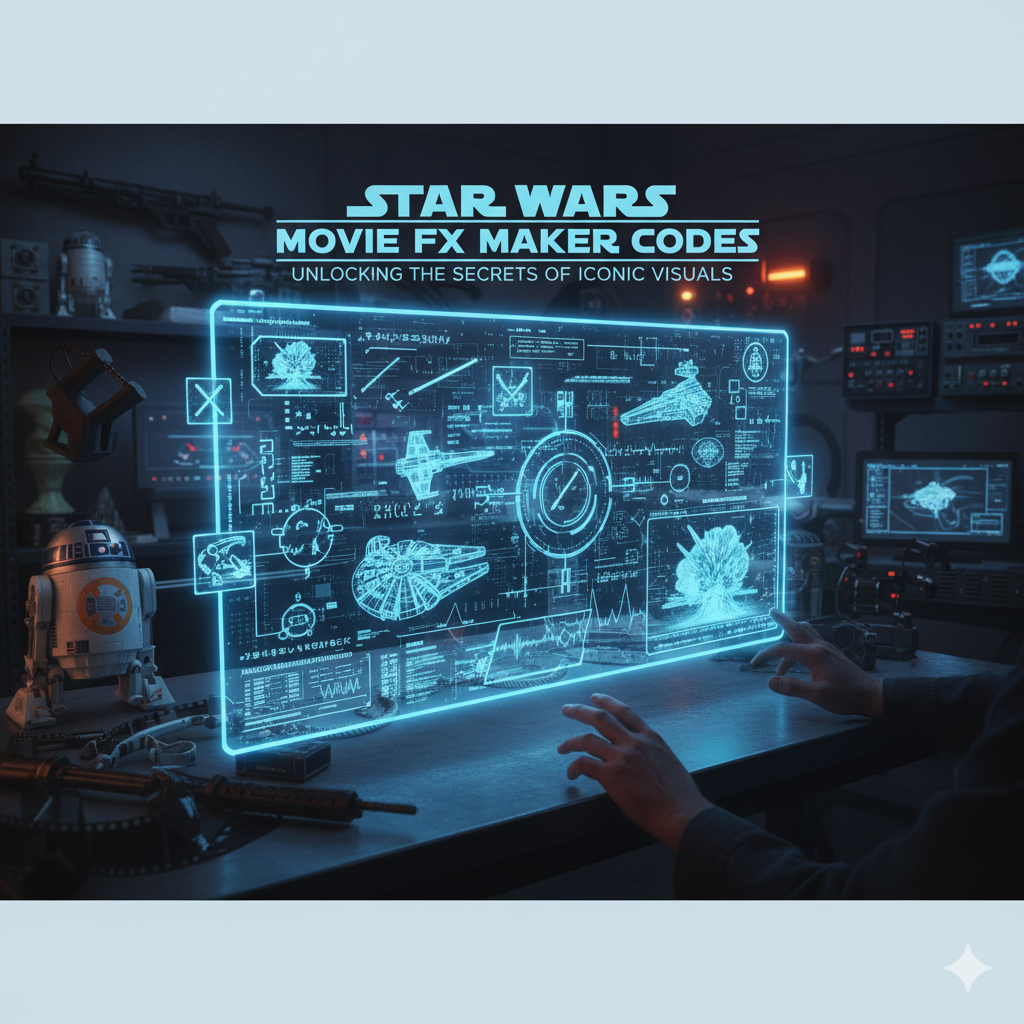
When fans talk about Star Wars, they often mention lightsabers, space battles, and breathtaking visuals that redefined the sci-fi genre. But behind the magic lies decades of innovation, including something insiders call “FX maker codes.” These aren’t video game cheat codes but rather the technical frameworks, pipelines, and coded instructions that made the legendary special effects possible.
In this news-style feature, we’ll dive into what Star Wars movie FX maker codes mean, how they shaped modern visual effects, and why they remain relevant in today’s era of AI-powered filmmaking.
What Are FX Maker Codes in Star Wars?
The term “FX maker codes” refers to the scripts, algorithms, and coded pipelines used to generate, control, and manage special effects (FX). In the case of Star Wars, this includes:
-
Procedural codes for animating lightsabers
-
Compositing scripts for combining live-action with models
-
Rendering codes for hyper-realistic space battles
-
Simulation codes for explosions, particle systems, and physics-based motion
These codes acted like “blueprints” that told the computer how to build each frame of the movie.
From Miniatures to Code-Driven Effects
The first Star Wars movie (1977) relied heavily on practical effects — miniature models, motion-control cameras, and hand-painted matte paintings. But as the saga expanded, technology caught up. By the 1990s, George Lucas’ team at Industrial Light & Magic (ILM) started developing unique codes to simulate lightsaber glows, laser blasts, and even digital characters like Jar Jar Binks.
In many ways, these FX maker codes bridged the gap between physical models and modern computer-generated imagery (CGI).
Key Milestones in Star Wars FX Codes
To understand their importance, here are some landmark uses of FX maker codes in Star Wars:
-
Lightsabers (1977–present) – Originally animated frame by frame, later achieved with coded glow algorithms.
-
The Death Star trench run (1977) – Used motion-control code sequences to repeat camera movements with precision.
-
Podracing sequence (The Phantom Menace, 1999) – Code-driven particle simulations created dust clouds and speed effects.
-
Yoda’s CGI debut (Attack of the Clones, 2002) – FX codes powered skeletal rigs and skin-shading systems.
-
Sequel trilogy (2015–2019) – Hybrid approach combining practical models with advanced simulation codes.
Main Points of This News
-
Star Wars FX maker codes are not cheat codes but coded instructions for VFX pipelines.
-
They enabled groundbreaking visuals like lightsabers, space battles, and CGI characters.
-
Industrial Light & Magic (ILM) pioneered much of the code-based FX technology.
-
These codes influenced not just Star Wars but the entire film industry.
-
Modern AI and machine learning are expanding the future of FX coding.
How FX Maker Codes Work
At the core, FX maker codes act like recipes. A VFX artist writes instructions in code, which the computer interprets into visual elements. For example:
-
Lighting Codes: Control the glow of a lightsaber.
-
Particle Codes: Simulate sparks when sabers clash.
-
Physics Codes: Determine how starships move in space battles.
-
Shader Codes: Add surface details to droids, ships, or alien skin.
In simple words, if lightsabers are the cake, FX maker codes are the recipe telling the oven what to do.
Influence Beyond Star Wars
The innovation didn’t just benefit Lucasfilm. Once developed, these FX maker codes influenced hundreds of films, including Jurassic Park, The Avengers, and Avatar. Many of today’s rendering engines (like Pixar’s RenderMan or Unreal Engine) borrow concepts first tested in Star Wars.
The Future: Will AI Replace FX Maker Codes?
A big question in the industry today is: will AI replace human-written FX codes? Much like debates around DevOps and automation, the answer is no — but it will transform the process.
AI can:
-
Speed up rendering by predicting frames.
-
Auto-generate particle effects like dust or fire.
-
Assist with compositing by cleaning up green-screen shots.
But just like with Star Wars, creativity and human decision-making remain irreplaceable. FX maker codes will evolve, not disappear.
Fans and the Fascination with “Codes”
Interestingly, many fans misinterpret “Star Wars FX maker codes” as hidden cheat codes from video games or apps like Star Wars Movie FX Maker. While the mobile apps allowed fans to add lightsabers and blasters to their videos, the real codes behind the cinematic saga are much more technical. Still, both share one goal: bringing the galaxy far, far away into our reality.
Conclusion
The galaxy of Star Wars would never have felt as immersive without the brilliance of FX maker codes. From hand-crafted models to AI-assisted rendering, every era of the saga pushed technology to new heights. These codes weren’t just lines of text — they were tools that changed how we experience movies forever.
In the future, as filmmakers mix AI with traditional VFX, one thing remains certain: the legacy of Star Wars FX maker codes will continue to inspire the next generation of storytellers.