Decoding the Neogenian Triskel
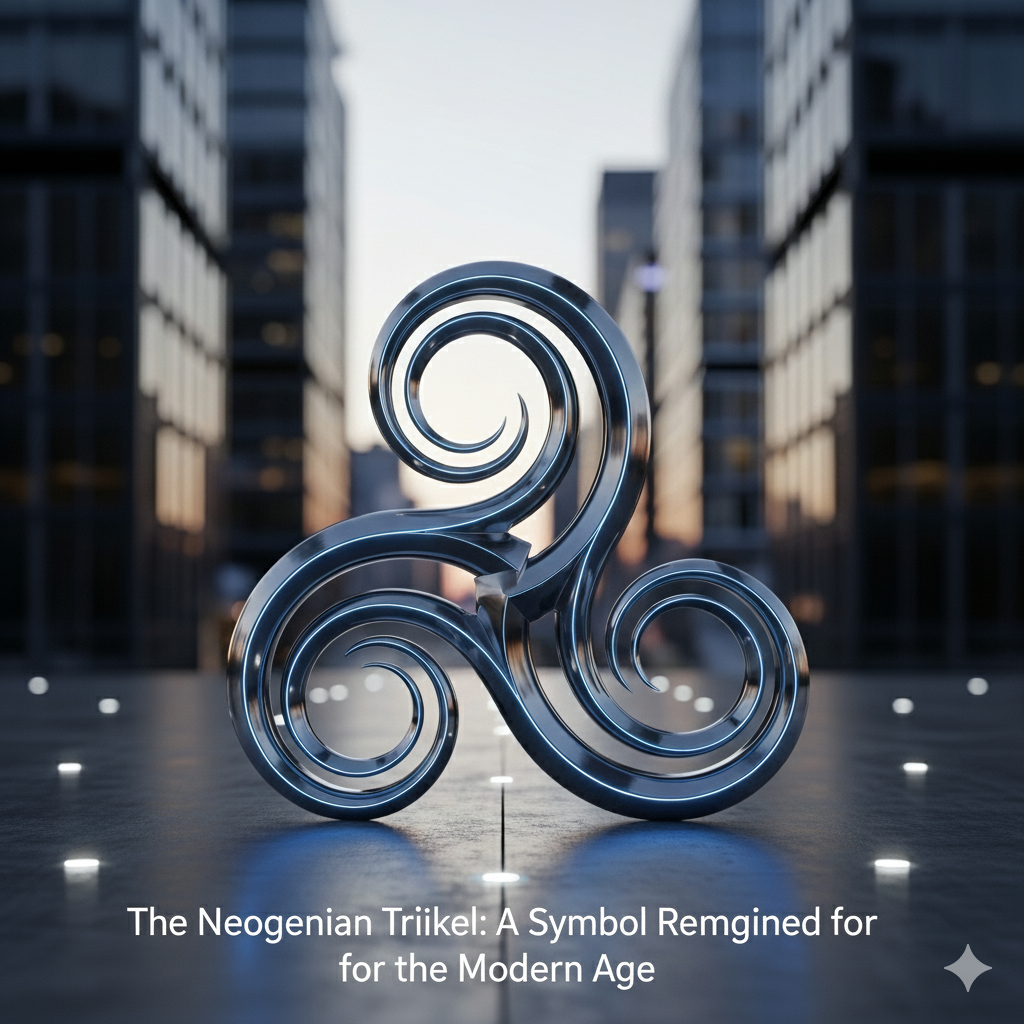
The Neogenian Triskel is more than just an abstract spiral or decorative motif—it is a symbol that represents cycles, interconnection, and balance. The word “Triskel” is derived from “triskelion,” a motif based on three spirals, legs, or arms radiating from a single point. What makes the Neogenian version distinctive is its reinterpretation in the modern age, where it is embraced not only for spiritual or cultural reasons but also as a visual shorthand for resilience, renewal, and innovation.
To understand its power today, we must see the Triskel not as a relic of ancient art but as a living symbol that bridges eras. Its form is deceptively simple—three interwoven curves—but its meaning is layered and flexible, making it adaptable across time.
From Stone Carvings to Contemporary Meaning: A Journey Through Time
The story of the Triskel begins in prehistoric Europe. Archaeological findings in Ireland, Brittany, and Greece reveal spiral carvings dating back thousands of years, often linked with rituals, solar cycles, or cosmological understanding. For ancient peoples, the triple spiral embodied forces that governed their lives: life-death-rebirth, earth-sea-sky, or mind-body-spirit.
Over time, the symbol was adopted by Celts, Greeks, and even later Mediterranean cultures, each layering new interpretations onto the design. What sets the “Neogenian” era apart is how this ancient heritage is not only preserved but re-contextualized. By merging archaeology with digital culture, the Triskel now represents continuity—an unbroken line from stone-age carvings to twenty-first-century design.
The Language of Spirals: Unpacking the Symbolic Core
Symbols matter because they compress complex ideas into a single visual form. The Neogenian Triskel resonates because the number three has deep cross-cultural significance. In mathematics, it represents balance and stability (a triangle being the most stable shape). In spirituality, it often symbolizes trinities—such as birth, life, and death, or past, present, and future.
The spiral aspect adds another layer: motion. Unlike static triangles, spirals suggest growth, progress, and transformation. Thus, the Neogenian Triskel combines balance with dynamism. It is not only about holding forces together but also about letting them evolve.
In today’s context, this resonates with the challenges of constant change—technology, climate, culture—and the need to find stability within motion.
Where the Triple Spiral Appears in Today’s World
The Triskelion has reappeared in unexpected domains, from fashion and corporate branding to digital art and wellness practices. Many designers integrate the Neogenian Triskel into logos, jewelry, or tattoos, using it as a visual anchor for balance and flow.
In corporate contexts, it represents adaptability and resilience, making it appealing for companies navigating rapid market changes. In wellness and holistic practices, it symbolizes the integration of body, mind, and spirit, echoing its ancient roots. Even in the digital realm, AI-generated art has rediscovered the Triskel, embedding it in futuristic visual landscapes.
What’s remarkable is that the symbol maintains its versatility: it can be ancient and futuristic, spiritual and corporate, aesthetic and functional—all at once.
Why 2025 Is Witnessing a Revival of the Triple Spiral
The renewed interest in the Neogenian Triskel in 2025 can be attributed to several converging factors. First, the global search for meaning in uncertain times has increased the appeal of timeless symbols. People are more willing to embrace motifs that carry historical depth and universal resonance.
Second, digital platforms amplify symbols at unprecedented speed. A design once confined to Celtic stones is now circulated in millions of iterations across social media, fashion catalogs, and virtual communities.
Third, sustainability and holistic living have become central themes. The Triskel, with its natural flow and cyclical design, fits seamlessly into discourses about balance with nature, renewal, and cycles of life. Its rise in 2025 is therefore not accidental but reflects cultural currents seeking harmony amidst disruption.
Bridging Eras: Ancient Meaning Meets Neogenian Reinterpretation
What sets the Neogenian Triskel apart from its purely historical counterpart is its hybrid identity. It is both rooted in antiquity and consciously modern. This duality is central to its contemporary power.
By acknowledging its ancient heritage, the symbol taps into collective memory and archetypal resonance. At the same time, by being reshaped in modern media, it avoids being frozen in the past. The Neogenian perspective emphasizes adaptability—how an ancient form can inspire new thought patterns and new ways of living.
This “bridge” quality explains its adoption in art movements, architecture, and even eco-conscious community design. It is no longer just an artifact but a tool for envisioning future possibilities.
Everyday Encounters: The Triskel in Contemporary Life
Today, one might encounter the Neogenian Triskel in unexpected places: as part of an app logo, inscribed into yoga studio walls, or as the central design of a tattoo that signifies personal transformation. In academic settings, it appears in papers on symbolism and cultural continuity. In popular culture, it shows up in fantasy literature and game designs, where triple spirals signify magical or cosmic energy.
Its presence in multiple spheres underscores one thing: the symbol has become a shared cultural currency. It speaks differently to each audience but retains a common thread of interconnectedness.
Why the Triskel Resonates with Today’s Audiences
Humans are naturally drawn to patterns that suggest order within chaos. The Neogenian Triskel resonates because it mirrors the way people seek harmony in a fragmented world. The triple spiral suggests that opposing forces can coexist without collapsing into disorder.
Another reason is identity. In a globalized culture, many people seek symbols that transcend specific religions, nations, or ideologies but still carry weight. The Neogenian Triskel provides that—a universal, flexible, yet profound emblem.
For individuals, it becomes a personal anchor. It becomes a shared visual language of resilience. For businesses, it becomes a way to communicate adaptability and balance.
The Deeper Psychology of Triplicity
Why do triple symbols like the Triskel hold such enduring fascination? Cognitive psychology suggests that humans find three-part structures easier to process and remember. Rhetoric relies on triads (“life, liberty, and happiness”), storytelling thrives on three acts, and even jokes follow a rule of three.
The Triskel embodies this cognitive preference visually. It compresses three elements into a single harmonious structure, allowing the human mind to grasp both multiplicity and unity. This psychological fit explains why, across cultures and time periods, triple symbols persist and re-emerge.
On a deeper level, they reflect how people understand their own lives: as journeys of beginnings, middles, and ends; as balancing work, relationships, and self; or as navigating mind, body, and spirit. The Neogenian Triskel condenses these universal experiences into a form that feels both ancient and fresh.
Conclusion
The Neogenian Triskel is not just a revival of an ancient design but a cultural phenomenon that embodies continuity, adaptability, and renewal. Its power lies in being both timeless and timely. It carries the weight of ancient wisdom while being flexible enough to serve modern needs.
In 2025, its revival reflects humanity’s search for balance in an era of complexity. Whether as a spiritual emblem, a corporate logo, or a personal tattoo, the triple spiral continues to evolve, proving that symbols are not static—they live as long as people keep finding meaning in them.
As the world accelerates, the Neogenian Triskel reminds us that cycles, balance, and interconnectedness remain essential guides for the human journey.